





Private schools claim $11.7 million through Government's wage subsidy
Elite New Zealand schools have claimed millions through the Government's wage subsidy, many of them while still charging full fees to students. Schools collecting full tuition fees said they were suffering as badly as any exposed business during the Covid-19 pandemic because they had lost income from international students and boarding fees. They still expected to make at least a 30 per cent loss, the threshold required to make the subsidy. However, at least one of the schools is now paying the money back after it overestimated the losses it would make. State schools are not eligible for the subsidy because the Government has guaranteed the wages of their staff. Private schools, on the other hand, are run as businesses and could apply if they expected a financial hit. A Ministry of Social Development database shows 21 private schools have claimed a total of $11.7m in wage subsidies so far. Most of them claimed the subsidy to cover the wages of non-teaching staff such as those in boarding houses or swimming schools. Others made much larger applications which included wages for teaching staff.
St Cuthbert's College in Auckland claimed $1.92 million for 302 staff members. It was still charging full fees during lockdown - between $20,000 and $25,000 a year for domestic students - though boarding fees had been reduced. Students were getting a "premium" online teaching service at home. "Our loss of revenue predictions at the outset of the lockdown were not based around any reduction in fees to parents," the school said through a spokeswoman. "They were based around a worst-case scenario of 30 per cent loss of revenue. This was predicted to be reduced revenue from our swim school, boarding, conferences and facility hire, and a roll decline." There was significant uncertainty about the scale and the length of the pandemic when it first arrived in this country, the school said. But six weeks later, it no longer expected a 30 per cent loss. St Cuthbert's had not spent any of the subsidy and planned to pay back "the bulk" of it. Some of the money would be kept because the swimming school had closed and the boarding facility expected to lose 30 per cent of its revenue.
Scots College in Wellington is also charging full fees, which run up to $22,000 a year. It claimed $1.2 million from the wage subsidy. The school did not respond to a request for comment. Private schools with a large number of international students or boarders had suffered particularly badly during the Covid-19 outbreak because the students had returned home and boarding schools had been forced to close. Dale Burden, principal of St Peter's School in Cambridge, said international students made up around 7 per cent of the school's roll. Some were stuck overseas when the lockdown was enforced, and others returned home. His school expected to lose "30 per cent and more" of its revenue and had claimed $2.15 million through the wage subsidy scheme.
It had also lost revenue by scrapping boarding fees (around $15,000 a year), its swim school, letting fees and business courses. The school had reduced tuition fees for students, Burden said, although some parents had insisted on paying their full fees and having the difference donated to a hardship fund for struggling families. The school charges between $19,000 and $25,000 for domestic students, and twice that amount for international students. Diocesan School for Girls claimed $174,000 for 38 staff. In a newsletter to parents, principal Heather McRae said this was to cover the costs of the swimming facility and boarding school, which were forced to close under the Covid-19 lockdown. The school was no longer charging boarders but had to cover the staff wages for the boarding facility - around $33,000. The school was still charging fees to students ($20,000-$24,000) and was providing intensive online classes. Families who had been financially hit by the lockdown could apply for relief, McRae said. Other top schools including King's College do not appear to have claimed the subsidy. It was also available to state-integrated schools, such as religious or "special character" schools. The Government has paid out more than $10 billion through the wage subsidy scheme.
=========================================================

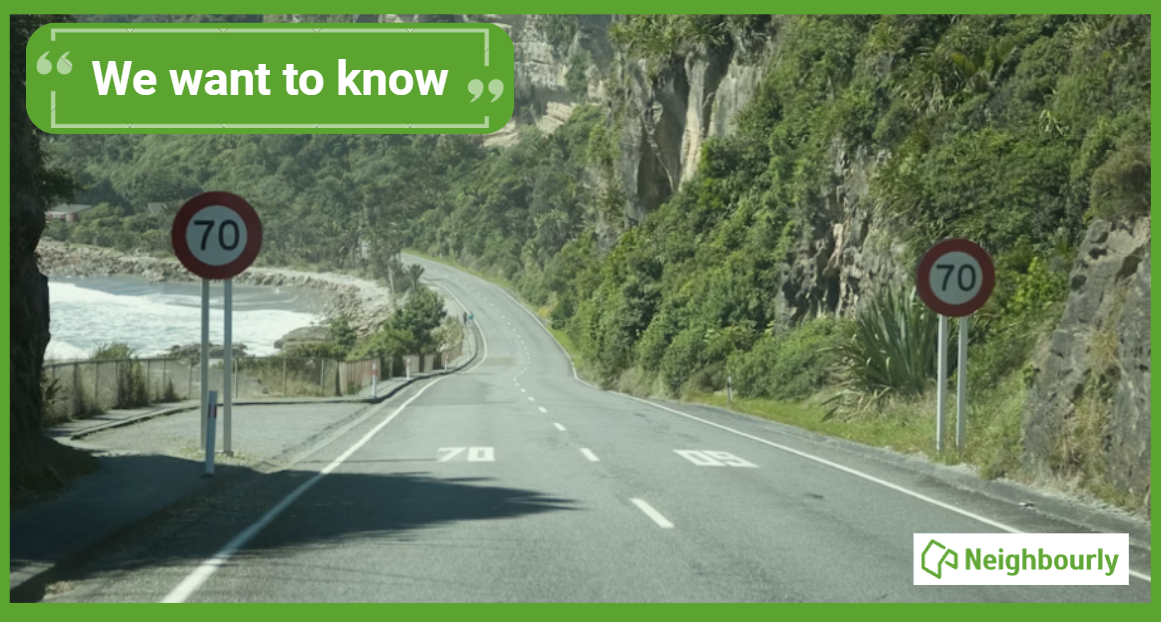
Poll: If we want to reduce speeding, what do you think actually changes driver behaviour? 🛻🚨🚓
In the Post's article on speeding penalties, the question is asked whether speeding fines are truly about road safety, or are they just a way to boost revenue for the Crown?
What do you think? Should speeding motorists receive speeding fines or demerit points?
-
35.5% The sting of a fine (Money talks!)
-
64.5% The threat of demerit points (Nobody wants to lose their license!)

Some Choice News!
DOC is rolling out a new tool to help figure out what to tackle first when it comes to protecting our threatened species and the things putting them at risk.
Why does this matter? As Nikki Macdonald from The Post points out, we’re a country with around 4,400 threatened species. With limited time and funding, conservation has always meant making tough calls about what gets attention first.
For the first time, DOC has put real numbers around what it would take to do everything needed to properly safeguard our unique natural environment. The new BioInvest tool shows the scale of the challenge: 310,177 actions across 28,007 sites.
Now that we can see the full picture, it brings the big question into focus: how much do we, as Kiwis, truly value protecting nature — and what are we prepared to invest to make it happen?
We hope this brings a smile!

Poll: Is Auckland’s economy improving?
The latest reporting from The Post suggests a wave of optimism for 2026. With interest rates finally heading south, businesses are feeling more positive. But for many on the ground, the real-world recovery feels a bit like a slow-moving commute on Auckland's motorways.
We want to know: Are you seeing signs of Auckland's economy improving in your industry or neighbourhood? Whether it's busier shops, new projects kicking off, or just a shift in the mood ...
-
17.4% Yes
-
65.8% No
-
16.8% A little
 Loading…