





New Zealand's 1422 coronavirus cases: Locations, ages, clusters, ethnicities
Where are the cases?
==================
This week, the Ministry began highlighting how many active, recovered and dead cases there are in each District Health Board. Southern DHB continues to have the most cases overall, while Tairawhiti has the fewest.
Cases in each DHB, ordered by the overall number of cases recorded
==============================================
Southern: 64 active, 152 recovered, 0 dead. Total: 216
Waitemata: 86 active, 120 recovered, 0 dead. Total: 206
Auckland: 49 active, 136 recovered, 0 dead. Total: 185
Waikato: 98 active, 84 recovered, 1 dead. Total: 183
Canterbury: 64 active, 76 recovered, 7 dead. Total: 147
Counties Manukau: 32 active, 78 recovered, 0 dead. Total: 110
Capital and Coast: 42 active, 49 recovered, 2 dead. Total: 93
Nelson-Marlborough: 14 active, 34 recovered, 0 dead. Total: 48
Bay of Plenty: 13 active, 32 recovered, 0 dead. Total: 45
Hawke's Bay: 21 active, 20 recovered, 0 dead. Total: 41
Mid Central: 11 active, 20 recovered, 0 dead. Total: 31
Northland: 17 active, 10 recovered, 0 dead. Total: 27
Hutt Valley: 7 active, 13 recovered, 0 dead. Total: 20
Lakes: 5 active, 11 recovered, 0 dead. Total: 16
South Canterbury: 9 active, 6 recovered, 0 dead. Total: 15
Taranaki: 3 active, 11 recovered, 0 dead. Total: 14
Wairarapa: 0 active, 8 recovered, 0 dead. Total: 8
Whanganui: 4 active, 4 recovered, 0 dead. Total: 8
West Coast: 2 active, 2 recovered, 1 dead. Total: 5
Tairawhiti: 3 active, 1 recovered, 0 dead. Total: 4
The seven deaths in Canterbury are all linked to the group from the Rosewood Rest Home cluster who were transferred to Burwood Hospital. New Zealand's first death was Greymouth woman Anne Guenole on the West Coast. Two people have died in Wellington, one of which was linked to the Bluff cluster. A single person has died in Waikato. He was linked to the Matamata cluster. Of New Zealand's 20 hospitalised cases, seven are in Waitemata, four are in Auckland, there are two each in Canterbury, Counties Manukau and Waikato, with single hospitalised cases in Northland, Southern and South Canterbury DHBs.
Transmission type:
===============
Contact with known case: 54 percent
Recent overseas travel: 38 percent
Community transmission: 4 percent
Source under investigation: 3 percent
Clusters
=======
Most of the cases now being recorded in New Zealand are being linked to clusters. These are groups of COVID-19 cases linked together as they have all been to the same location, but are not all part of the same household. Within a cluster there may be an individual who has a link to someone who has travelled. New Zealand has 16 significant clusters, up three since last Saturday. These are clusters with 10 or more cases. The origin of some remains unknown and under investigation.
==========================================
Bluff wedding: 96 cases, linked to overseas exposure
Marist College, Auckland: 92 cases, unknown origin
Matamata bar: 75 cases, linked to overseas exposure
Rosewood Rest Home, Christchurch: 40 cases, unknown origin
Stag party, Auckland: 38 cases, unknown origin
World Hereford Conference, Queenstown: 35 cases, linked to overseas exposure
"Community", Auckland: 30 cases, unknown origin
Ruby Princess cruise ship, Hawkes Bay: 22 cases, linked to overseas exposure
Auckland rest home (1): 21 cases, unknown origin
George Manning retirement village, Christchurch: 20 cases, unknown origin
Wellington group which travelled to the United States: 16 cases, linked to overseas exposure
Auckland group which travelled to the United States: 16 cases, linked to overseas exposure
Waikato rest home: 14 cases, linked to overseas exposure
Auckland rest home: 14 cases, linked to overseas exposure
Wellington wedding: 13 cases, linked to overseas exposure
Christchurch workplace: 10 cases, linked to overseas exposure
Ages
=====
0-9: 33
10-19: 113
20-29: 340
30-39: 217
40-49: 209
50-59: 234
60-69: 167
70+: 109
Gender
======
Male: 639
Female: 782
Not specified: 1
Ethnicity
=======
European or other: 1053
Asian: 158
Maori: 121
Pacific peoples: 65
Unknown: 25
=========================================================

Some Choice News!
DOC is rolling out a new tool to help figure out what to tackle first when it comes to protecting our threatened species and the things putting them at risk.
Why does this matter? As Nikki Macdonald from The Post points out, we’re a country with around 4,400 threatened species. With limited time and funding, conservation has always meant making tough calls about what gets attention first.
For the first time, DOC has put real numbers around what it would take to do everything needed to properly safeguard our unique natural environment. The new BioInvest tool shows the scale of the challenge: 310,177 actions across 28,007 sites.
Now that we can see the full picture, it brings the big question into focus: how much do we, as Kiwis, truly value protecting nature — and what are we prepared to invest to make it happen?
We hope this brings a smile!


Scam Alert: Bank cold calls
ASB is warning customers about reports of cold calls from scammers claiming to be from ASB. These scammers are trying to obtain personal information, including usernames, dates of birth, and verification codes sent to your mobile phone.
🛡️ The "Caller Check" Test
If you get a call from someone claiming to be from ASB and you’re unsure, just ask them for a Caller Check. You will then be able to verify the call through the app.
Remember, banks will:
❌ Never ask for your banking passwords, PINs, or verification codes
❌ Never need to know your full credit card number – especially the CVC
❌ Never ask you to download software or remotely access your device
❌ Never ask you to purchase gift cards or transfer funds.
If you have received a phone call and think your account has been compromised, call ASB on 0800 ASB FRAUD (0800 272 372), or visit your local branch.
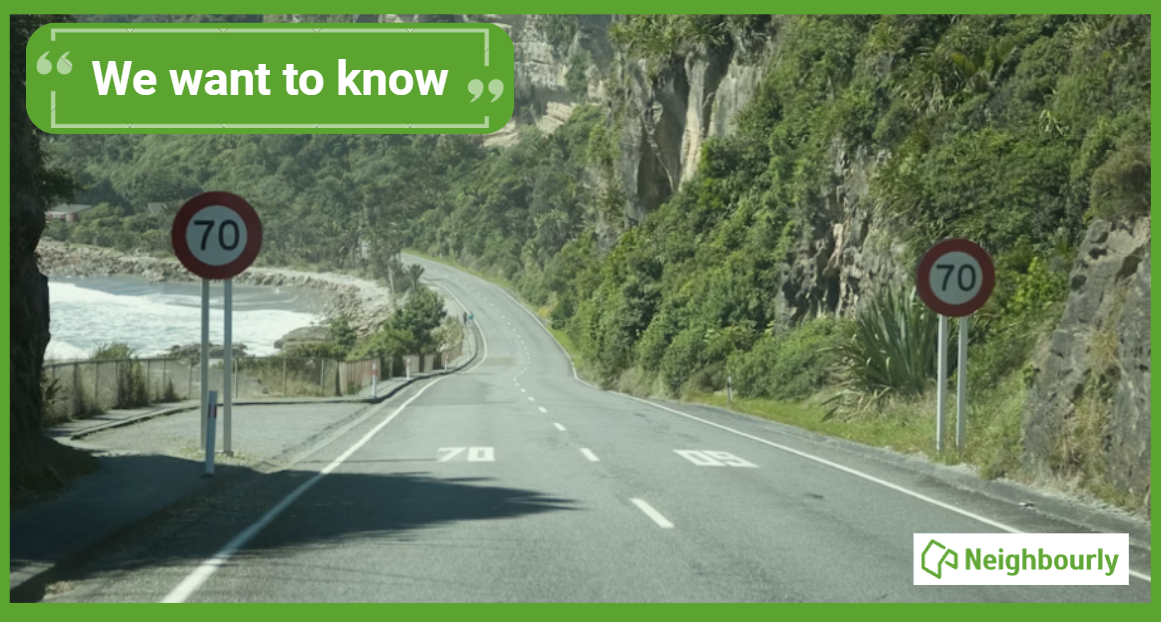
Poll: If we want to reduce speeding, what do you think actually changes driver behaviour? 🛻🚨🚓
In the Post's article on speeding penalties, the question is asked whether speeding fines are truly about road safety, or are they just a way to boost revenue for the Crown?
What do you think? Should speeding motorists receive speeding fines or demerit points?
-
36.5% The sting of a fine (Money talks!)
-
63.5% The threat of demerit points (Nobody wants to lose their license!)
 Loading…