






North Shore rubbish collection trial a success, but technology won't be rolled out across Auckland
Kia ora neighbours. A new rubbish collection method trialled on the North Shore was a runaway success, but there are no plans to roll it out across the Auckland.
In 2021, rubbish collection using radio frequency identification (RFID) was trialled with 498 households in Albany, Beach Haven, Browns Bay, Murrays Bay, Northcross, Torbay and Totara Vale.
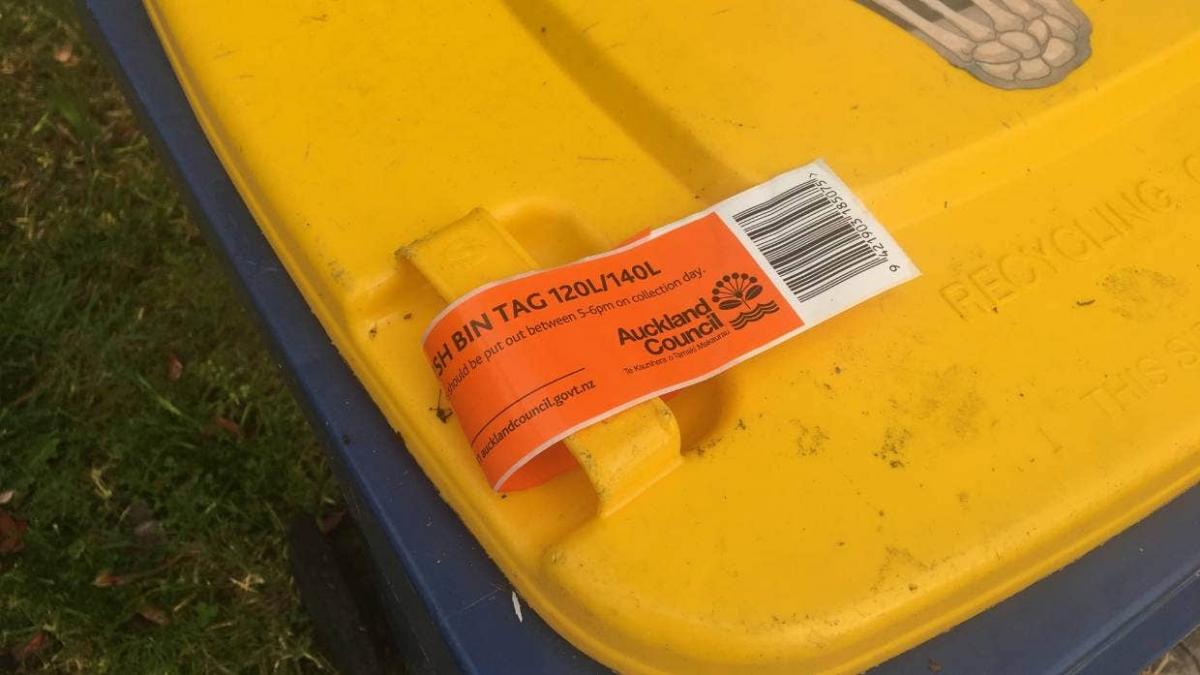
RFID is a wireless data transfer method. When a bin fitted with a RFID chip is emptied, payment is deducted from the resident’s account which is linked to their debit card.
The technology eliminates the need for residents to buy bin tags and provided Auckland Council with more insight on trial participants’ waste habits.
Of the 191 residents who completed a trial survey, 92 per cent wanted the service to continue.
“Overall, the trial was successful in providing a convenient, reliable service that ... based on survey responses, achieved very high satisfaction ratings from customers," the post-trial report stated.
However, RFID technology won’t be rolled out widely any time soon, as the council is still deciding whether the region should move entirely to a rates-funded model or a PAYT model.
“Should the region decide to pursue a user pays model, then the RFID payment method could be progressed,” an Auckland Council spokesperson said.
Click 'read more' for the full report.

🐾 It’s here! Our SPCA Merch has officially launched online 🐾
We’re excited to share our brand-new range of exclusive SPCA Merch, featuring tees, tote bags, socks, bandanas, and more 🛍️
Shop the range online now 🔗 www.spcaopshops.nz...
Every purchase helps raise vital funds to protect over 55,000 animals in need across NZ every year 💙


Some Choice News!
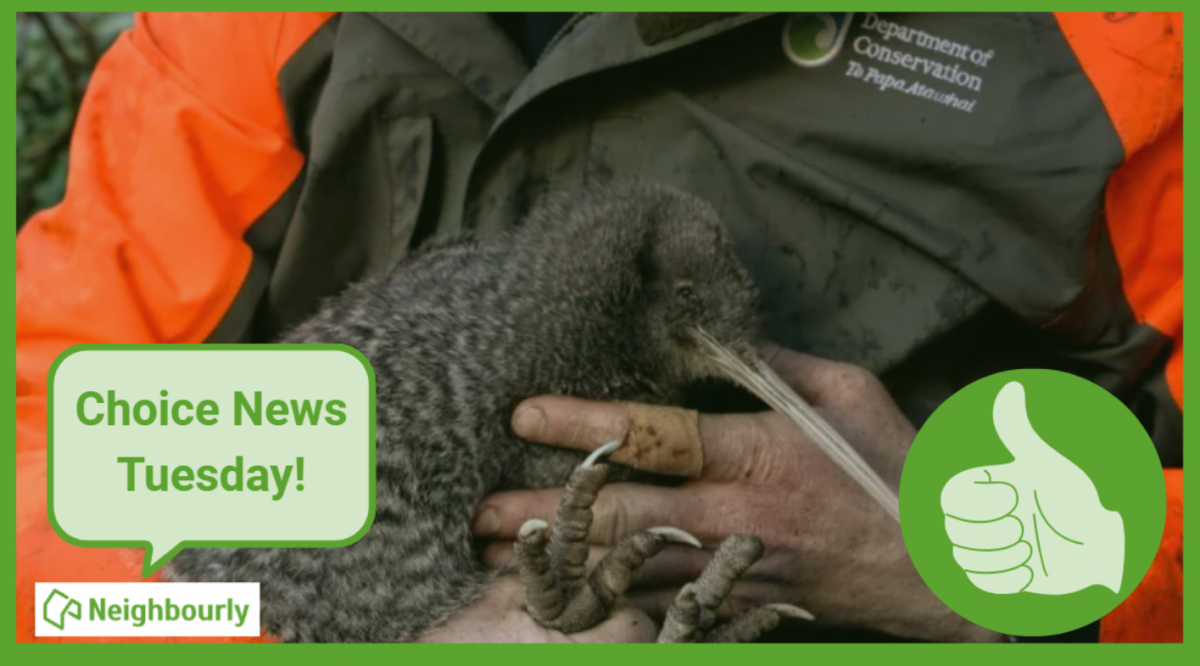
DOC is rolling out a new tool to help figure out what to tackle first when it comes to protecting our threatened species and the things putting them at risk.
Why does this matter? As Nikki Macdonald from The Post points out, we’re a country with around 4,400 threatened species. With limited time and funding, conservation has always meant making tough calls about what gets attention first.
For the first time, DOC has put real numbers around what it would take to do everything needed to properly safeguard our unique natural environment. The new BioInvest tool shows the scale of the challenge: 310,177 actions across 28,007 sites.
Now that we can see the full picture, it brings the big question into focus: how much do we, as Kiwis, truly value protecting nature — and what are we prepared to invest to make it happen?
We hope this brings a smile!

🧩😏 Riddle me this, Neighbours…
I am an odd number. Take away a letter and I become even. What number am I?
Do you think you know the answer?
Want to stop seeing these in your newsfeed? No worries! Simply head here and click once on the Following button.
 Loading…