





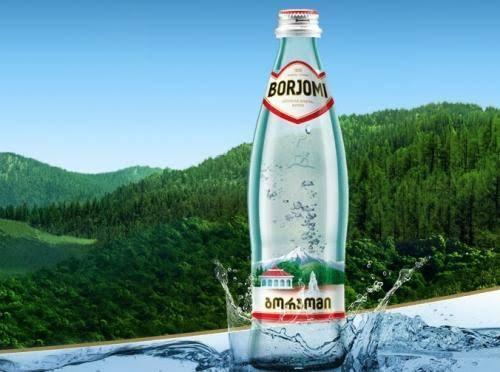
Georgian unique mineral water BORJOMI
Everyone knows about Georgian cuisine and wine, but what do you know about Georgian unique mineral water BORJOMI?
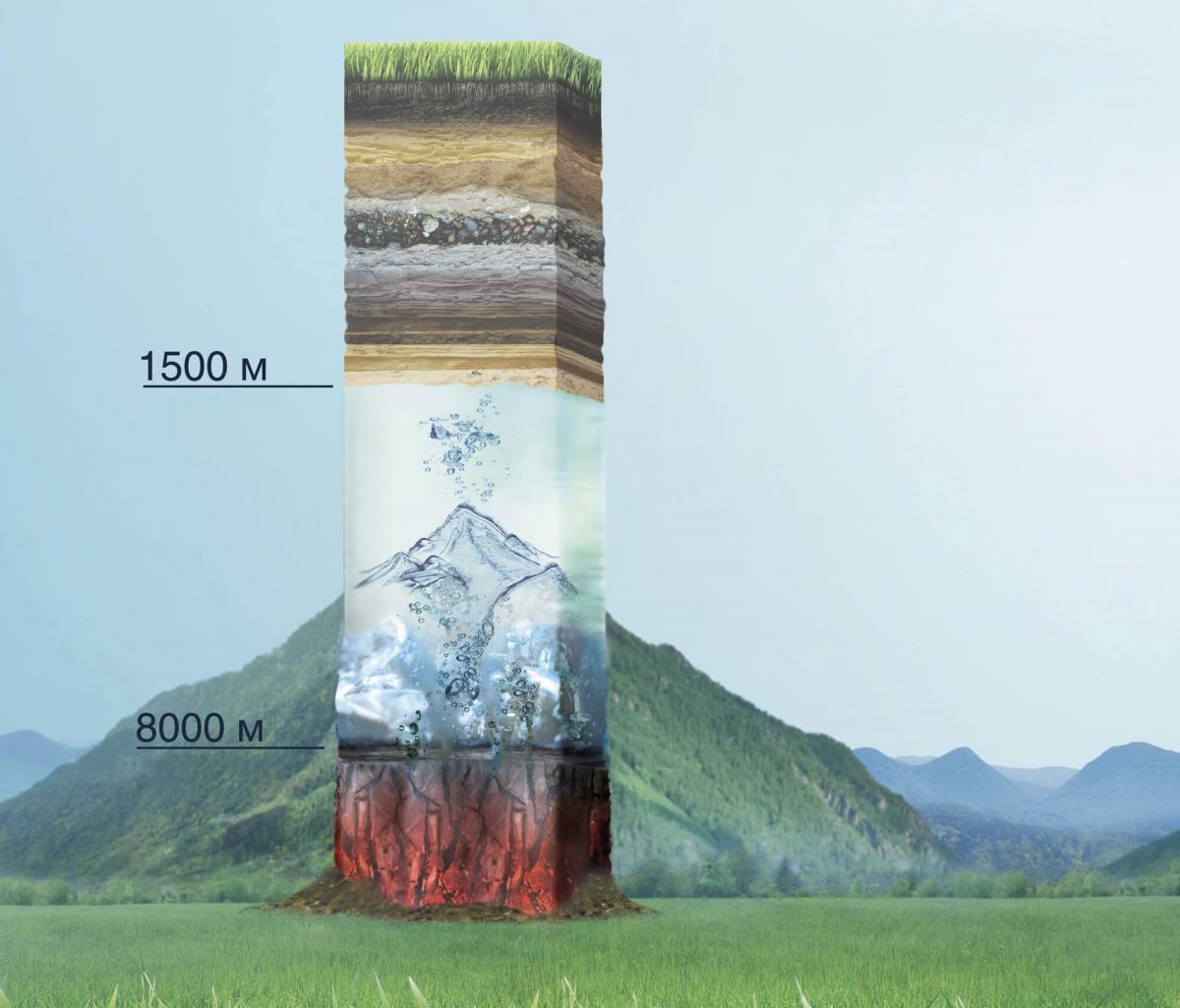
Every drop of this water is priceless: BORJOMI is born in Georgia’s volcanic depths, rises many kilometers up to the surface while getting enriched with unique minerals on its way, and then is produced, most carefully, from springs in the BORJOMI Gorge but only in the quantities that could be naturally reproduced.
BORJOMI water’s impeccable quality has been confirmed by numerous laboratory tests, which prove that today’s composition of BORJOMI is the same as it was over a century ago.
BORJOMI is a mineral water of volcanic origin, which by natural standards is over 1,500 years old. It rises to the surface from the depth of 8-10 km, pushed up by natural carbon dioxide pressure. Unlike many other sodium bicarbonate mineral waters, BORJOMI does not cool down before it reaches the surface and comes out warm (38-41°С), getting enriched “on its way” with a composition of 60 various minerals found in rock layers of the Caucasus Mountains.
BORJOMI water tests show that it is formed by deep-earth mineralized, modern fresh and low-mineralized waters.
But how do these waters form deep down there? To answer this question, let’s recall several theories explaining the origin of underground waters.
One of the first theories — infiltration — was suggested by the Roman architect Marcus Vitruvius Pollio back in ancient times, but scientists still use it today. According to this theory, underground waters are formed from precipitations penetrating the earth via channels in rock.
In the late 19th century, the entire world was captivated by the condensation theory of the German engineer Otto Volger, who believed that underground waters were formed from condensation of atmospheric water vapor in the soil.
And lastly, one of the recent theories — juvenile — was put forth in 1902 by the Austrian geologist Eduard Suess. The scientist found the evidence proving connection of certain mineral waters with the Earth magma. In his opinion, products emitted from molten magma come to areas with lower temperatures and begin to condense, thus forming juvenile (i.e. primal) waters coming to the surface as springs. But not in the pure form: rising up along the cracks in rock layers, often under pressure from gases of volcanic origin, juvenile water dissolves these rock layers, getting enriched with minerals, and mixes with underground waters of a different (often infiltration) origin.
In the early 1990s, a research discovered that in terms of the ratio of certain hydrogen isotopes, BORJOMI drastically differed from other mineral waters. It is quite possible that this information proves the presence of a substantial portion of that very juvenile, “primal” component in this mineral water. Perhaps the uniqueness of BORJOMI, its positive effect on the human body that sometimes defies medical analysis, and in the end, the popularity of this water stem from the mystery of its origin.
Life consists of the sequence of moments, and what these moments will be depends on us. Conquering mountain peaks or swimming across the Bosporus? Seeing the Seven Wonders of the World and making a selfie with the most famous painting? Or, perhaps, planning an own trip instead of taking a package tour? Trying something for the first time: a new route, new mode of transport, new places, new cuisine? The world is open, hospitable and ready to share its wonders, so all you have to do is to brace yourself, take a gulp or two of BORJOMI and feel the centuries-old power of volcano filling your body and clearing your mind, inspiring and prompting you to make the first step toward your dream. Copyright from www.borjomi.com...

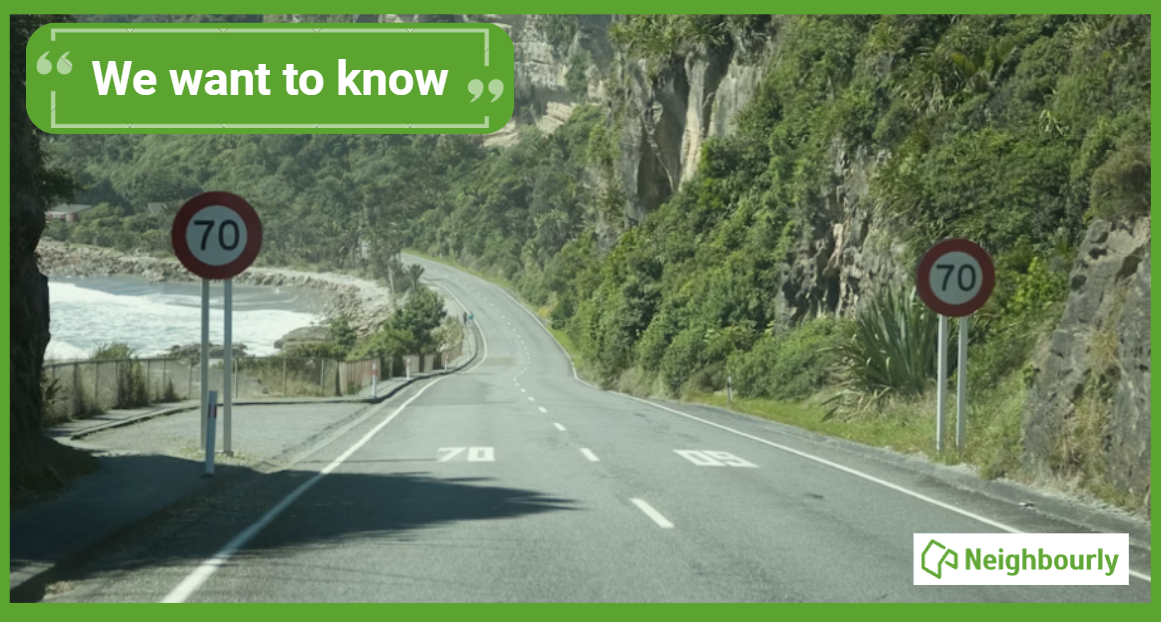
Poll: If we want to reduce speeding, what do you think actually changes driver behaviour? 🛻🚨🚓
In the Post's article on speeding penalties, the question is asked whether speeding fines are truly about road safety, or are they just a way to boost revenue for the Crown?
What do you think? Should speeding motorists receive speeding fines or demerit points?
-
37% The sting of a fine (Money talks!)
-
63% The threat of demerit points (Nobody wants to lose their license!)
Scam Alert: Bank cold calls
ASB is warning customers about reports of cold calls from scammers claiming to be from ASB. These scammers are trying to obtain personal information, including usernames, dates of birth, and verification codes sent to your mobile phone.
🛡️ The "Caller Check" Test
If you get a call from someone claiming to be from ASB and you’re unsure, just ask them for a Caller Check. You will then be able to verify the call through the app.
Remember, banks will:
❌ Never ask for your banking passwords, PINs, or verification codes
❌ Never need to know your full credit card number – especially the CVC
❌ Never ask you to download software or remotely access your device
❌ Never ask you to purchase gift cards or transfer funds.
If you have received a phone call and think your account has been compromised, call ASB on 0800 ASB FRAUD (0800 272 372), or visit your local branch.


Some Choice News!
DOC is rolling out a new tool to help figure out what to tackle first when it comes to protecting our threatened species and the things putting them at risk.
Why does this matter? As Nikki Macdonald from The Post points out, we’re a country with around 4,400 threatened species. With limited time and funding, conservation has always meant making tough calls about what gets attention first.
For the first time, DOC has put real numbers around what it would take to do everything needed to properly safeguard our unique natural environment. The new BioInvest tool shows the scale of the challenge: 310,177 actions across 28,007 sites.
Now that we can see the full picture, it brings the big question into focus: how much do we, as Kiwis, truly value protecting nature — and what are we prepared to invest to make it happen?
We hope this brings a smile!

 Loading…