





Watch out for this pretty flower
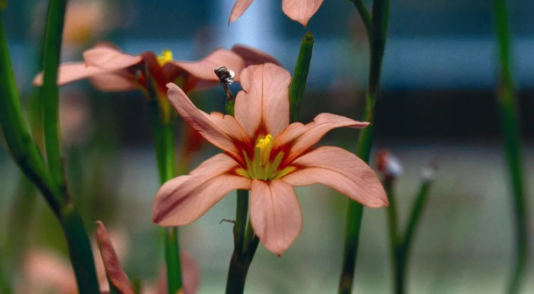
Green thumbs are being asked to watch out for a beautiful but toxic flower that could be growing in their backyards.
What you need to know:
- Every part of the plant is poisonous, and can cause gastroenteritis, thirst, paralysis, blindness, and heart and kidney failure.
- This plant is hardy and normal pest control efforts are often not enough to eradicate.
- The cape tulip, growing up to 90cm high with one strap-like leaf, was introduced to Aotearoa in the 1940s, the Ministry for Primary Industries’ manager for pest management John Sanson said. “Cape tulips, like many of these invasive weeds, are really attractive ornamental species ...but they escape over people’s backyard fences and into pasture, as these things often do,”
- It was classified as a noxious plant in the late 1970s after they were discovered to cause harm to livestock and humans, even killing animals when too much as ingested.
- The salmon-pink flowers bloom for about two days a year between June and December, and have previously been an ornamental species for keen gardeners.
Sanson urged people who believed they had the weed growing on their property to leave it untouched and contact Biosecurity New New Zealand’s Exotic Pest and Disease on 0800 80 99 66.
Once a site was confirmed, manual removal or chemical treatment would start.

Dry cleaners mt Roskill
Hello our fellow neighbors I was hoping someone would know where the old dry cleaners we had up at the lights on dominion road have moved to?? I was out of town and when I came back they were gone .... I had some items that I would really love to get back but if only I new where they moved to or how to get In Touch with the owners to see what they did with our clothes if they closed down or moved elsewhere? Any updates or news about it would be amazing neighbors. Have a great day
Poll: As a customer, what do you think about automation?
The Press investigates the growing reliance on your unpaid labour.
Automation (or the “unpaid shift”) is often described as efficient ... but it tends to benefit employers more than consumers.
We want to know: What do you think about automation?
Are you for, or against?
-
9.4% For. Self-service is less frustrating and convenient.
-
43.6% I want to be able to choose.
-
47.1% Against. I want to deal with people.

Even Australians get it - so why not Kiwis???
“Ten years ago, if a heatwave as intense as last week’s record-breaker had hit the east coast, Australia’s power supply may well have buckled. But this time, the system largely operated as we needed, despite some outages.
On Australia’s main grid last quarter, renewables and energy storage contributed more than 50% of supplied electricity for the first time, while wholesale power prices were more than 40% lower than a year earlier.
[…] shifting demand from gas and coal for power and petrol for cars is likely to deliver significantly lower energy bills for households.
Last quarter, wind generation was up almost 30%, grid solar 15% and grid-scale batteries almost tripled their output. Gas generation fell 27% to its lowest level for a quarter century, while coal fell 4.6% to its lowest quarterly level ever.
Gas has long been the most expensive way to produce power. Gas peaking plants tend to fire up only when supply struggles to meet demand and power prices soar. Less demand for gas has flowed through to lower wholesale prices.”
Full article: www.theguardian.com...
If even Australians see the benefit of solar - then why is NZ actively boycotting solar uptake? The increased line rental for electricity was done to make solar less competitive and prevent cost per kWh to rise even more than it did - and electricity costs are expected to rise even more. Especially as National favours gas - which is the most expensive form of generating electricity. Which in turn will accelerate Climate Change, as if New Zealand didn’t have enough problems with droughts, floods, slips, etc. already.
 Loading…