








New speed cameras could crack down on tailgaters, take photos of drivers using cellphones, not belted in
Speed cameras that take two pictures at different spots in order to work out a vehicle's average speed could be in use within months.
Transport Agency documents say law changes could allow them to be used against more offences including tailgating, and seeing inside a car to spot drivers using cellphones or not belted in.
The OIA papers show Waka Kotahi has been working on this and a new highway tolling system that can also be used for congestion charging, for a couple of years.
Its plans say the point-to-point or average-speed cameras "could be a game changer enabling us to manage corridor speeds rather than spot speed".
They would be three times better than fixed or mobile speed cameras at cutting the road toll, a business case said.
The smart cameras "can be used to provide evidence, for example, that a driver is using a mobile phone or not wearing a seatbelt.
"Camera-based enforcement can be invasive, as images are purposely taken of the driver and passenger compartment," the business case stated.
A board paper from April said law changes under the Regulatory Stewardship Transport Amendment Bill meant from early 2023 there could be use of point-to-point cameras, automation of offence processing and fine notices delivered to cellphones.
Already 26 of the new cameras are on order to add to the 142-strong network.
The agency is calling them "safety cameras" in a Cabinet-ordered attempt "to shift the public away from perceptions that safety cameras are an enforcement, revenue-gathering tool".
Medium and high-risk roads will be the target.
A camera business case estimates they could save between 1500 and 2400 lives and $1.5 billion across two decades.
The privacy implications are still being worked out with the Privacy Commissioner.
Waka Kotahi refuses to specify the total cost of the camera system and new tolling system, saying this was to protect "ministers, members of organisations, officers, and employees from improper pressure or harassment".
However, just the first phase - choosing the mix of cameras, where to put them and the design of the system - costs $21.6m, which is $10m more than expected, though the documents said that had not impacted the whole budget.
Spanish traffic company SICE (Sociedad Ibérica de Construcciones Eléctricas) won the contract for the cameras and tolling.
The work is being done quickly alongside a review of road offence penalties with the aim of saving 114 lives a year by 2030.
As it stands, relatively few cameras per capita and lack of advanced cameras, along with very low penalties for speeding "greatly undermine the effectiveness of the enforcement approach", the papers say.
In New Zealand the speeding fine for being 1-10km/h over the limit in an urban area is $30, compared to $370 in Sweden.
Fines are set to rise and demerit points are very likely to be stiffer, and applied for the first time to camera offences.
Authorities see all this as crucial to the Road to Zero strategy, with cameras expected to provide 5 percent of the 40 percent reduction in road deaths and serious injuries that is the strategy's primary goal.
========================================
At present there are 142 safety cameras across its road network: 45 red-light, 54 fixed speed, and 43 mobile cameras, an increase of 30 since 2019. Waka Kotahi is taking them over from police, adding to its 2000 traffic management cameras. It would not say how many cameras it planned to have.
========================================
"ITS and infrastructure will be future-proofed to enable Waka Kotahi to trial and adopt ... smart cameras" with "built-in intelligent image processing and pattern recognition algorithms [that] allow these cameras to detect motion, measure objects, read vehicle number plates, and recognise human behaviours", the camera business case says.
Police were already testing prototypes of trailers to carry point-to-point speed cameras that might be used at roadworks.
The aim with the network of three types of camera - point-to-point, red light, and standard used in both fixed and mobile operations - is to create an "anywhere, any time" deterrent.
Research shows the public thinks speeding is much safer than it is: 44 percent of all road deaths in the last decade were down to speed.
Privacy implications
=================
On privacy, the business case says "the data and digital images captured by cameras, their storage, and their use all have privacy implications".
"New issues will arise with new technologies that can be used for other than current safety-related purposes, such as average speed and mobile phone use detection."
The agency expects a small rise in public support for cameras of up to 2.5 percent as people see the safety benefits.
On the tolling front, the documents show the current system used on just three highways is on its last legs.
"As it is now, the current tolling system is a very inefficient way of collecting money," the business case said.
One option was to run it to standstill, or outsource it entirely.
The is an indication there will be more tolling: "Over time, it should be expected that the cost of an outsourced service will increase as more roads are tolled."
Waka Kotahi has chosen Spanish company SICE to provide and run all the back office systems.
The business case does not mention congestion charging but the board paper says the upgrade is aimed at "upcoming toll roads as well as to support new capability that may be required, e.g. congestion charging."
====================================================

Poll: 🤖 What skills do you think give a CV the ultimate edge in a robot-filled workplace?
The Reserve Bank has shared some pretty blunt advice: there’s no such thing as a “safe” job anymore 🛟😑
Robots are stepping into repetitive roles in factories, plants and warehouses. AI is taking care of the admin tasks that once filled many mid-level office jobs.
We want to know: As the world evolves, what skills do you think give a CV the ultimate edge in a robot-filled workplace?
Want to read more? The Press has you covered!

-
52.2% Human-centred experience and communication
-
15.1% Critical thinking
-
29.9% Resilience and adaptability
-
2.8% Other - I will share below!

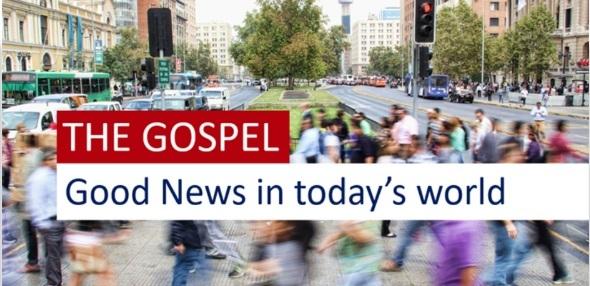
The Gospel’s Relevance Today**
The Gospel, meaning ‘good news’, is the cornerstone of the message contained in the Bible’s first four books—Matthew, Mark, Luke, and John. While these records were written approximately 2,000 years ago, a natural question arises: why is this Gospel still relevant and vital for us today? This analysis seeks to explore what the Bible itself defines as the Gospel and to understand its enduring significance.
**Defining the Gospel: Core Biblical References**
The Gospel is not a vague concept; Scripture provides clear descriptions of its content and focus.
* **The Gospel of the Kingdom:** In Matthew 4:23, as Jesus begins his ministry, he is described as “preaching the gospel of the kingdom.” This immediately establishes that the good news is centrally about a kingdom—the Kingdom of God. His accompanying miracles served to validate the authority of this message.
* **The Gospel of Jesus Christ:** Mark 1:1 opens with, “The beginning of the gospel of Jesus Christ, the Son of God.” Here, “Christ” is a title meaning ‘anointed one’. Thus, the good news is intrinsically about Jesus: his identity as the Anointed One and his unique status as the Son of God.
* **The Gospel of God’s Grace:** In Acts 20:24, the Apostle Paul speaks of his mission to “testify the gospel of the grace of God.” Grace signifies an undeserved gift. This reveals that the Gospel involves a gift from God, offered not because it is merited, but out of His benevolence.
* **The Gospel of Salvation and Peace:** Romans 1:16 declares the Gospel is “the power of God to salvation for everyone who believes,” breaking down barriers between Jew and Gentile (Greek). Furthermore, Romans 10:15 calls it the “gospel of peace,” pointing to a future state of peace brought about by this message.
* **The Gospel Summarised:** 1 Corinthians 15:1-4 provides a foundational summary. Paul reminds believers of the gospel he preached, “by which also you are saved.” He then states its core historical facts: “that Christ died for our sins according to the Scriptures, and that He was buried, and that He rose again the third day according to the Scriptures.” The Gospel is therefore rooted in the sacrificial death and resurrection of Jesus.
In synthesis, the Gospel is the good news of **salvation and future peace in the Kingdom of God**, made possible by **the grace of God** and **the obedient sacrifice of His Son, Jesus Christ**, and offered to all who believe.
**Old Testament Foundations: The Gospel Preached to Abraham**
A crucial question is whether the Gospel is confined to the New Testament. Scripture shows its foundations were laid much earlier. Galatians 3:8 states explicitly that “the Scripture, foreseeing that God would justify the Gentiles by faith, preached the gospel to Abraham beforehand, saying, ‘In you all the nations shall be blessed.’”
This reference points back to Genesis 12:1-3, where God made profound promises to Abraham: to make him a great nation, to bless those who blessed him, and that “in you all the families of the earth shall be blessed.” These promises—later reaffirmed to Isaac and Jacob—form the bedrock of the Gospel hope. The good news of salvation through Christ is the fulfillment of how **all nations** would be blessed through Abraham’s “seed.”
**The Gospel’s Personal Relevance: Good News for You Today**
How does this ancient message become “good news for you” today? The application is clearly outlined in Galatians 3.
* **Access through Faith in Christ:** Galatians 3:26 declares, “For you are all sons of God through faith in Christ Jesus.” The promise made to Abraham is now extended to anyone with faith in Jesus.
* **The Role of Baptism:** Verse 27 explains, “For as many of you as were baptized into Christ have put on Christ.” Baptism is the God-appointed act of faith that identifies a believer with Christ’s death and resurrection.
* **Unity and Inheritance:** Verses 28-29 reveal the glorious outcome: “There is neither Jew nor Greek, there is neither slave nor free, there is neither male nor female; for you are all one in Christ Jesus. And if you are Christ’s, then you are Abraham’s seed, and heirs according to the promise.” Through the Gospel, all barriers are removed; believers become spiritual descendants of Abraham and heirs to the promises of the Kingdom.
This Gospel was once a mystery hidden in God’s purpose (Ephesians 3:3-9). Now, it has been revealed: the unsearchable riches of Christ, offering salvation to all who heed the call, believe the message, and are baptised into him.
**Conclusion: An Enduring and Open Invitation**
The Gospel is far more than a historical account; it is the living, powerful good news of God’s plan for salvation. It is rooted in promises to Abraham, accomplished through the death and resurrection of Jesus Christ, and open to all people without distinction. It offers a tangible hope—the hope of resurrection, peace, and an inheritance in the coming Kingdom of God. This is why the Gospel remains profoundly relevant. It is an invitation to listen, believe, and stand firm in this hope, linking our lives today to the eternal purpose of God.

Share your favourite main crop potato recipe and win a copy of our mag!
Love potatoes? We will give away free copies of the May 2026 issue to readers whose potato recipes are used in our magazine. To be in the running, make sure you email your family's favourite way to enjoy potatoes: mailbox@nzgardener.co.nz, by March 1, 2026.

 Loading…