






New Government rules will require every rental home in New Zealand to have a heater in the living room and an extractor fan in the kitchen and bathroom.
The new requirements are part of the Government's healthy homes standards, announced by Housing Minister Phil Twyford this morning. The Green Party has welcomed the new rules, but the Green Building Council said they were not quite good enough. National said the cost of the new rules would ultimately be born by tenants. The standards set minimum requirements for heating, insulation, ventilation, moisture and drainage, as well as rules to stop draughts, in all residential rental properties across the country. From mid-2021, all rental homes will be required by law to have a heater that can heat a main living area to 18C. Kitchens and bathrooms will have to have extraction fans or rangehoods and, where rental homes have an enclosed subfloor space, property owners will need to install a ground moisture barrier to stop moisture rising into the home. Twyford said the new rules were some of the "most important public health changes the Government could make". "Nearly 600,000 households rent in New Zealand, and our rental stock is of poorer quality than owner-occupied homes." He said it was estimated about 200,000 families lived in rental homes that did not have ceiling or underfloor insulation.
"The Ministry of Health says 6000 children are admitted each year for 'housing-sensitive hospitalisations'."
He said these children had been found to be nearly four times more likely to be re-hospitalised and 10 times more likely to die in the following 10 years. "We cannot continue to accept this." A commitment to ending "energy poverty" by ensuring every New Zealander had a warm, dry, secure home was part of the Labour/Greens supply and confidence agreement. The Greens welcomed the news; co-leader Marama Davidson saying New Zealand's housing standards were not fit for purpose. "I am thrilled that as part of our Confidence and Supply Agreement, the Green Party have worked with Labour to achieve a major increase in standards required for a healthy home."
National housing spokeswoman Judith Collins said with the State House waiting list now topping 10,000 for the first time, the last thing the Labour Government should be doing was making it more expensive to rent.
"More cost on landlords will be passed on to tenants." But Green Building Council boss Andrew Eagles said Twyford's announcement was not quite good enough. He said Housing New Zealand homes wouldn't fall under the standards for another four years and that was too late. "New Zealand has waited way too long for moves like the one today, and there's no time to waste to improve the sorry state of all our rental homes." Eagles also said there was a lack of detail around some of the more important issues, such as droughts and heat. From July 2021, private landlords must ensure their rental properties comply with the standards. All Housing New Zealand houses and registered Community Housing Providers houses must comply with the healthy home standards by July 2023. By July 2024, all rental homes must comply with the new standards.
The new required standards
=======================
• Heating: Rental homes must have a fixed heating device that can heat the living room to 18C.
• Insulation: Ceiling and underfloor insulation must either meeting the 2008 building code, or have a minimum thickness of 120mm
• Ventilation: Windows in the living room, dining room, kitchen and bedrooms must be operable and extractor fans must be in rooms with a bath or shower, on indoor cooktop.
• Moisture and drainage: If a rental property has an enclosed subfloor, it must have a ground moisture barrier if it's possible to install one.
• Draughts: Landlords must stop any unnecessary gaps or holes in walls, ceilings, windows, floors, and doors that cause noticeable draughts. All unused chimneys and fireplaces must be blocked.
===========================================================

Scam Alert: Bank cold calls
ASB is warning customers about reports of cold calls from scammers claiming to be from ASB. These scammers are trying to obtain personal information, including usernames, dates of birth, and verification codes sent to your mobile phone.
🛡️ The "Caller Check" Test
If you get a call from someone claiming to be from ASB and you’re unsure, just ask them for a Caller Check. You will then be able to verify the call through the app.
Remember, banks will:
❌ Never ask for your banking passwords, PINs, or verification codes
❌ Never need to know your full credit card number – especially the CVC
❌ Never ask you to download software or remotely access your device
❌ Never ask you to purchase gift cards or transfer funds.
If you have received a phone call and think your account has been compromised, call ASB on 0800 ASB FRAUD (0800 272 372), or visit your local branch.
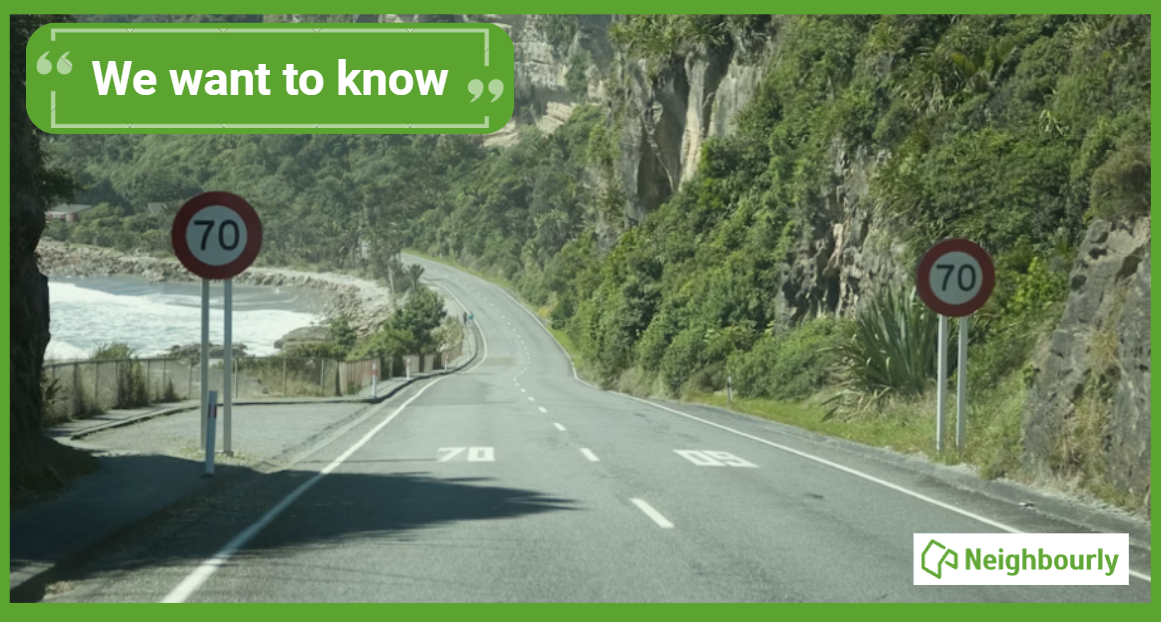
Poll: If we want to reduce speeding, what do you think actually changes driver behaviour? 🛻🚨🚓
In the Post's article on speeding penalties, the question is asked whether speeding fines are truly about road safety, or are they just a way to boost revenue for the Crown?
What do you think? Should speeding motorists receive speeding fines or demerit points?
-
36.5% The sting of a fine (Money talks!)
-
63.5% The threat of demerit points (Nobody wants to lose their license!)

Some Choice News!
DOC is rolling out a new tool to help figure out what to tackle first when it comes to protecting our threatened species and the things putting them at risk.
Why does this matter? As Nikki Macdonald from The Post points out, we’re a country with around 4,400 threatened species. With limited time and funding, conservation has always meant making tough calls about what gets attention first.
For the first time, DOC has put real numbers around what it would take to do everything needed to properly safeguard our unique natural environment. The new BioInvest tool shows the scale of the challenge: 310,177 actions across 28,007 sites.
Now that we can see the full picture, it brings the big question into focus: how much do we, as Kiwis, truly value protecting nature — and what are we prepared to invest to make it happen?
We hope this brings a smile!

 Loading…