








Creating a buzz: Glendene, Auckland
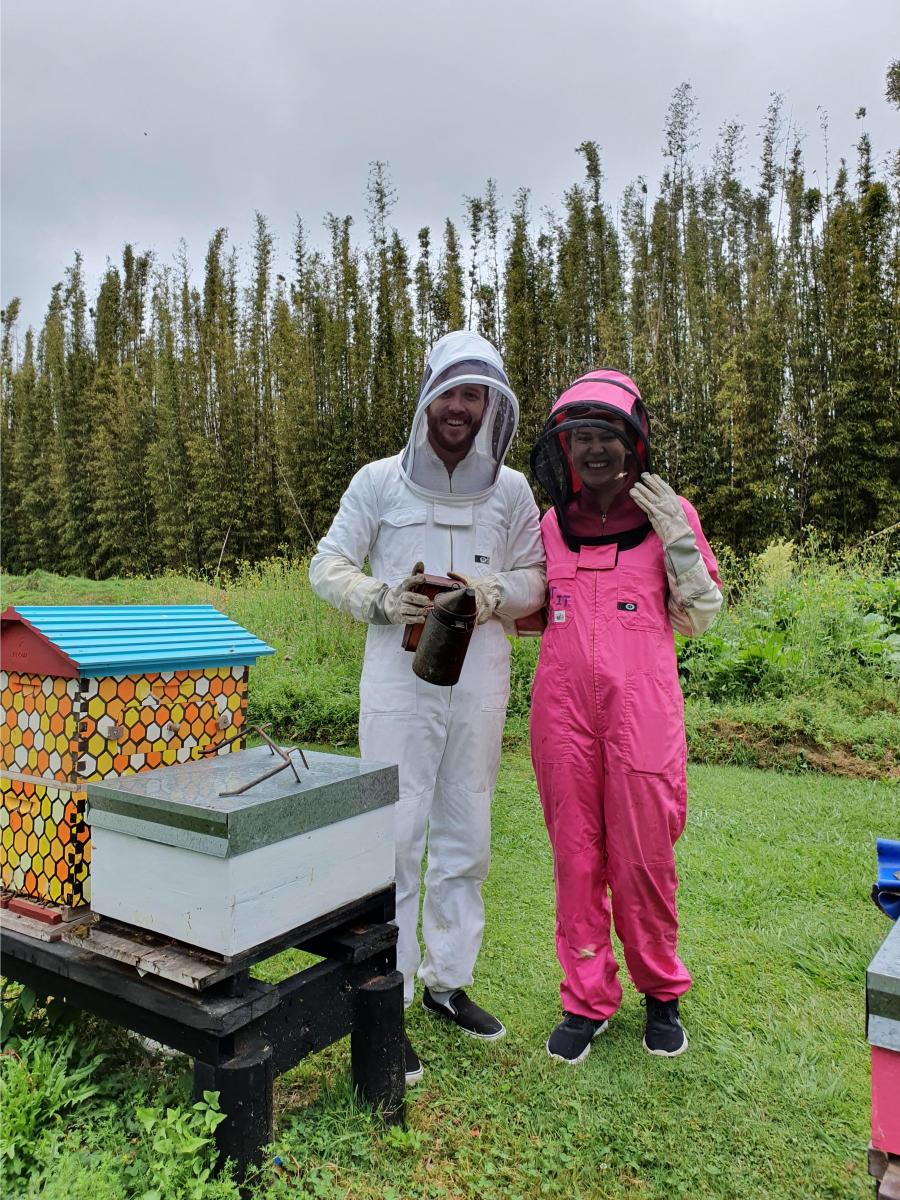
Ellen Parker admits she used to shun insects.
But now she is the confident custodian of thousands of bees.
"Normally I'm not really a fan of insects and flying things," said Parker, a medical receptionist.
"But when I started to learn more, I realised they're not out to sting you. They're out there doing their own thing and they're pretty tame."
The Glendene resident and partner Alexander Jones have drawn a flock of followers to their Instagram page @verygoodbeeco, which documents their beekeeping journey.
The 28-year-olds bought their first hive in November 2019 after delving into a beekeeping experience course in Matakana.
"We really enjoyed it and decided to take the plunge," Jones said.
The fact that the entire hive can function as one brain is incredible, he said.
"... bees are essential parts of the life cycle of many plants and therefore life on earth, so being able to contribute to that definitely provides a bit of a feel-good aspect to it."
The keen apiarists last week spent an hour watching the bees from a beanbag fronting the hive.
"It's strangely therapeutic," Jones said.
A fascination with flying is echoed in the West Auckland couple's careers.
Jones is an aircraft technician and Parker, a former flight attendant.
The goal is to keep the operation small.
"For us on a hobby scale and the way we've established our hive, we're not thrashing the bees to get every drop of honey out of them like on a commercial scale," Jones said.
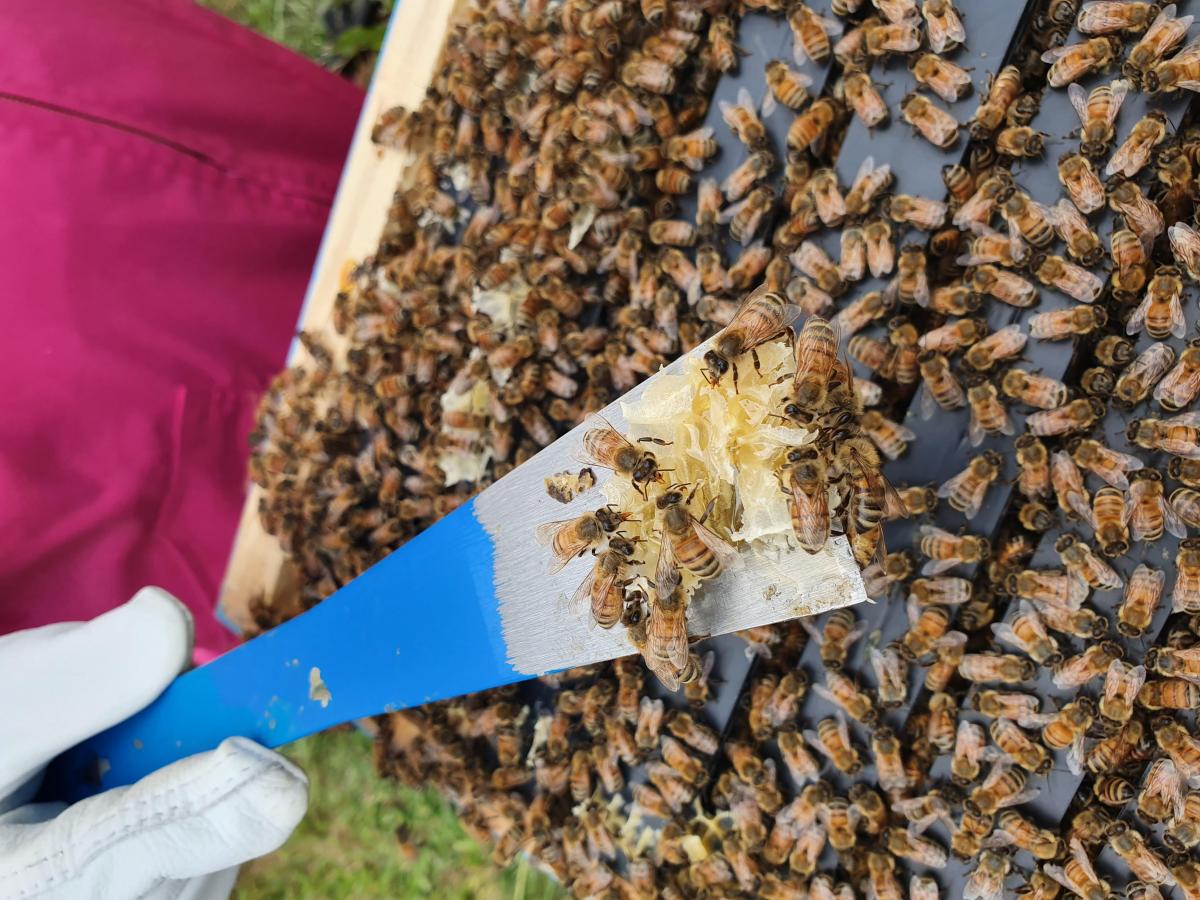
Any honey and wax produced by their bees is purely a bonus, he said.
The couple has found it rewarding to turn the products into beard wax, a honey and sugar scrub and beeswax food wraps.
Jones and Parker have been flooded with orders for Christmas presents.
"We give our neighbours honey and stuff to say thanks for putting up with us," Jones said.
He confesses there have been days when he questioned if beekeeping was a good idea.
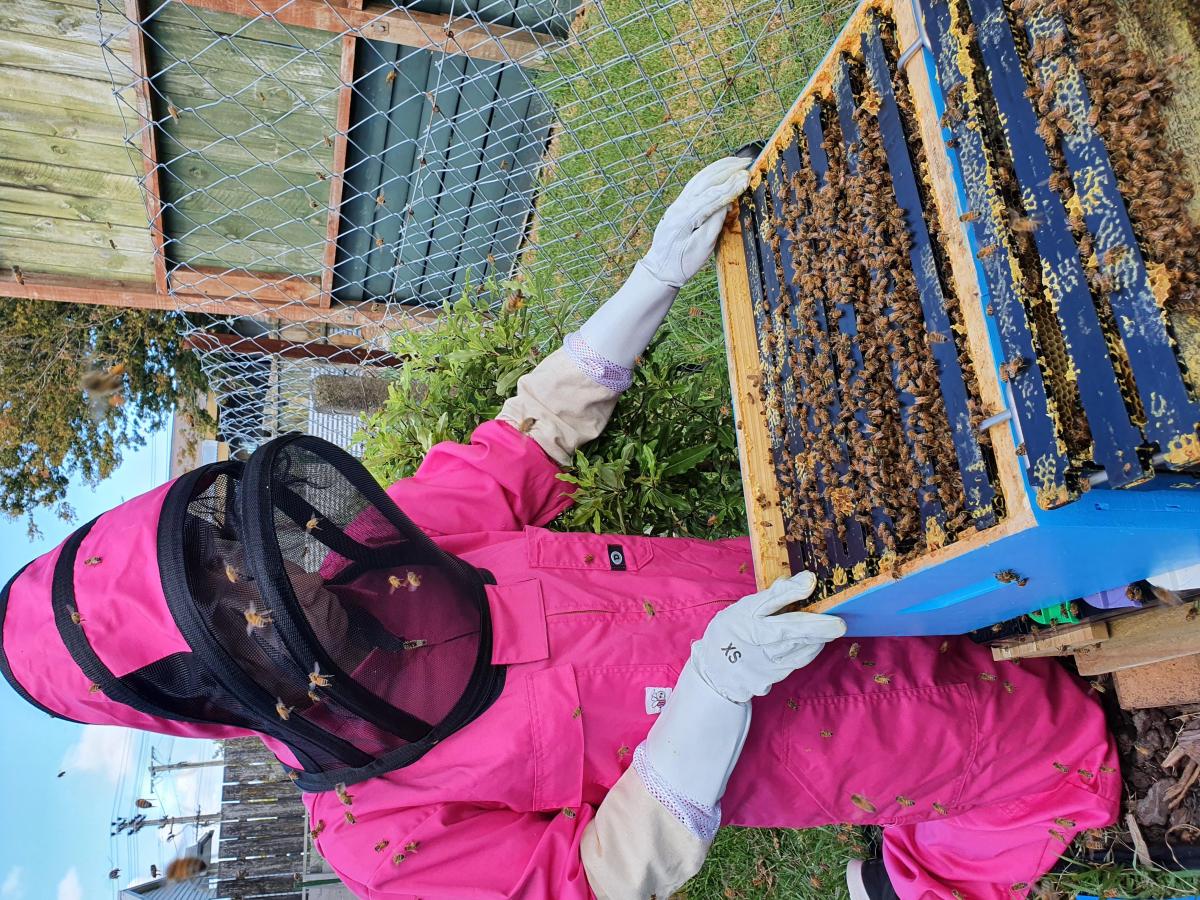
When the honey farmers first brought the hive home, they made the mistake of inspecting it on a cloudy day when most occupants were home.
The bees grew angry and launched a stinging attack on their new owners.
"They were bouncing off our suits," Parker said.
"You think of bees, which are focused on foraging, being stuck at home when someone comes lifts the roof off their house and starts shaking it around," Jones said.
"They'd prefer it to happen while they're away at work."
The budding apiculturists have to inspect the bees for signs of infestations, mites and wax moths.
Jones said they are battling their way through swarm season- the bees' natural instinct to propagate when flowers and bees start to wake from a long winter.
The apiculturists have learned the hard way that swarm prevention is critical at this time of year.
This can be done by giving hives enough space, splitting a hive to almost simulate a swarm and to prevent them raising a new queen, he said.
"We were a bit slow to read the signs and a couple of days before we planned to split our hive (to prevent a swarm), our hive swarmed into the neighbour's tree," Jones said.
"We then managed to find the swarming queen and return her to a spare hive we had ready for the split."
The honey farmers carried out the hive split and the bees returned to their hives an hour later.
"We were pretty embarrassed and stressed by the whole thing, but it has offered us plenty of learning and lessons for the rest of the season and onto the next," Jones said.
Nature has taken its course and a new queen has hatched in the new hive.
Jones said that out of respect to their neighbours, the couple will give the hive to interested friends.
"We'd love to manage a hive for them to see if they want to take the hobby up themselves."
"The original hive seems to be behaving again and has started their honey production."

Poll: Should the government levy industries that contribute to financial hardship?
As reported in the Post, there’s a $30 million funding gap in financial mentoring. This has led to services closing and mentors stepping in unpaid just to keep helping people in need 🪙💰🪙
One proposed solution? Small levies on industries that profit from financial hardship — like banks, casinos, and similar companies.
So we want to hear what you think:
Should the government ask these industries to contribute?

-
60.8% Yes, supporting people is important!
-
23.8% No, individuals should take responsibility
-
15.4% ... It is complicated

Night-time chipsealing works on SH2
From 9 to 17 February, stop/go traffic management will be in place on SH2 between McPherson Road and Dimmock Road on multiple nights between 9pm and 5am (Sundays to Thursdays).
During the day, all lanes will be open, but speed restrictions will apply to allow the chipseal to set and to protect vehicles travelling over the newly laid surface.
There may be delays to your journey when travelling through the area. This is weather dependent so check NZTA Journey Planner before you travel.


A Neighbourly Riddle! Don’t Overthink It… Or Do?😜
Do you think you know the answer? Simply 'Like' this post if you know the answer and the big reveal will be posted in the comments at 2pm on the day!
If you multiply this number by any other number, the answer will always be the same. What number is this?

 Loading…