






Pets will now be allowed to travel on Auckland's trains following two trials and a survey of train customers.
Stacey van der Putten, Group Manager of Metro Services says the majority of people who completed the survey, support having pets on trains, with only 12 per cent opposed. "Our customers have really enjoyed being able to take their fur companions on the trains. Pet owners have been very supportive of the protocols that have been put in place to allow this initiative to happen." Councillor Cathy Casey has been the main advocate for pets on trains and she is delighted that the trial has become permanent. "This is another fantastic step towards making Auckland a more dog-friendly city. We are finally catching up with the great cities of Europe where pets are welcomed on all forms of public transport." Pets can go on trains between nine in the morning and three in the afternoon and after 6:30 at night. They can travel all-day on weekends and on public holidays. All dogs must either be wearing an approved muzzle and lead or can be travelling in an approved pet carrier.
Full details and conditions
======================
Pets can only travel on trains at off-peak times (9am-3pm and 6.30pm-end of service on weekdays, and all-day weekends and public holidays)
======================
All dogs must either be wearing an approved muzzle and lead or can be travelling in an approved pet carrier
======================
Domestic pets are to be enclosed in a suitable pet carrier that is small enough to be stored securely under the seat or held on the passenger's lap
======================
Passengers travelling with domestic pets are responsible for their pet and must keep them caged and under control at stations, getting on or off the train, and while onboard trains
======================
Passengers travelling with domestic pets are responsible for all pet mess and must ensure that any pet mess is cleaned up before they get off the train
=========================
Passengers may be refused entry to board the train if the train is crowded
========================
Passengers may be asked to leave the train with their domestic pet if the animal is causing or likely to cause a safety risk or nuisance to other customers
========================
Domestic pets travel free of charge on our services.
========================================================

Scam Alert: Bank cold calls
ASB is warning customers about reports of cold calls from scammers claiming to be from ASB. These scammers are trying to obtain personal information, including usernames, dates of birth, and verification codes sent to your mobile phone.
🛡️ The "Caller Check" Test
If you get a call from someone claiming to be from ASB and you’re unsure, just ask them for a Caller Check. You will then be able to verify the call through the app.
Remember, banks will:
❌ Never ask for your banking passwords, PINs, or verification codes
❌ Never need to know your full credit card number – especially the CVC
❌ Never ask you to download software or remotely access your device
❌ Never ask you to purchase gift cards or transfer funds.
If you have received a phone call and think your account has been compromised, call ASB on 0800 ASB FRAUD (0800 272 372), or visit your local branch.
Poll: If we want to reduce speeding, what do you think actually changes driver behaviour? 🛻🚨🚓
In the Post's article on speeding penalties, the question is asked whether speeding fines are truly about road safety, or are they just a way to boost revenue for the Crown?
What do you think? Should speeding motorists receive speeding fines or demerit points?
-
36.7% The sting of a fine (Money talks!)
-
63.3% The threat of demerit points (Nobody wants to lose their license!)

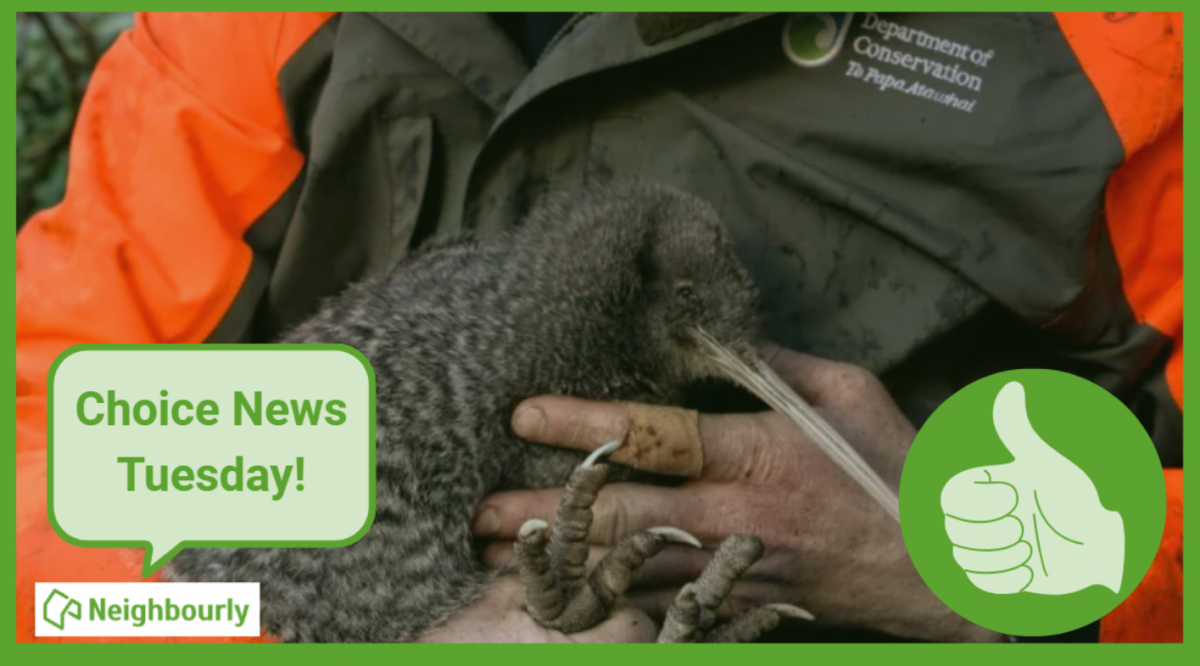
Some Choice News!
DOC is rolling out a new tool to help figure out what to tackle first when it comes to protecting our threatened species and the things putting them at risk.
Why does this matter? As Nikki Macdonald from The Post points out, we’re a country with around 4,400 threatened species. With limited time and funding, conservation has always meant making tough calls about what gets attention first.
For the first time, DOC has put real numbers around what it would take to do everything needed to properly safeguard our unique natural environment. The new BioInvest tool shows the scale of the challenge: 310,177 actions across 28,007 sites.
Now that we can see the full picture, it brings the big question into focus: how much do we, as Kiwis, truly value protecting nature — and what are we prepared to invest to make it happen?
We hope this brings a smile!
 Loading…