







Police seize eight dirt bikes after spike in driving offences
Police have impounded eight dirt bikes after a spate of dangerous driving in Manukau and Bucklands Beach.
Counties Manukau police have issued a warning to dirt bike riders to exercise caution after three separate incidents.
Three dirt bikes and two road bikes were seized on Sunday after people reported a group of riders hitting Musick Point in Bucklands Beach.
When police arrived on the scene, some riders dumped their bikes in the bushes and fled on foot.
Officers found five bikes, one of them stolen, with the help of from Howick Golf Course players and members of the community.
A young person was stopped at the scene and police enquiries are ongoing to identify the other bikers.
On Friday, police confiscated a quad bike after it was seen ripping up turf at Walter Massey Park.
The incident was reported to the council and more action is likely, police said.
On February 16, a quad bike rider without a helmet was injured after he crashed in Yates Rd, Mangere.
Police found a man with significant injuries being treated by ambulance staff at a house nearby.
Officers impounded two bikes from the address and said charges are likely.
People have reported dirt bikers getting injured after crashing into cars in Otara and Mangere Bridge in the past week.
During one incident, a male cyclist without a helmet drove through a red light in Otara and smashed into another vehicle, police said.
He suffered moderate injuries and was taken to hospital.
Counties Manukau policing manager inspector Kay Lane said it is only a matter of time before one of the riders is killed.
“In general these dirt bike riders show little regard for their own safety or the safety of those around them on the roads," Lane said.
“We are continuing to see riders put themselves and other motorists in significant danger by driving recklessly, carrying out dangerous stunts and failing to wear helmets.
Police are appealing to the bikers to stop putting themselves and other road users at risk.
"It may seem like fun until one of your mates is seriously hurt," said Lane.
It is illegal to ride a dirt bike on the road unless it is roadworthy with a current warrant and registration, police said.
Anyone riding a bike with an engine capacity above 50cc must have a motorbike licence.
Police are calling on parents and family members to make sure the bikers, some of them youths, are driving safely and wearing helmets.
“The last thing we want is to have to knock on your door and tell you that your loved one has been killed or seriously injured in a crash," Lane said.
Investigations are continuing into the Waitangi Day mass cavalcade of 170 bikes as officers review CCTV footage.
If you have footage of dirt bike riders driving dangerously, you can upload it here: dirtbike.nzpolice.org...
Email DL_CMSCU@police.govt.nz or call 105 with any information.
You can also phone Crimestoppers anonymously on 0800 555 111.
Have you seen dirt bike riders behaving badly in your neighbourhood?
What have you seen?
*Please put NFP if you do not want your comments used by Stuff.
Photographer: Robyn Edie: Dirt Bike Riders (file photo)


Poll: Should the government levy industries that contribute to financial hardship?
As reported in the Post, there’s a $30 million funding gap in financial mentoring. This has led to services closing and mentors stepping in unpaid just to keep helping people in need 🪙💰🪙
One proposed solution? Small levies on industries that profit from financial hardship — like banks, casinos, and similar companies.
So we want to hear what you think:
Should the government ask these industries to contribute?

-
60.9% Yes, supporting people is important!
-
23.5% No, individuals should take responsibility
-
15.6% ... It is complicated

Night-time chipsealing works on SH2
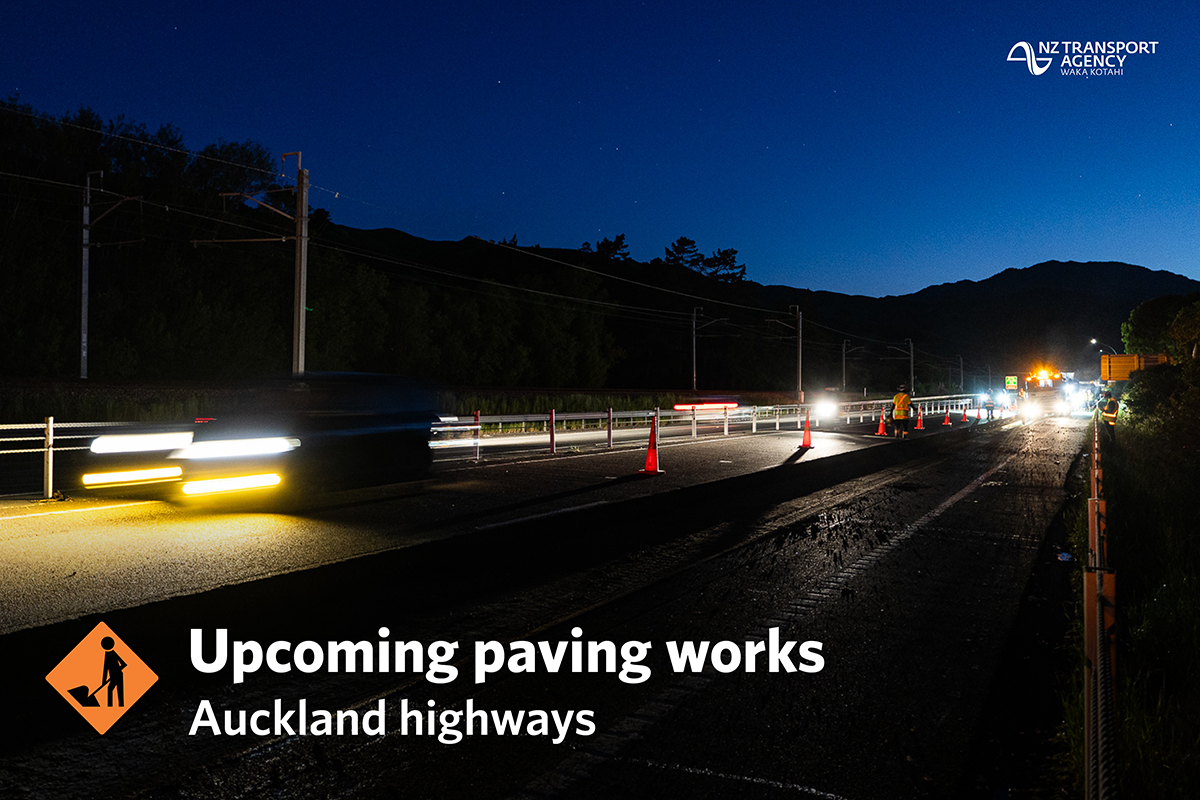
From 9 to 17 February, stop/go traffic management will be in place on SH2 between McPherson Road and Dimmock Road on multiple nights between 9pm and 5am (Sundays to Thursdays).
During the day, all lanes will be open, but speed restrictions will apply to allow the chipseal to set and to protect vehicles travelling over the newly laid surface.
There may be delays to your journey when travelling through the area. This is weather dependent so check NZTA Journey Planner before you travel.

Seen, Unseen, and Still Serving — Before We Speak: The Measure of Our Responsibility and Trust!
Why work, mental health, public service, and respect demand a deeper understanding of sympathy and empathy as we embody the body of Christ and bear witness to others?
At first glance, the debate surrounding working from home versus working in the office appears to centre on efficiency, accountability, and organisational performance. Yet, such a framing remains insufficient. At a deeper level, this debate reveals something far more searching about how society understands work, how it speaks about those who serve within complex systems, and how readily empathy is extended when suffering is not immediately visible.
Too often, public discourse proceeds as though all workers experience labour in identical ways, as though personal circumstances are uniform, and as though human resilience is inexhaustible. In opposition to this, Scripture resists such flattening of experience. More precisely, humanity is portrayed as embodied and relational, entrusted with meaningful labour rather than labour that overwhelms or diminishes dignity, as stated in Genesis 2:15.1 From this standpoint, when work is discussed without attentiveness to context, power, and vulnerability, harm inevitably follows.
For many individuals, working from home has enabled continued participation in employment that might otherwise have become unsustainable. Of particular note, reduced commuting demands, increased flexibility, and greater capacity to attend to health and caregiving responsibilities have allowed people to remain engaged rather than excluded. Viewed in this way, remote work has not constituted indulgence but survival. On this basis, the biblical call to bear one another’s burdens is not theoretical but profoundly practical, as stated in Galatians 6:2.
Set against this, it must also be recognised that working in the office continues to carry relational and communal significance. It is worth noting that physical presence allows trust to emerge through ordinary interaction, mentoring to develop organically, and concern to be perceived before distress escalates into crisis. Within such settings, the workplace may function as a site of shared responsibility rather than surveillance. In parallel, Scripture affirms this relational vision, reminding communities that formation occurs not merely through shared task but through shared life, as stated in Acts 2:42 – 47.
At this point, a more confronting question arises. Put plainly, how readily are judgments formed about experiences never personally encountered? By extension, how frequently are circumstances interpreted through one’s own lens rather than approached with a willingness to understand another’s? At this juncture, the wisdom tradition speaks directly into this tendency, urging restraint in speech and attentiveness in listening, as stated in James 1:19. Absent such restraint, debates about work move beyond disagreement and begin to wound those already carrying exhaustion, grief, or quiet struggle.
In answer to this, traditions that prioritise listening and discernment offer a necessary corrective. Notably, the New Zealand National Baptist Hui of 2024 and 2025, convened in accordance with commitments to collective reflection and shared responsibility, were grounded in the conviction that wisdom emerges through attentive presence, humility, and openness to diverse perspectives. Practically speaking, these gatherings prioritised shared discernment and prayerful listening, thereby modelling a form of community that resists efficiency as its primary value. Within this framework, difference was approached with care rather than suspicion, and herein lies a challenge to contemporary workplaces and public discourse alike. Taken together, such an approach affirms that understanding is formed relationally rather than transactionally. In turn, these hui offer a compelling example of how communities may be shaped by humility, restraint, and mutual regard rather than assumption or control.2
With this in mind, the manner in which public servants are spoken about demands particular care. Over recent years, many within the public service have endured sustained pressure, heightened scrutiny, and a marked erosion of respect from members of the public. In effect, such roles require absorbing frustration and hostility directed at systems over which individual employees hold limited control, while simultaneously maintaining professionalism, neutrality, and restraint. As a result, these conditions impose an undue and unnecessary emotional burden upon those whose labour exists for the benefit of the wider community.
Beyond this, public servants operate within constraints rarely visible from the outside. Specifically, legislative frameworks, political direction, confidentiality obligations, and persistently high workloads shape daily practice, often amid limited resources and minimal margin for error. Importantly, evidence from the Public Service Commission confirms that significant proportions of public servants experience ongoing work-related stress and mental health strain. On that note, these findings are not abstractions. Rather, they represent people who continue to serve faithfully while carrying responsibility for outcomes that affect the well-being of communities and the nation as a whole.
Within this reality, assumptions that working in the public service is easy require gentle but honest correction. For those who hold such views, placing oneself within these roles would offer a sobering and necessary perspective, as only lived experience reveals the intensity of the work, the constraints under which it is performed, and the moral weight such responsibilities carry. In that light, public servants do not merely complete tasks. Instead, such roles require acting ethically and professionally at all times, upholding the Privacy Act and a wide range of government legislation, the scope of which varies according to department and sector. Moreover, many public servants are sworn under a secrecy oath, binding them to protect sensitive information, internal processes, and the public trust, even in the face of misunderstanding or criticism. Furthermore, ethical integrity is consistently required, including the declaration of any actual, potential, or perceived conflicts of interest, such as when family members are employed within the public service, and this obligation must be upheld with full professionalism at all times.
In fulfilling these obligations, responsibility is borne for people, information, and decisions that shape the life of communities and the country, often under considerable pressure and with limited freedom to respond publicly. Within these constraints, public servants are frequently able to disclose the stress arising from their roles only to a trusted counsellor, bound by confidentiality and professional care, and not within their own family.
Alongside these demands, another reality remains largely unspoken. Namely, confidentiality and non-disclosure requirements frequently prevent public servants from speaking openly about workplace experiences. As a consequence, inaccurate narratives are often left unchallenged. Silence, however, is easily misinterpreted. Here again, Scripture cautions against such misjudgement, reminding readers not to assess one another by outward appearance alone, as stated in 1 Samuel 16:7.
Nor, importantly, does the impact of public service necessarily conclude when employment ends. Instead, transitioning out of such roles can prove difficult, as skills developed within complex public systems are not always readily recognised elsewhere. At the same time, many former public servants continue to live with the mental health consequences of prolonged stress, including burnout and anxiety, while carrying the fear of being questioned about why employment ceased or has not resumed. In such moments, even casually posed enquiries may reopen wounds that remain unresolved.
Consequently, a persistent cultural assumption endures that working for the government is easy or insulated from harm. To maintain such a view, however, is to overlook the intensity, constraint, and moral responsibility inherent in public service. On the other hand, such assumptions often fail to recognise the degree of trust and honesty upon which public service depends, without realising that public servants can be trusted to act with integrity, including where such individuals serve wholeheartedly in their ministry roles voluntarily as well, even when their work is misunderstood or unseen. In reality, these roles uphold systems that sustain education, health, justice, social support, and democratic trust. Through such labour, communities are shaped, the vulnerable are protected, and society is enabled to function.
In light of the above, the present conversation demands more than opinion. Rather, it calls for inward examination and outward care. Specifically, it calls for sympathy that acknowledges suffering, empathy that seeks understanding, and love demonstrated not merely through words but through restraint, reflection, and action. Equally, it calls for resistance to boundaries that isolate, exclude, or silence, particularly when such barriers deepen loneliness rather than foster community.
Finally, the question is not whether working from home or working in the office is preferable. Instead, the more pressing question concerns how one chooses to speak, judge, and respond. Most importantly, if life appears easy from a distance, then perhaps the invitation is to step into another’s shoes rather than to speak from afar. Nevertheless, such a posture requires humility, attentiveness to inward thought, and love enacted through outward expression.
Let’s allow this discomfort to form us, for such unease often marks the beginning of greater understanding and demands sympathy, empathy, and support, calling us decisively towards unity and shared responsibility
Thank - you.
Atua (God) Bless.
** Please check out the article below, which I have published on Substack: substack.com... .
 Loading…