




Blessing scam
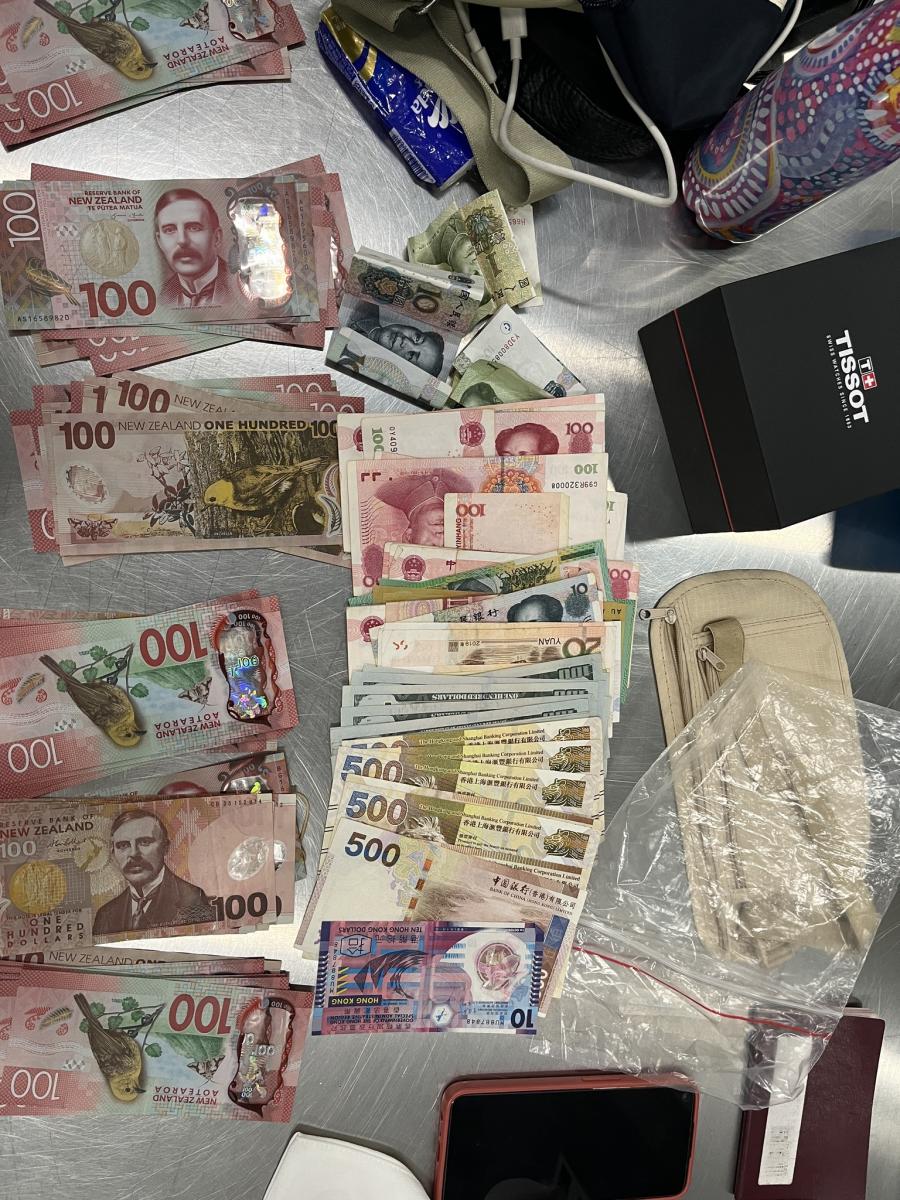
Three suspected scammers have been arrested trying to leave New Zealand with a large quantity of cash from their alleged victims.
A 50-year-old man and two women, 59 and 53, were arrested at Auckland International Airport yesterday by detectives from the Auckland City Financial Crime Unit. The trio, all Chinese nationals, were arrested just before they checked in for their flights to China.
They arrived in New Zealand on 10 October. Police alleged that two days later, they began operating a blessing scam – a form of fraud targeting immigrant or elderly communities who are deceived into believing they or their loved ones are cursed or in spiritual danger.
Police have jointly charged the three suspects with two counts of obtaining by deception. The charges relate to two victims – one who lost $14,500 and jewellery and another who lost $15,000.
The accused were remanded in custody following their arrest and are due to appear in the Auckland District Court today. Police are continuing to tally the money that has been recovered, but it is a substantial amount.
Perpetrators of blessing scams pose as healers or spiritual practitioners, offering to remove the curse or bring good fortune in exchange for money or valuable items. Victims are pressured to hand over cash or jewellery, typically instructed not to open the packages they receive, only to later discover that the contents are worthless.
While the Financial Crime Unit has identified two victims so far, it’s highly likely more people were targeted.
We urge anyone who may have fallen victim to this scam to contact us and encourage members of New Zealand’s Chinese community to talk with elderly relatives and make a report if they have been scammed.
If you have any information that could help our enquiries, please contact us at 105.police.govt.nz... or call 105.
In New Zealand, blessing scams have predominantly targeted Chinese communities, exploiting cultural beliefs in spiritual healing and curses. This type of fraud has been active in New Zealand for more than 15 years, with a notable rise in cases in Auckland in recent years.
Police have continued to raise awareness within at-risk communities, yet these fraudulent activities persist, often carried out by well-coordinated groups.
Police remain committed to protecting all members of the public from fraud and financial harm, and ensuring that everyone feels safe from deceptive practices.
We encourage the community to stay vigilant against scams and to remain cautious when approached by individuals offering unsolicited services.
If you suspect that you may have fallen victim to a scam, please contact Police via 105 immediately.


Time to Tickle Your Thinker 🧠
If a zookeeper had 100 pairs of animals in her zoo, and two pairs of babies are born for each one of the original animals, then (sadly) 23 animals don’t survive, how many animals do you have left in total?
Do you think you know the answer? Simply 'Like' this post and we'll post the answer in the comments below at 2pm on the day!
Want to stop seeing these in your newsfeed? No worries! Simply head here and click once on the Following button.

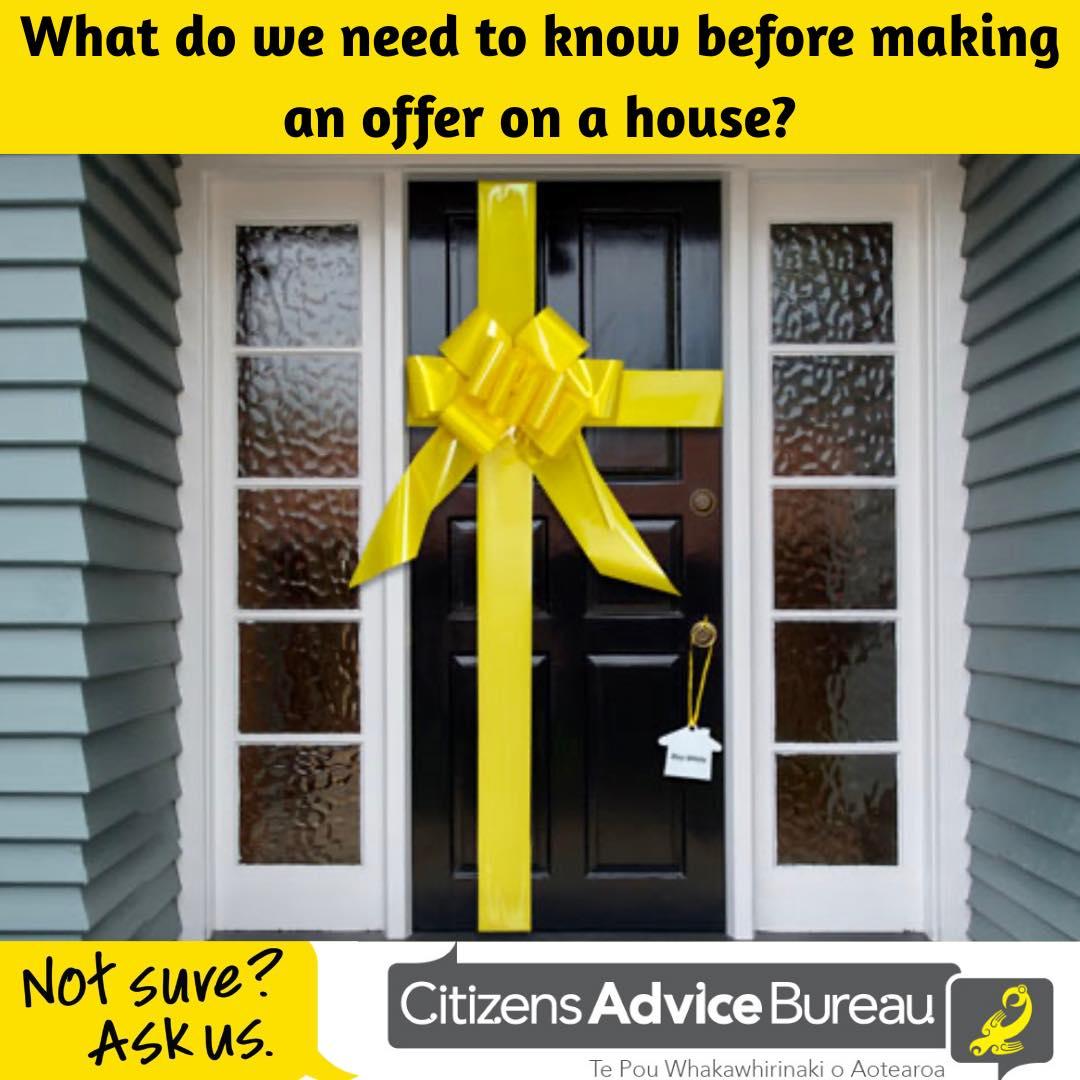
Here's what you need to know before making an offer on a house
🏠 What is the neighbourhood like?
Familiarise yourself with the neighbourhood, to check accessibility to public transport, schools and shops. Visit the street at different times of day, to find out how quiet or noisy it gets. Check with the local council whether they know of any future developments in the area that could increase noise or traffic.
🏠 How much are the rates and insurance?
Do a property search on the local council’s website to see what the rates are.
You can also get quotes from insurers to find out what it might cost to insure it.
Check whether the homeowner is paying off the cost of installing insulation or heating units through their rates, because you will inherit that debt if you buy the house.
🏠 For a unit title, check the pre-contract disclosure
If the property is on a unit title development (for example, an apartment), ask to see the pre-contract disclosure. This is basic information about the unit and the unit title development.
🏠 Get a LIM (Land Information Memorandum) report
A LIM report tells you everything the local council knows about the land and the buildings, for example, what building consents and code compliance certificates they have issued for work done on the property.
🏠 Pre-purchase building inspection
Get an independent building inspector to examine the house thoroughly and look for potential problems with weather-tightness, wiring, plumbing or the foundations (piles).
Ask them to check for features that might make maintenance more difficult. For example, some types of wall claddings need specialist knowledge to maintain, access to the gutters might not be straightforward, and retaining walls can be expensive to repair.
🏠 Check the property title
Ask a lawyer or conveyancer to check the property title for things like easements. For example, an easement might allow a neighbour to access part of the property. The property title should also confirm the property boundary.
More information is on the Settled website:
www.settled.govt.nz...
Image credit: Ray White New Zealand
Info credit: Citizens Advice Bureau: cab.org.nz

Poll: As a customer, what do you think about automation?
The Press investigates the growing reliance on your unpaid labour.
Automation (or the “unpaid shift”) is often described as efficient ... but it tends to benefit employers more than consumers.
We want to know: What do you think about automation?
Are you for, or against?
-
9.5% For. Self-service is less frustrating and convenient.
-
43.3% I want to be able to choose.
-
47.2% Against. I want to deal with people.
 Loading…