




BEWARE: Scammers impersonating Police taking advantage of vulnerable, older people
Police are aware of reports emerging overnight where people have received a phone call from someone claiming to be a Police officer.
The officer will claim to be from a particular department, tell you that you have been a victim of fraud or scam, and begin to try and obtain further financial information from you.
People have been directed to go to the bank and withdraw money for evidence of the scam.
This is a scam – no legitimate Police officer will ever ask you to hand over money for any reason.
Overnight we have had five instances of this being reported, people need to be vigilant.
Enquiries into reports of scams of a similar nature received last week remain ongoing.
We appreciate these scammers are convincing, but New Zealand Police will never contact you and ask you to withdraw money. New Zealand Police will also never contact people seeking their banking details, card numbers, PIN or passwords.
Older members of our community are being targeted and Police urge anyone with elderly or vulnerable relatives to make them aware this activity is a scam.
There are instances where legitimate Police officers will contact you as part of their duties.
Remember:
• Police will never ask for details about your bank cards, PIN or passwords over the phone.
• Trust your instincts.
• If something doesn't feel right, or is too good to be true, it probably is.
• If you are uncertain, ask for the officer’s details.
• Hang up, contact 105 and request the officer to contact you.
• Police aren’t in the business of offering prize money.
If you are in the unfortunate position of being a victim of a scam, please report the matter to Police.
Take the chance to upskill yourself on scam awareness, check for further information on the Netsafe website: netsafe.org.nz...

Time to Tickle Your Thinker 🧠
If a zookeeper had 100 pairs of animals in her zoo, and two pairs of babies are born for each one of the original animals, then (sadly) 23 animals don’t survive, how many animals do you have left in total?
Do you think you know the answer? Simply 'Like' this post and we'll post the answer in the comments below at 2pm on the day!
Want to stop seeing these in your newsfeed? No worries! Simply head here and click once on the Following button.

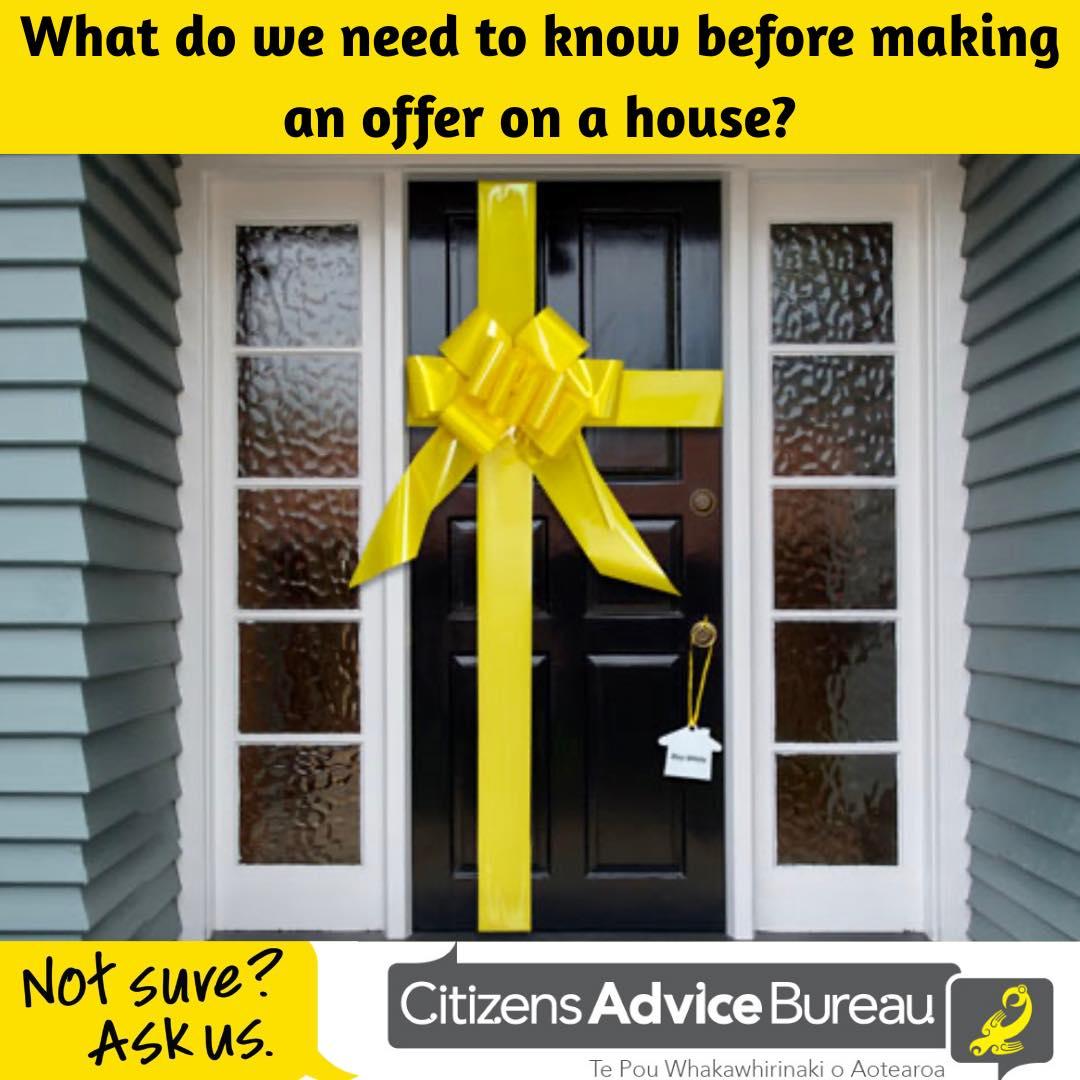
Here's what you need to know before making an offer on a house
🏠 What is the neighbourhood like?
Familiarise yourself with the neighbourhood, to check accessibility to public transport, schools and shops. Visit the street at different times of day, to find out how quiet or noisy it gets. Check with the local council whether they know of any future developments in the area that could increase noise or traffic.
🏠 How much are the rates and insurance?
Do a property search on the local council’s website to see what the rates are.
You can also get quotes from insurers to find out what it might cost to insure it.
Check whether the homeowner is paying off the cost of installing insulation or heating units through their rates, because you will inherit that debt if you buy the house.
🏠 For a unit title, check the pre-contract disclosure
If the property is on a unit title development (for example, an apartment), ask to see the pre-contract disclosure. This is basic information about the unit and the unit title development.
🏠 Get a LIM (Land Information Memorandum) report
A LIM report tells you everything the local council knows about the land and the buildings, for example, what building consents and code compliance certificates they have issued for work done on the property.
🏠 Pre-purchase building inspection
Get an independent building inspector to examine the house thoroughly and look for potential problems with weather-tightness, wiring, plumbing or the foundations (piles).
Ask them to check for features that might make maintenance more difficult. For example, some types of wall claddings need specialist knowledge to maintain, access to the gutters might not be straightforward, and retaining walls can be expensive to repair.
🏠 Check the property title
Ask a lawyer or conveyancer to check the property title for things like easements. For example, an easement might allow a neighbour to access part of the property. The property title should also confirm the property boundary.
More information is on the Settled website:
www.settled.govt.nz...
Image credit: Ray White New Zealand
Info credit: Citizens Advice Bureau: cab.org.nz

Poll: As a customer, what do you think about automation?
The Press investigates the growing reliance on your unpaid labour.
Automation (or the “unpaid shift”) is often described as efficient ... but it tends to benefit employers more than consumers.
We want to know: What do you think about automation?
Are you for, or against?
-
9.5% For. Self-service is less frustrating and convenient.
-
43.4% I want to be able to choose.
-
47.1% Against. I want to deal with people.
 Loading…