






Unit pricing – the secret to saving at the supermarket
Have you ever found yourself standing in a supermarket aisle wondering which size packet offers the better deal? Throw in some products on special, and it’s easy to feel baffled.
Once you know about unit prices though, you won’t need to do any tricky supermarket maths ever again. And it’s easy to learn how to use unit pricing.
The unit price is the smaller money amount that usually sits at the bottom of the price tag. It shows you how much the product costs per unit of measure. The measure could be per kilogram or litre or per item for example. When you use the unit price, you can see how much you’re paying per egg, per nappy or per 100 sheets of toilet paper.
Here's what the unit price looks like:
=============================
Supermarkets that have a floor space of more than 1,000m2 have had to display unit prices on the shelves since August 2024. From 31 August 2025, they will also have to display unit prices online.
But supermarkets aren’t the only ones that have to show unit prices. Unit pricing has to be shown at any store over 1,000m2 that sells food from the following 10 categories.
Bread
Dairy products
Eggs or egg products
Fruit
Vegetables
Meat
Fish
Rice
Sugar
Manufacturer-packaged food.
There’s a list of units of measure that the stores must use depending on the type of product. For example, meat must be priced per kilogram and drinks per litre.
Some products don’t have to display unit pricing. These include alcohol, tobacco and flowers.
How unit pricing is helping shoppers save
=================================
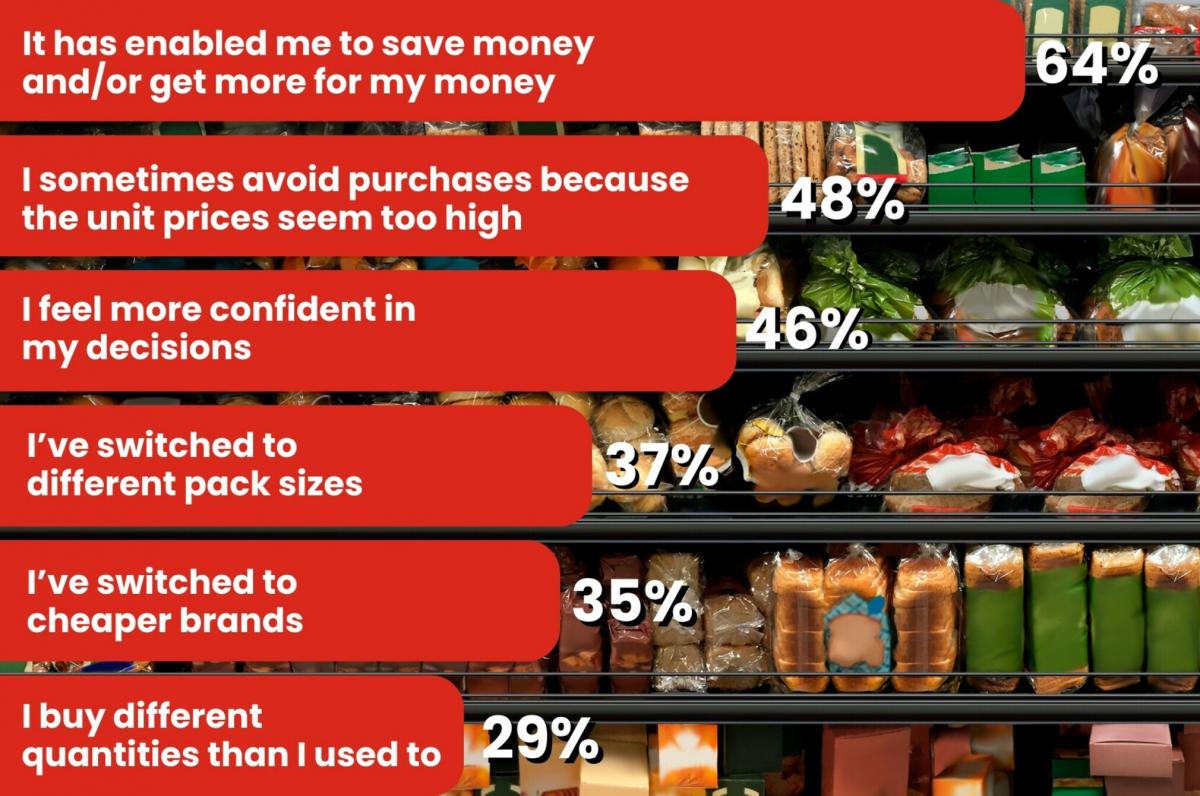
Once you learn about unit pricing, it can be really useful when you do your grocery shopping. It can help you work out which products offer the best value. From a survey we conducted on unit pricing, 64% of respondents said unit pricing helped them save money. Nearly half said they feel more confident doing their shopping because of unit pricing.
Here’s a snapshot of how people said unit pricing is helping them:
=====================================================
Unit pricing survey
Here’s what some survey respondents said about using unit pricing.
“I always use the unit price. Products on special are not necessarily the best value.”
“I use the unit price, for example, on tinned tomatoes, as the product is pretty much the same from one brand to another.”
The unit price dictates what I buy as I’m on a very strict budget.”
How to use unit pricing and save money
================================
We asked our survey respondents when they found unit pricing most helpful. Here are some of the most common scenarios people told us about.
1. When something is on special
Supermarkets have so many specials because they know it makes us more likely to add the ‘special’ item to our trolleys. Unit pricing helps you look past the promotion and find the real bargain.
2. When a product comes in different sizes
Imagine you’re trying to work out which pack of toilet paper to buy – the decision might be between a 4-pack, a 6-pack or an 8-pack. Unit pricing lets you see how much you’ll pay per 100 sheets. Of course, you might still want to take ply into account, but it’s easier to see which product gives you more bang for your buck.
3. When the packaging has changed
Shrinkflation is the word used to describe when a company downsizes its product without bringing the price down. It’s easy to keep going for the same product you’ve always bought without noticing there’s a difference in how much is inside the packaging. This is where unit pricing can help. By keeping an eye on unit pricing, we can see how the price of our favourites compares with the price of similar products.
4. When there are too many options
The supermarket can be a confusing place – think of the cheese section for example. There are blocks, slices and bags of grated cheese from various brands. Unit pricing cuts through the confusion to show you the most budget-friendly options.
5. When buying in bulk
When you’re buying in bulk, you might think it will be cheaper to get the biggest package size available. But this isn’t always the case – and a lot of people told us they discovered this when they started looking at unit prices. Bulk-buy bins, where you bag your own ingredients, can also sometimes be more expensive than buying a packet from the shelf.
Here are some other ways you could use unit pricing to help you save money.
===============================================
6. Comparing products within the supermarket
Unit pricing isn’t just for comparing the products you see in front of you on the shelf. Instead of buying a fresh vegetable, you could see how much you’d pay for the same amount frozen. Or instead of buying fresh fruit for baking, you could see if it’s cheaper buying fruit in a can.
7. Comparing the same product at different supermarkets
Unit pricing is also a good tool for comparing products between supermarkets because they don’t always stock the same size of a product. If you check out the unit prices on different supermarkets’ websites, you might decide it’s worth shopping around.
Extra tips for using unit pricing
=========================
New World, Pak’nSave and Woolworths’ websites let you sort products by unit price. This makes it easy to choose the product with the best value.
You may get tripped up both instore and online when the measure used for the same product is different. For example, the unit price for dishwasher tablets is sometimes displayed as ‘per tablet’ or ‘per 100 tablets’.
Supermarkets are actually following the unit pricing rules here. Some products have a cut-off point of 40 items – if the packet contains more than 40 of an item, it should display the unit price per 100 rather than per actual item.
======================================================

The Gospel’s Relevance Today**
The Gospel, meaning ‘good news’, is the cornerstone of the message contained in the Bible’s first four books—Matthew, Mark, Luke, and John. While these records were written approximately 2,000 years ago, a natural question arises: why is this Gospel still relevant and vital for us today? This analysis seeks to explore what the Bible itself defines as the Gospel and to understand its enduring significance.
**Defining the Gospel: Core Biblical References**
The Gospel is not a vague concept; Scripture provides clear descriptions of its content and focus.
* **The Gospel of the Kingdom:** In Matthew 4:23, as Jesus begins his ministry, he is described as “preaching the gospel of the kingdom.” This immediately establishes that the good news is centrally about a kingdom—the Kingdom of God. His accompanying miracles served to validate the authority of this message.
* **The Gospel of Jesus Christ:** Mark 1:1 opens with, “The beginning of the gospel of Jesus Christ, the Son of God.” Here, “Christ” is a title meaning ‘anointed one’. Thus, the good news is intrinsically about Jesus: his identity as the Anointed One and his unique status as the Son of God.
* **The Gospel of God’s Grace:** In Acts 20:24, the Apostle Paul speaks of his mission to “testify the gospel of the grace of God.” Grace signifies an undeserved gift. This reveals that the Gospel involves a gift from God, offered not because it is merited, but out of His benevolence.
* **The Gospel of Salvation and Peace:** Romans 1:16 declares the Gospel is “the power of God to salvation for everyone who believes,” breaking down barriers between Jew and Gentile (Greek). Furthermore, Romans 10:15 calls it the “gospel of peace,” pointing to a future state of peace brought about by this message.
* **The Gospel Summarised:** 1 Corinthians 15:1-4 provides a foundational summary. Paul reminds believers of the gospel he preached, “by which also you are saved.” He then states its core historical facts: “that Christ died for our sins according to the Scriptures, and that He was buried, and that He rose again the third day according to the Scriptures.” The Gospel is therefore rooted in the sacrificial death and resurrection of Jesus.
In synthesis, the Gospel is the good news of **salvation and future peace in the Kingdom of God**, made possible by **the grace of God** and **the obedient sacrifice of His Son, Jesus Christ**, and offered to all who believe.
**Old Testament Foundations: The Gospel Preached to Abraham**
A crucial question is whether the Gospel is confined to the New Testament. Scripture shows its foundations were laid much earlier. Galatians 3:8 states explicitly that “the Scripture, foreseeing that God would justify the Gentiles by faith, preached the gospel to Abraham beforehand, saying, ‘In you all the nations shall be blessed.’”
This reference points back to Genesis 12:1-3, where God made profound promises to Abraham: to make him a great nation, to bless those who blessed him, and that “in you all the families of the earth shall be blessed.” These promises—later reaffirmed to Isaac and Jacob—form the bedrock of the Gospel hope. The good news of salvation through Christ is the fulfillment of how **all nations** would be blessed through Abraham’s “seed.”
**The Gospel’s Personal Relevance: Good News for You Today**
How does this ancient message become “good news for you” today? The application is clearly outlined in Galatians 3.
* **Access through Faith in Christ:** Galatians 3:26 declares, “For you are all sons of God through faith in Christ Jesus.” The promise made to Abraham is now extended to anyone with faith in Jesus.
* **The Role of Baptism:** Verse 27 explains, “For as many of you as were baptized into Christ have put on Christ.” Baptism is the God-appointed act of faith that identifies a believer with Christ’s death and resurrection.
* **Unity and Inheritance:** Verses 28-29 reveal the glorious outcome: “There is neither Jew nor Greek, there is neither slave nor free, there is neither male nor female; for you are all one in Christ Jesus. And if you are Christ’s, then you are Abraham’s seed, and heirs according to the promise.” Through the Gospel, all barriers are removed; believers become spiritual descendants of Abraham and heirs to the promises of the Kingdom.
This Gospel was once a mystery hidden in God’s purpose (Ephesians 3:3-9). Now, it has been revealed: the unsearchable riches of Christ, offering salvation to all who heed the call, believe the message, and are baptised into him.
**Conclusion: An Enduring and Open Invitation**
The Gospel is far more than a historical account; it is the living, powerful good news of God’s plan for salvation. It is rooted in promises to Abraham, accomplished through the death and resurrection of Jesus Christ, and open to all people without distinction. It offers a tangible hope—the hope of resurrection, peace, and an inheritance in the coming Kingdom of God. This is why the Gospel remains profoundly relevant. It is an invitation to listen, believe, and stand firm in this hope, linking our lives today to the eternal purpose of God.


Poll: 🤖 What skills do you think give a CV the ultimate edge in a robot-filled workplace?
The Reserve Bank has shared some pretty blunt advice: there’s no such thing as a “safe” job anymore 🛟😑
Robots are stepping into repetitive roles in factories, plants and warehouses. AI is taking care of the admin tasks that once filled many mid-level office jobs.
We want to know: As the world evolves, what skills do you think give a CV the ultimate edge in a robot-filled workplace?
Want to read more? The Press has you covered!

-
52.5% Human-centred experience and communication
-
14.8% Critical thinking
-
29.6% Resilience and adaptability
-
3.1% Other - I will share below!
Room for rent
🌿 Beautiful Private Space Available for Rent – Perfect for 2 Girls or a Couple 🌿
Located in the peaceful and family-friendly suburb of Lynfield, this warm and welcoming home offers a comfortable living space in a highly sought-after top school zone.
✨ What’s Included:
🏡 2 Spacious Bedrooms
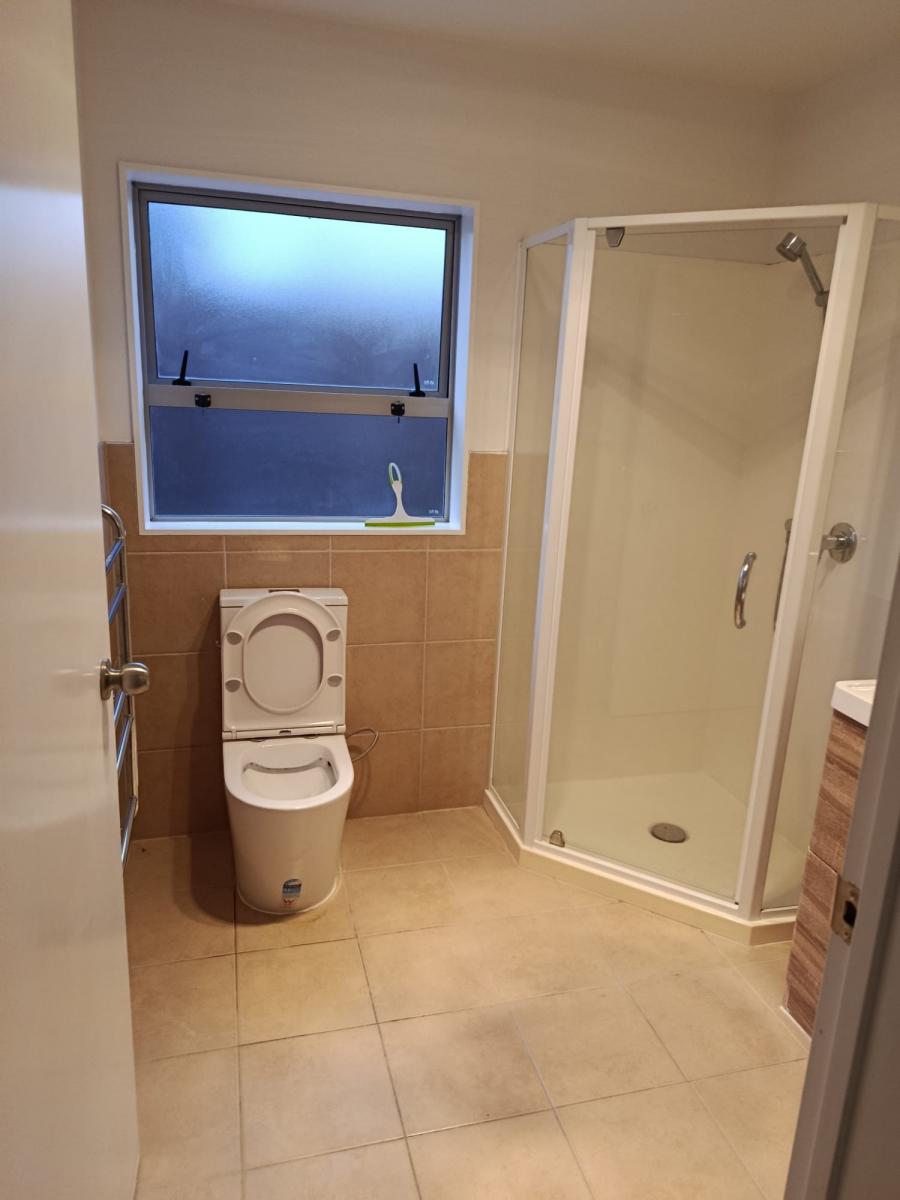
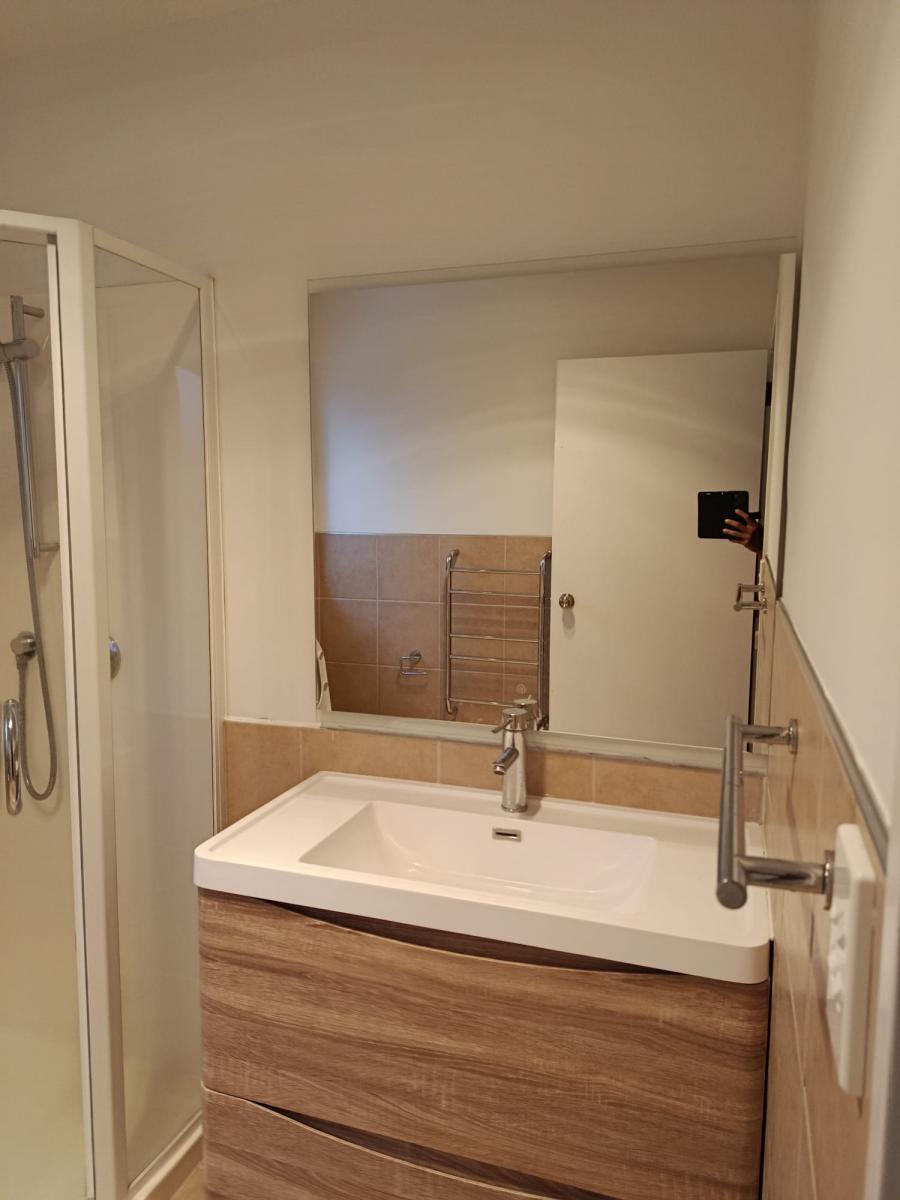
🛁 Private Bathroom
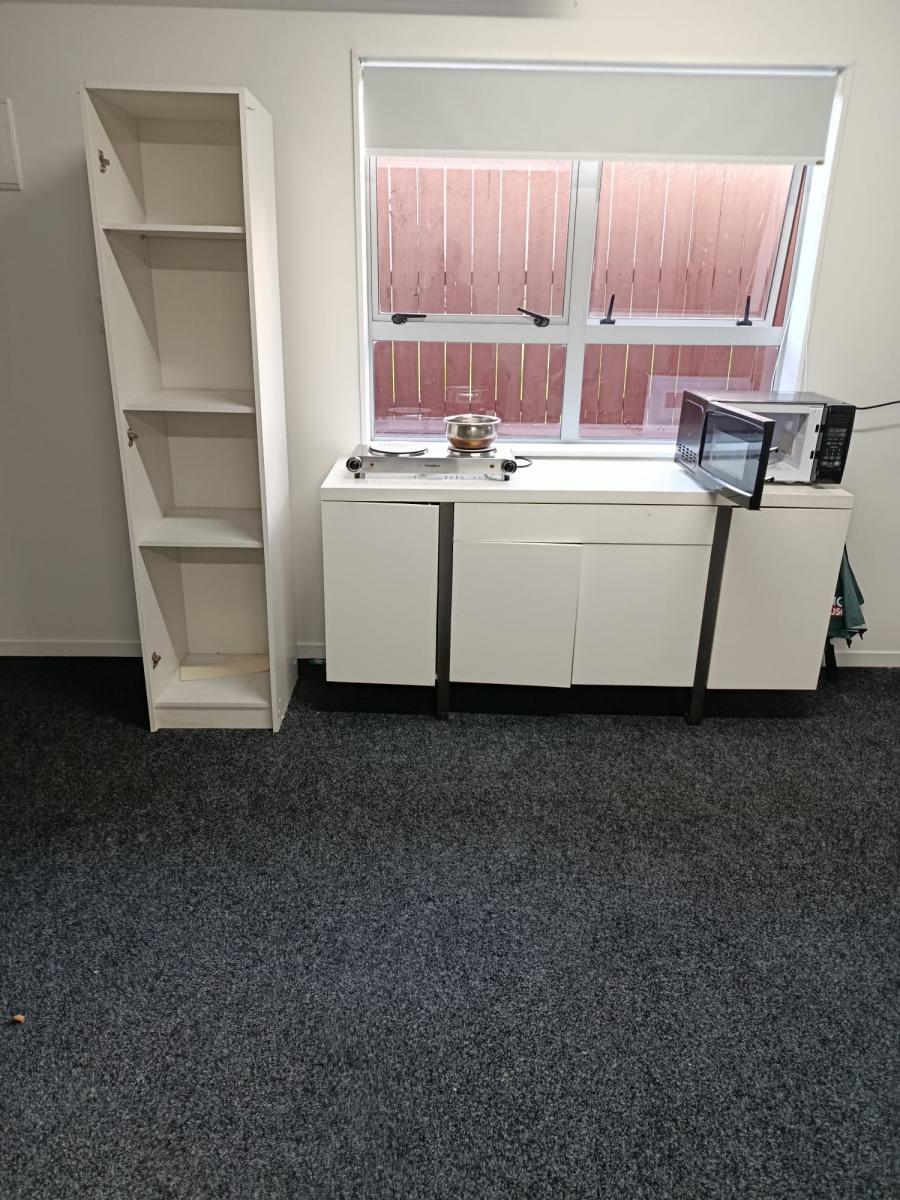
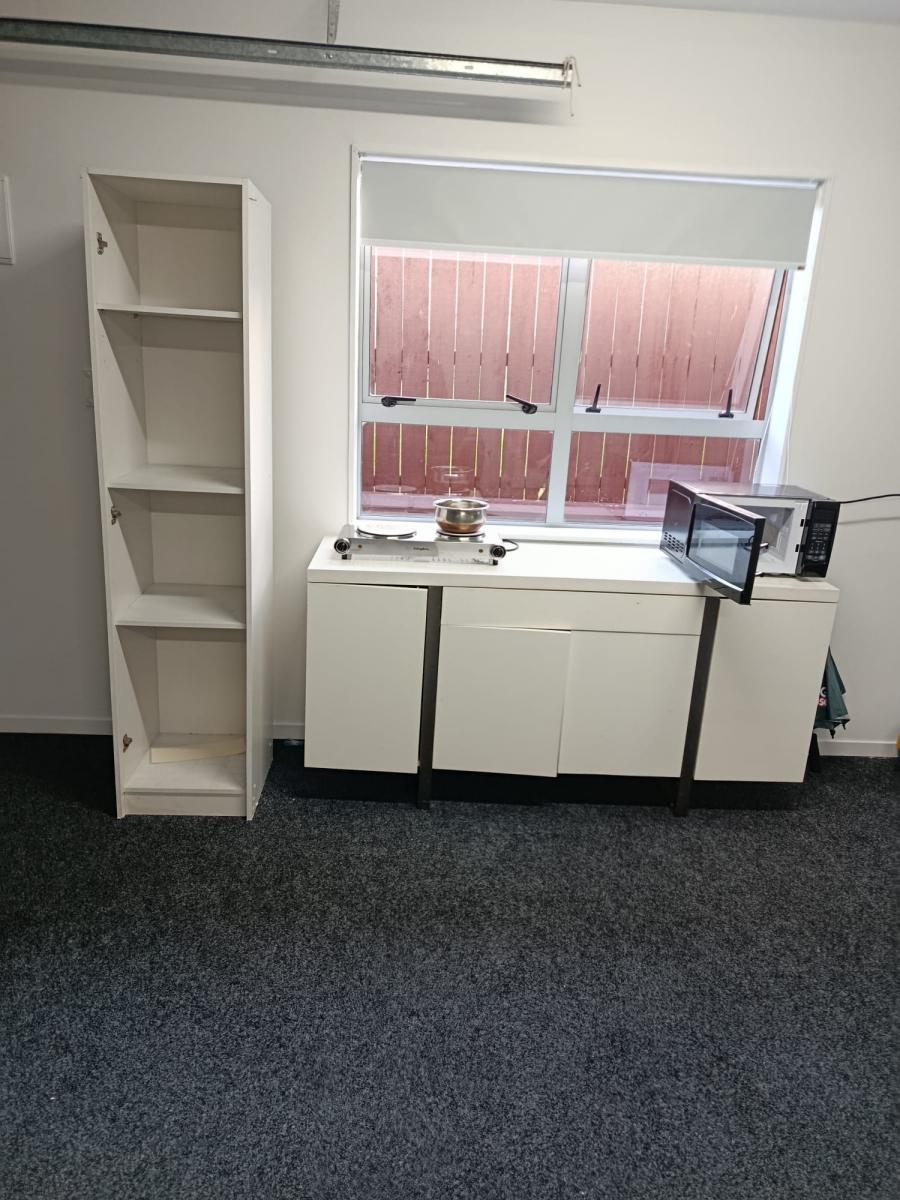
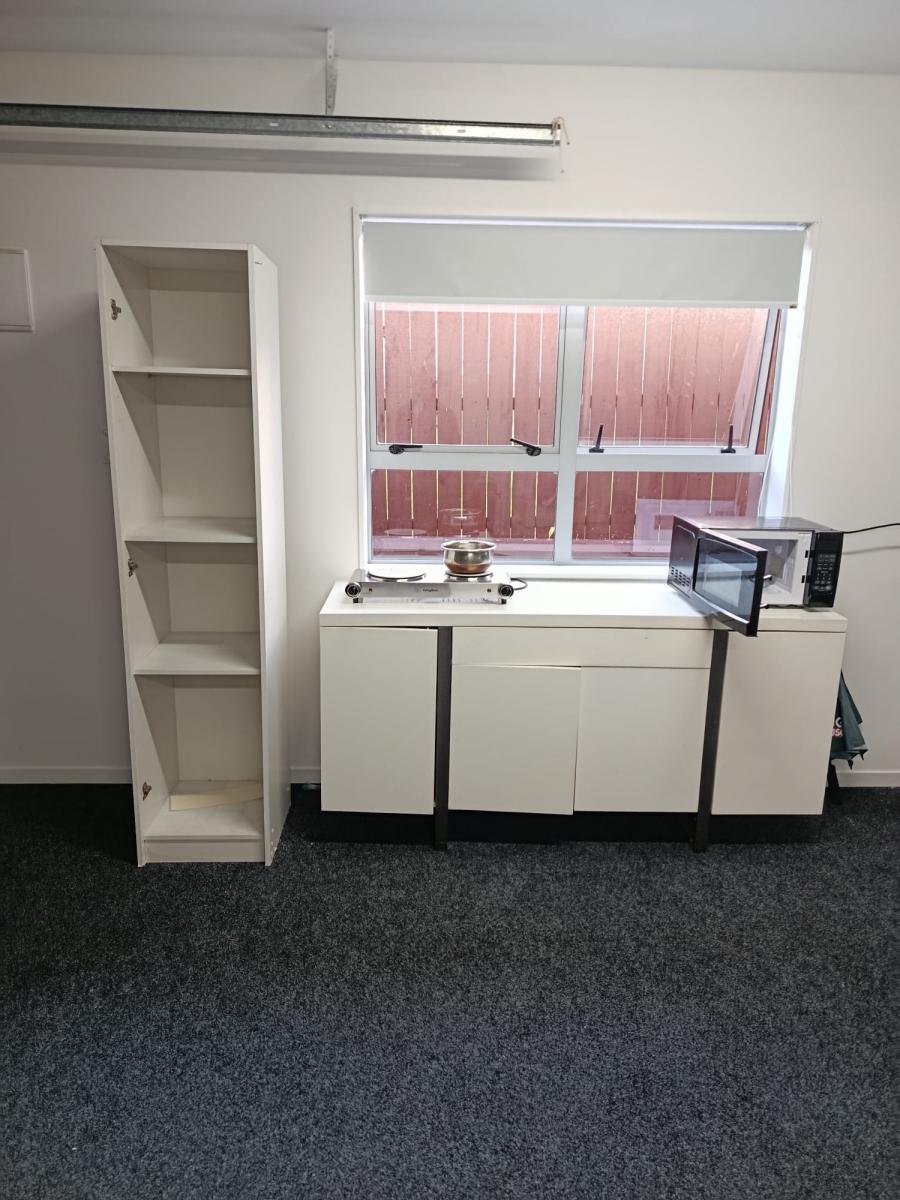
🍳 Separate Kitchen
🛏️ 1 Bed with Mattress
🔥 Stove
📟 Microwave
Unlimited WiFi included
✔ Power & water included
✔ Bus stop in front of the house
✔ Nearby shops and supermarkets
This setup is ideal for two girls or a couple looking for a quiet, safe, and relaxed place to call home.
🌸 Enjoy living in a serene neighbourhood with a friendly community atmosphere, while still being conveniently close to schools, shops, and transport.
If you're looking for comfort, privacy, and a peaceful lifestyle — this could be your perfect new home 💛
📍 Location: Lynfield, Auckland
📩 Message for more details or to arrange a viewing. For couple $450 for one bedroom. $600 for the 2 bedroom and kitchen and bathroom. Feel free to contact me on 022-422-0145 for any other details









 Loading…