







Top tips for a hassle-free holiday
Are you planning your next getaway? Organising a holiday is exciting, but the journey itself can sometimes be a little overwhelming. To ensure your trip is smooth from start to finish, here are some top tips from the travel experts at You, Me and Friends to help you avoid common travel pitfalls and enjoy a carefree vacation.
Before You Go
============
Know your luggage and its contents
=============================
Before you zip up your suitcase, it’s helpful to make a list of your contents in a notebook or on your phone. Taking a few quick photos of both the outside and inside of your luggage is also beneficial. If your bags are lost or delayed, having a written or visual record makes it easier to recover or replace your belongings.
Make copies of your documents
==========================
It’s a good idea to keep all your essential travel documents - passport, tickets, and itineraries - in one easily accessible folder or wallet. You may want to scan these documents and store them digitally on your email or an app. Having backups ensures that even if something goes missing, you won’t be left stranded.
Choose the right travel insurance for you
=================================
It’s worth spending time finding the right travel insurance policy that fits your needs and the places you’re heading. And of course, remember to double check the fine print to avoid any surprises! Look for coverage that includes things like medical emergencies, repatriation flights, trip cancellations, and lost baggage. Don’t hesitate to discuss your options with your insurance provider - they can help you select the perfect policy for your trip.
Research local customs and etiquette
===============================
Familiarising yourself with the local customs, etiquette, and basic phrases of the country you’re visiting can help make your holiday smoother. Carrying a language phrasebook or using Google Translate can be handy in a place where English isn’t widely spoken. Free language learning apps like Duolingo can also get you started with basic conversations. A little research can go a long way in making your trip more enjoyable.
Think about travelling with medicines
==============================
If you're travelling with medication, it's a good idea to keep it in the original packaging and carry a list of what you're bringing. This can help if customs have any questions. Packing at least three days' worth of medication, along with some clothes and personal items, in your carry-on is also smart - just in case your checked bag doesn't arrive at your destination.
Offline maps and apps
===================
Before you leave, you might want to download offline maps of your destination and any apps you think you’ll need, like translation tools or public transport guides. This ensures you’ll have access to essential information, even if you don’t have an internet connection. Organic Maps is a great free app that gives you access to city maps offline.
Set up travel alerts and notifications
=============================
Registering your travel and signing up for travel alerts with Safetravel is a useful way to stay informed. Safetravel provides official advice for New Zealand citizens travelling overseas, including updates on travel advisories, emergency contacts, and tips for staying safe while abroad.
Bring a portable charger
====================
Bringing a portable charger with you could be a lifesaver. Whether you’re out exploring all day or find yourself stuck at the airport, having extra battery power ensures your phone or tablet stays charged when you need it most.
You can pick up a portable power pack from places like Kmart, just be sure to pack it in your carry-on bag.
Research places to visit
====================
Would you rather hike 10 stairs or 1,000? When researching attractions, it’s helpful to consider your groups fitness and energy levels. You might find that exploring nearby options that are easier to reach, or free of charge, could make your trip more enjoyable for everyone. TripAdvisor is a handy website to check reviews and find information about restaurants, hotels and attractions.
Discounts for over 65’s and kids
==========================
Over 65? Many countries around the world offer discounted rates on public buses and trains, as well as entry fees to some museums and attractions. Visiting the Colosseum? That will be free. Visiting Prague? All transport will be free for tourists over 70. What about the Tokyo National Museum? That’s also free.
Want to take the grandchildren on a trip? The same rules apply, attractions are often free or discounted for children.
Enjoy the journey
==============
While planning and preparing can help make your holiday smooth and hassle-free, the most important tip is to remember to have fun and embrace the adventure. Whether you’re uncovering hidden corners of the world, sampling new foods, or simply soaking in the local culture, travel is all about creating memories.
So, enjoy the ride, and let your journey unfold in its own unique way. After all, it’s the unexpected moments that often make for the best stories when you return home. Safe travels!
==================================================
www.rymanhealthcare.co.nz...
==============================================

Poll: 🤖 What skills do you think give a CV the ultimate edge in a robot-filled workplace?
The Reserve Bank has shared some pretty blunt advice: there’s no such thing as a “safe” job anymore 🛟😑
Robots are stepping into repetitive roles in factories, plants and warehouses. AI is taking care of the admin tasks that once filled many mid-level office jobs.
We want to know: As the world evolves, what skills do you think give a CV the ultimate edge in a robot-filled workplace?
Want to read more? The Press has you covered!

-
52.2% Human-centred experience and communication
-
15.1% Critical thinking
-
29.9% Resilience and adaptability
-
2.8% Other - I will share below!

The Gospel’s Relevance Today**
The Gospel, meaning ‘good news’, is the cornerstone of the message contained in the Bible’s first four books—Matthew, Mark, Luke, and John. While these records were written approximately 2,000 years ago, a natural question arises: why is this Gospel still relevant and vital for us today? This analysis seeks to explore what the Bible itself defines as the Gospel and to understand its enduring significance.
**Defining the Gospel: Core Biblical References**
The Gospel is not a vague concept; Scripture provides clear descriptions of its content and focus.
* **The Gospel of the Kingdom:** In Matthew 4:23, as Jesus begins his ministry, he is described as “preaching the gospel of the kingdom.” This immediately establishes that the good news is centrally about a kingdom—the Kingdom of God. His accompanying miracles served to validate the authority of this message.
* **The Gospel of Jesus Christ:** Mark 1:1 opens with, “The beginning of the gospel of Jesus Christ, the Son of God.” Here, “Christ” is a title meaning ‘anointed one’. Thus, the good news is intrinsically about Jesus: his identity as the Anointed One and his unique status as the Son of God.
* **The Gospel of God’s Grace:** In Acts 20:24, the Apostle Paul speaks of his mission to “testify the gospel of the grace of God.” Grace signifies an undeserved gift. This reveals that the Gospel involves a gift from God, offered not because it is merited, but out of His benevolence.
* **The Gospel of Salvation and Peace:** Romans 1:16 declares the Gospel is “the power of God to salvation for everyone who believes,” breaking down barriers between Jew and Gentile (Greek). Furthermore, Romans 10:15 calls it the “gospel of peace,” pointing to a future state of peace brought about by this message.
* **The Gospel Summarised:** 1 Corinthians 15:1-4 provides a foundational summary. Paul reminds believers of the gospel he preached, “by which also you are saved.” He then states its core historical facts: “that Christ died for our sins according to the Scriptures, and that He was buried, and that He rose again the third day according to the Scriptures.” The Gospel is therefore rooted in the sacrificial death and resurrection of Jesus.
In synthesis, the Gospel is the good news of **salvation and future peace in the Kingdom of God**, made possible by **the grace of God** and **the obedient sacrifice of His Son, Jesus Christ**, and offered to all who believe.
**Old Testament Foundations: The Gospel Preached to Abraham**
A crucial question is whether the Gospel is confined to the New Testament. Scripture shows its foundations were laid much earlier. Galatians 3:8 states explicitly that “the Scripture, foreseeing that God would justify the Gentiles by faith, preached the gospel to Abraham beforehand, saying, ‘In you all the nations shall be blessed.’”
This reference points back to Genesis 12:1-3, where God made profound promises to Abraham: to make him a great nation, to bless those who blessed him, and that “in you all the families of the earth shall be blessed.” These promises—later reaffirmed to Isaac and Jacob—form the bedrock of the Gospel hope. The good news of salvation through Christ is the fulfillment of how **all nations** would be blessed through Abraham’s “seed.”
**The Gospel’s Personal Relevance: Good News for You Today**
How does this ancient message become “good news for you” today? The application is clearly outlined in Galatians 3.
* **Access through Faith in Christ:** Galatians 3:26 declares, “For you are all sons of God through faith in Christ Jesus.” The promise made to Abraham is now extended to anyone with faith in Jesus.
* **The Role of Baptism:** Verse 27 explains, “For as many of you as were baptized into Christ have put on Christ.” Baptism is the God-appointed act of faith that identifies a believer with Christ’s death and resurrection.
* **Unity and Inheritance:** Verses 28-29 reveal the glorious outcome: “There is neither Jew nor Greek, there is neither slave nor free, there is neither male nor female; for you are all one in Christ Jesus. And if you are Christ’s, then you are Abraham’s seed, and heirs according to the promise.” Through the Gospel, all barriers are removed; believers become spiritual descendants of Abraham and heirs to the promises of the Kingdom.
This Gospel was once a mystery hidden in God’s purpose (Ephesians 3:3-9). Now, it has been revealed: the unsearchable riches of Christ, offering salvation to all who heed the call, believe the message, and are baptised into him.
**Conclusion: An Enduring and Open Invitation**
The Gospel is far more than a historical account; it is the living, powerful good news of God’s plan for salvation. It is rooted in promises to Abraham, accomplished through the death and resurrection of Jesus Christ, and open to all people without distinction. It offers a tangible hope—the hope of resurrection, peace, and an inheritance in the coming Kingdom of God. This is why the Gospel remains profoundly relevant. It is an invitation to listen, believe, and stand firm in this hope, linking our lives today to the eternal purpose of God.


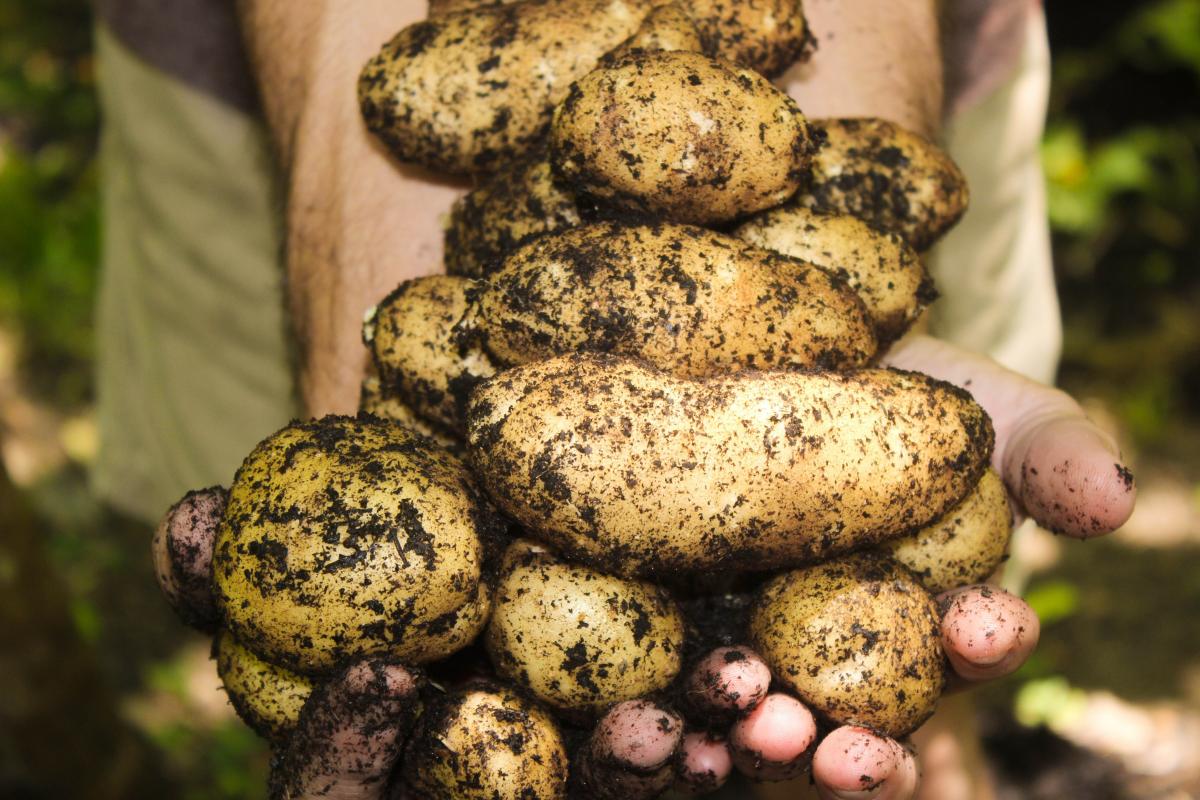
Share your favourite main crop potato recipe and win a copy of our mag!
Love potatoes? We will give away free copies of the May 2026 issue to readers whose potato recipes are used in our magazine. To be in the running, make sure you email your family's favourite way to enjoy potatoes: mailbox@nzgardener.co.nz, by March 1, 2026.
 Loading…