







Cost of living: How to get $110 off your electricity bill through Power Credits Scheme
Some Kiwis can expect their power bill to rise this month for the third year in a row as the low-user charge is phased out – but there's a payment available for people who are struggling.
It's the third year in a row that low-power users are facing increasing fixed costs as the low-power users scheme is phased out.
To help the industry set up the $5 million Power Credits Scheme which means eligible households can access credit during the transition.
The phase out which began in 2022 will see fixed costs for low users rise every april for five years.
The scheme means households who are supplied by Contact, Meridian, Mercury, Genesis, Nova, Wise, Globug, Powershop, Frank or Toast Electric can access a $110 payment if they’re in hardship. So far $1.4 million has been paid out.
The scheme is run by the Electricity Retailers’ Association of New Zealand. Chief executive Bridget Abernethy told Consumer NZ households showing signs of energy hardship can get the payment. But Abernethy said each power company will have its own criteria for what energy hardship looks like.
The Ministry of Business, Innovation and Employment (MBIE) said removing the "low Fixed Charge Tariff regulations is essential for creating a fairer playing field for all New Zealand households".
However, the MBIE website acknowledged the phase-out could be challenging for some households.
"While all households are expected to benefit in the long term from the regulations being removed, some households may face higher power bills," the website said.
The credit can help households adjust, it added.
The decision to remove the low user charge was made by the then Labour Government in 2021 who called it "poorly targeted".
Then Energy Minister Megan Woods said it would mean three in five households could benefit from lower power bills.
============================================
www.newshub.co.nz....
=============================================

Some Choice News!
DOC is rolling out a new tool to help figure out what to tackle first when it comes to protecting our threatened species and the things putting them at risk.
Why does this matter? As Nikki Macdonald from The Post points out, we’re a country with around 4,400 threatened species. With limited time and funding, conservation has always meant making tough calls about what gets attention first.
For the first time, DOC has put real numbers around what it would take to do everything needed to properly safeguard our unique natural environment. The new BioInvest tool shows the scale of the challenge: 310,177 actions across 28,007 sites.
Now that we can see the full picture, it brings the big question into focus: how much do we, as Kiwis, truly value protecting nature — and what are we prepared to invest to make it happen?
We hope this brings a smile!


Poll: 🤖 What skills do you think give a CV the ultimate edge in a robot-filled workplace?
The Reserve Bank has shared some pretty blunt advice: there’s no such thing as a “safe” job anymore 🛟😑
Robots are stepping into repetitive roles in factories, plants and warehouses. AI is taking care of the admin tasks that once filled many mid-level office jobs.
We want to know: As the world evolves, what skills do you think give a CV the ultimate edge in a robot-filled workplace?
Want to read more? The Press has you covered!

-
52.6% Human-centred experience and communication
-
14.7% Critical thinking
-
29.9% Resilience and adaptability
-
2.7% Other - I will share below!

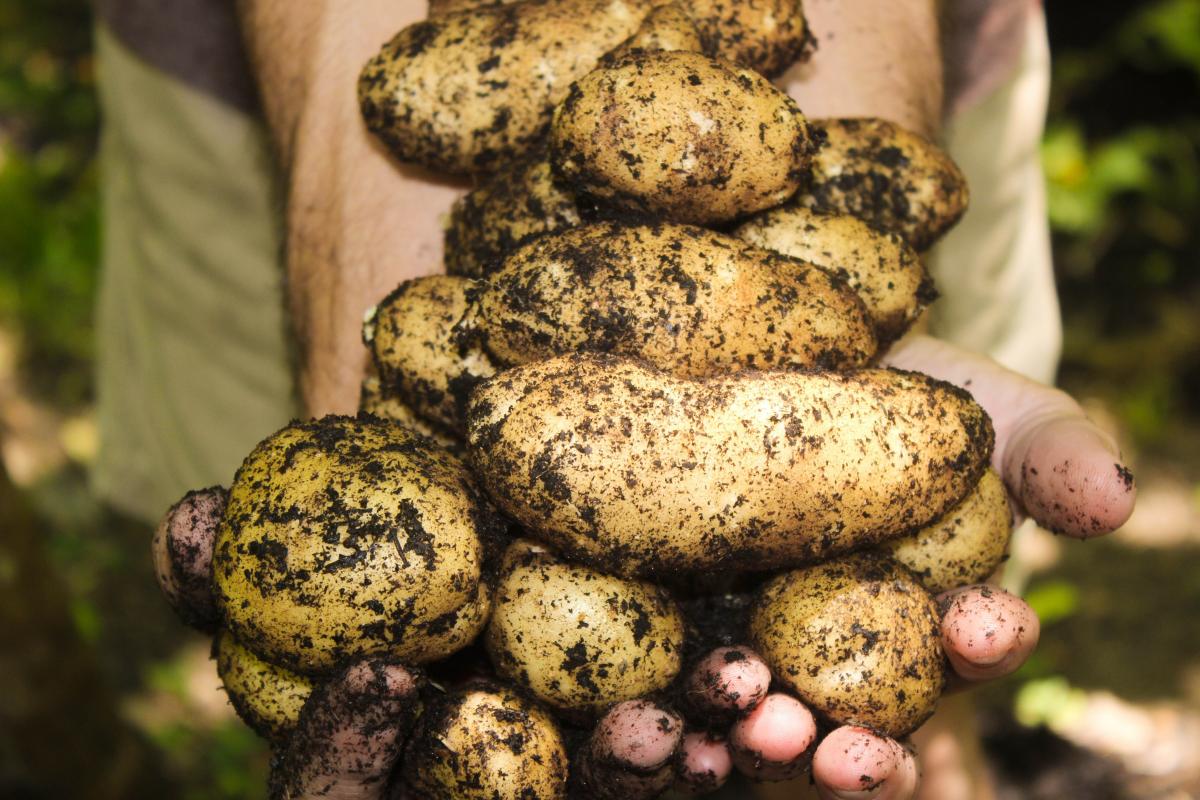
Share your favourite main crop potato recipe and win a copy of our mag!
Love potatoes? We will give away free copies of the May 2026 issue to readers whose potato recipes are used in our magazine. To be in the running, make sure you email your family's favourite way to enjoy potatoes: mailbox@nzgardener.co.nz, by March 1, 2026.
 Loading…