







Court ruling may have significant impact, North Canterbury schools say
From local democracy reporter David Hill:
An Employment Court ruling around teacher working hours could have major implications, North Canterbury schools say.
The New Zealand Post Primary Teachers’ Association successfully argued that a school is ‘‘not open for instruction’’ during weekends, public holidays, vacations and outside of 8.30am to 4.30pm on school days, in a recent Employment Court hearing in the North Island.
But principals said there needed to be flexibility in a teacher’s day to ensure work/life balance and being available for meeting with parents.
Rangiora High School board of trustees chairperson Simon Green was unaware of the ruling, but said it would be ‘‘disappointing’’ if it became binding.
The teaching day was structured from 9am to 3pm and then it was ‘‘flexible’’, Rangiora High School principal Bruce Kearney said.
To accommodate the Employment Court ruling, Kearney changed the start time for staff meetings from 8.20am to 8.30am, ‘‘but you can’t put rigidities around the end time’’.
Some teachers might choose to start earlier or to remain at school after 3pm, while others needed to go and pick up their children after school and took home marking to do later in the evening, he said.
Schools also relied on teachers being available to run cultural activities and coach sports teams outside of teaching hours.
‘‘Teachers are paid a salary and there is a flexibility built in, and it is about how we can best serve our students,’’ Kearney said.
Oxford Area School principal Mike Hart said the ruling was about fairness in recognising an eight hour working day as the accepted limit for teachers.
Collective agreements had a ‘‘call back’’ clause, which gave provision for attending evening meetings, such as those with parents, or for staff training during term breaks.
‘‘Employment law is the guiding document, but we have to remember there are 12 weeks in a calendar year where we don’t expect teachers to do an eight hour day,'' Hart said.
‘‘It is a choice, where teachers can work out what is best for their work/life balance.
‘‘Some may choose to work longer hours during term time and take a break, while others choose to work a consistent number of hours throughout the year.’’
Kaiapoi High School principal Jason Reid said many teachers worked long hours with burnout a major concern, particularly for new teachers.
He said his advice for new teachers was to ‘‘pace yourself’’ in the first two years.
‘‘The challenges of doing this job are incredibly complex and it will absorb as much time as you will throw into it.’’
■ Public interest journalism funded through New Zealand on Air.

Poll: Should we ditch daylight saving? 🕰️
First introduced in New Zealand in 1927 with the passing of the Summer Time Act, it's what we know as 'Daylight Saving' and this year it ends on the first Sunday in April.
While we do get to sleep in this time around, some people would like to scrap the clock tinkering for good.
And why? Some evidence suggests the time changes are bad for our health as they mess with sleep patterns leading to short-term fatigue and affecting mood. Meanwhile the hour change is frustrating for farmers and a nightmare for getting the littlies to sleep. But what's your take?

-
40.3% Yes - get rid of the clock changes
-
57.8% No, I enjoy it
-
1.9% Other - I'll share below

Loud explosions rangiora
Did anyone else get woken around 7 ish by a very loud sound that shook my house?

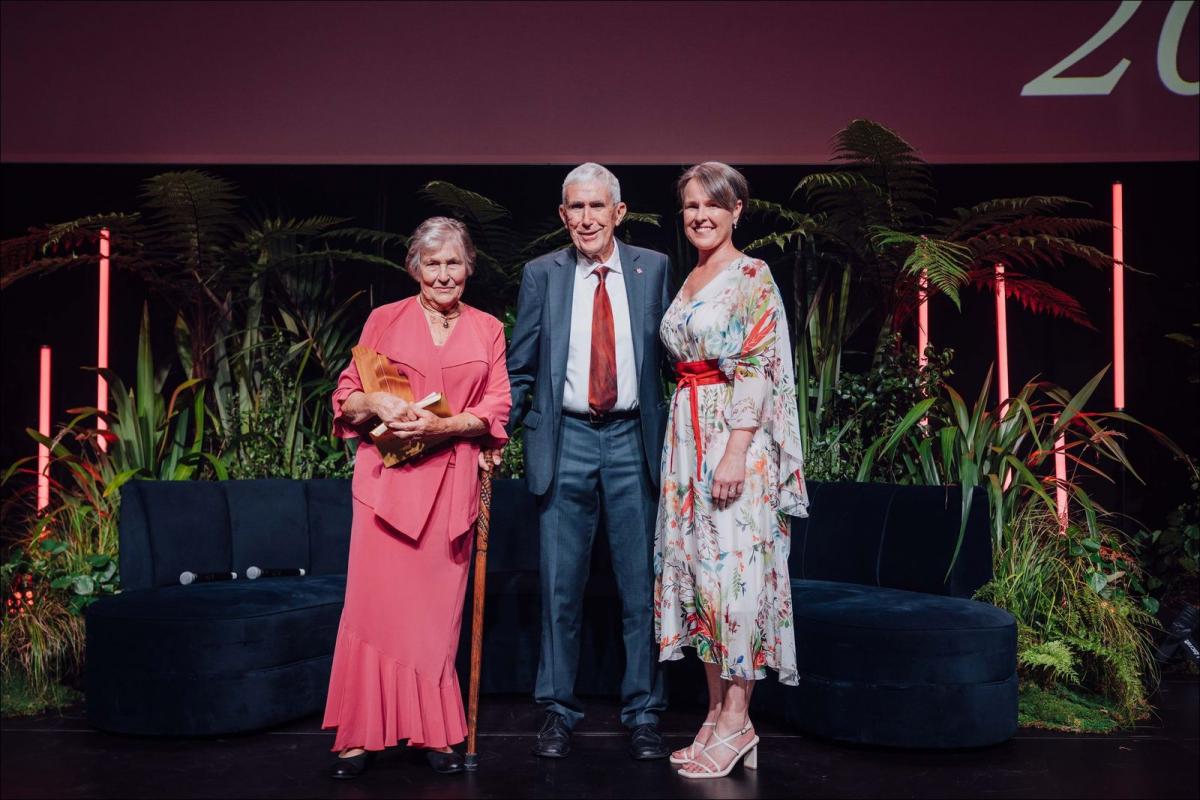
Alan and Hazel Kerr share Senior New Zealander of the Year Award 2026
Dr Alan and Hazel Kerr describe themselves as ‘just ordinary old Kiwis’, despite being named as the 2026 Ryman Healthcare Senior New Zealanders of the Year Te Mātāpuputu o te Tau.
The amazing couple prompted a standing ovation at a star-studded Auckland event which recognised their tireless efforts, with Alan travelling to and from Gaza and the West Bank 40 times to help children over 20 years, and Hazel travelling 20 times.
Click read more to find out more.
 Loading…