





Targeted spraying 'necessary'
From local democracy reporter David Hill:
Spraying is a ‘‘necessary’’ form of weed control, council staff say.
Targeted spraying is necessary to support braided rivers and to protect water ways and roadsides from invasive species, the staff said.
Environment Canterbury (ECan) river engineer Sam Kidner and Waimakariri District Council water environment advisor Angela Burton provided updates on their respective council’s spraying programmes at Monday’s Waimakariri Zone Committee meeting.
Kidner said targeted spraying of weeds helped Canterbury’s braided rivers to perform their natural functions, which improved flood protection.
ECan used glyphosate and herbicides to target weeds such as ivy, hops, lupins, gorse, broom and willows.
‘‘Lupins are less of a problem than gorse and broom or willows.
‘‘It is a matter of scale,’’ Kidner said.
‘‘If it is starting to push water in different directions then we need to respond.’’
A build-up of willows on an island, could prevent the river from braiding and, when in flood, it could divert water to riverbanks, causing erosion.
Responding to a question from the floor, Kidner says ECan has conducted trials using bulldozers as an alternative, but found it was not cost-effective and the bulldozers were not able to access all areas.
Kidner says by clearing the ‘‘fairways’’ in rivers, council staff could then manage weeds through spot spraying to allow native species to thrive.
Birds had returned to nest in areas where ECan had successfully completed spraying programmes, he said.
Sometimes flooding could clean up the rivers, but it was difficult to predict when floods would occur.
ECan also sprayed river berms and stopbanks to stop weeds getting out of control.
But he says the council is facing a constant battle.
‘‘Unfortunately not everyone does biosecurity checks on their vehicles, so we could get the rivers looking pristine, but seeds can be spread by vehicles and by other means, so it is still going to be an ongoing problem.’’
Burton says the Waimakariri District Council conducted spraying for roadside maintenance, planting maintenance and around waterways, drainage and water races.
But ‘‘non-chemical methods’’ were preferred, especially for drains.
Property owners could apply to have their street frontage added to the ‘‘no spray register’’.
‘‘Landowners are actively encouraged to not use spray on the land near gutters, but unfortunately it is not something we can enforce.’’
Burton included a report prepared by the Canterbury Waterway Rehabilitation Experiment (CAREX), a University of Canterbury initiative, in her presentation.
The report considered the ecological consequences of using glyphosate to control aquatic weeds in lowland waterways near Rangiora.
It found the ‘‘species richness of invertebrates and fish are not affected by the use of glyphosate’’ in the water ways, but Burton acknowledges it is not a large enough sample size.
As glyphosate spraying has been used for a number of years, any species found in the sample waterways would have some resistance, meaning the study may need to be compared with waterways without a history of spraying before drawing any conclusions.

Poll: Should we ditch daylight saving? 🕰️
First introduced in New Zealand in 1927 with the passing of the Summer Time Act, it's what we know as 'Daylight Saving' and this year it ends on the first Sunday in April.
While we do get to sleep in this time around, some people would like to scrap the clock tinkering for good.
And why? Some evidence suggests the time changes are bad for our health as they mess with sleep patterns leading to short-term fatigue and affecting mood. Meanwhile the hour change is frustrating for farmers and a nightmare for getting the littlies to sleep. But what's your take?

-
40.3% Yes - get rid of the clock changes
-
57.8% No, I enjoy it
-
1.9% Other - I'll share below

Loud explosions rangiora
Did anyone else get woken around 7 ish by a very loud sound that shook my house?

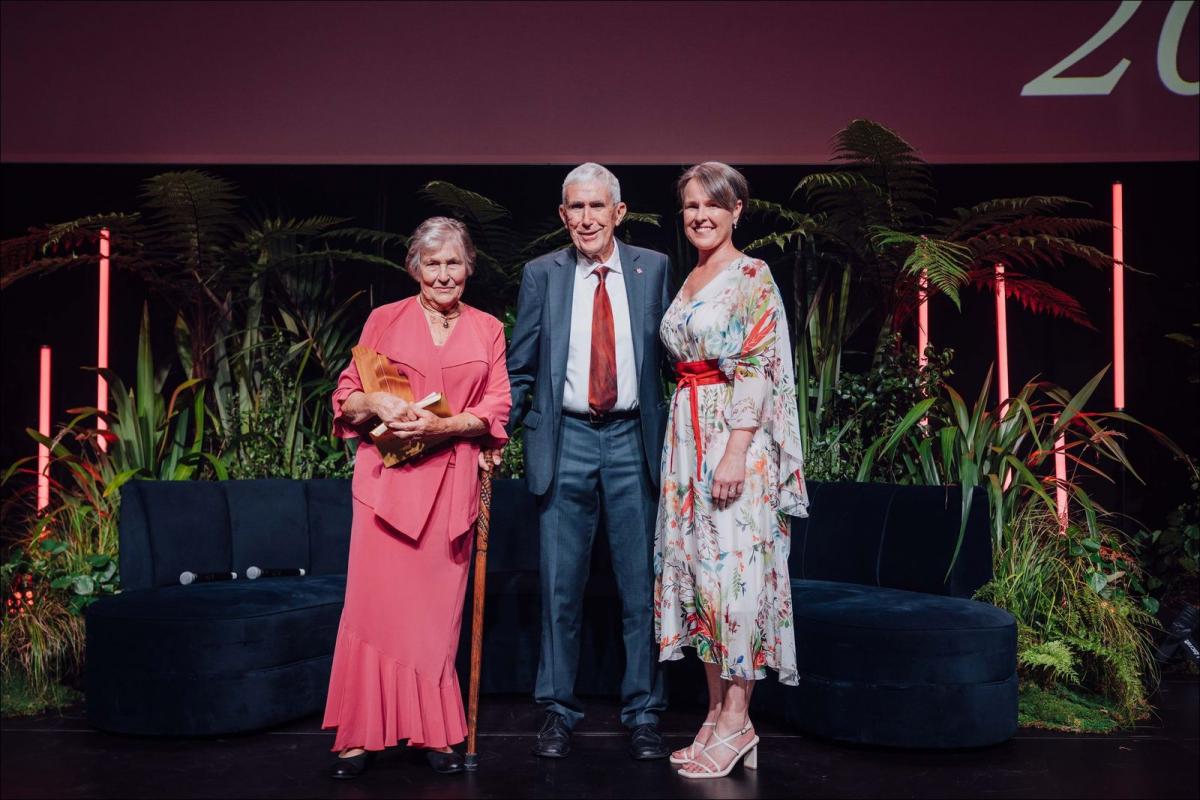
Alan and Hazel Kerr share Senior New Zealander of the Year Award 2026
Dr Alan and Hazel Kerr describe themselves as ‘just ordinary old Kiwis’, despite being named as the 2026 Ryman Healthcare Senior New Zealanders of the Year Te Mātāpuputu o te Tau.
The amazing couple prompted a standing ovation at a star-studded Auckland event which recognised their tireless efforts, with Alan travelling to and from Gaza and the West Bank 40 times to help children over 20 years, and Hazel travelling 20 times.
Click read more to find out more.
 Loading…