







North Canterbury bucking attendance trend
By David Hill, Local Democracy Reporter
North Canterbury schools are bucking the trend when it comes to school attendance in the wake of Covid.
While education leaders around the country are lamenting high absentee rates, North Canterbury principals are collaborating to support staff and whānau.
Former North Canterbury principal Simon Green, who now works as a leadership adviser with Evaluation Associates, supporting principals and boards of trustees across Otago and Canterbury, says there has been ‘‘a noticeable dip in attendance’’. Green is also Rangiora High School board of trustees chairperson.
‘‘There is a definite trend across Otago and Canterbury since Covid, where school attendance hasn’t tracked back as quickly as teachers would like.
‘‘It is a massive concern and something needs to happen to re-engage families before the start of next year.’’
But Green has been impressed with how his former colleagues have adapted.
‘‘North Canterbury schools are working hard and trying different things to improve engagement through the Kahui Ako (local education clusters). One of the strengths in North Canterbury is that the principals are close-knit. They work well together and support each other.’’
Under Ministry of Education guidelines, 90 percent attendance is the ideal, while less than 70% attendance (30% absence) is considered ‘‘chronically absent’’.
Recent media reports, quoting politicians, have used the term ‘‘chronically truant’’.
Rangiora High School principal Bruce Kearney said the school has been achieving about 80% attendance, which he said was ‘‘pretty good’’ considering the isolation rules earlier in the year and high levels of sickness.
‘‘How many industries have staff attendance at over 90% over the year during Covid? Do politicians have 90% attendance in Parliament? I would suggest there would be hardly any businesses at 90%, so why are we yelling at schools, when schools are just a reflection of the reality we are in?’’
Kaiapoi High School principal Jason Reid said his school has been contacted by the Ministry of Education wanting to learn more about how it is managing a low absentee rate.
He said the school’s success is in building relationships.
Students are divided into tutor groups (form classes) of about 15 students, with focus on wellbeing. Tutors follow up when students are absent, with tutors and deans contacting whānau when needed.
‘‘It is all about that communication, because sometimes the family doesn’t realise things have gone sideways.’’
By communicating with whānau, Reid said the school has been able to address any misunderstandings around isolation requirements.
‘‘I have empathy for other school principals dealing with high absence rates because of the complexity of human beings and the environment we are operating in. It could be us tomorrow.’’
Oxford Area School principal Mike Hart said about half of his students have about 90% attendance, with about one-third achieving 80% to 90%.
The September figures presented to the board of trustees had 7.2% listed as ‘‘chronically absent’’, compared to 7.7% nationwide.
Hart said families are experiencing higher levels of sickness than normal with Covid and the return of the flu. ‘‘The sickness pattern we are seeing is it is not just a day or two, but it is severe enough to put a student out for a week or more.’’
He said Covid had forced people to be more vigilant around symptoms, which was contributing to absence rates. With the border being open again, some families are also taking extended breaks to visit loved ones. Online learning options wee being offered so students could learn from home.
■ Public interest journalism funded through New Zealand on Air.

Poll: Should we ditch daylight saving? 🕰️
First introduced in New Zealand in 1927 with the passing of the Summer Time Act, it's what we know as 'Daylight Saving' and this year it ends on the first Sunday in April.
While we do get to sleep in this time around, some people would like to scrap the clock tinkering for good.
And why? Some evidence suggests the time changes are bad for our health as they mess with sleep patterns leading to short-term fatigue and affecting mood. Meanwhile the hour change is frustrating for farmers and a nightmare for getting the littlies to sleep. But what's your take?

-
40.3% Yes - get rid of the clock changes
-
57.8% No, I enjoy it
-
1.9% Other - I'll share below

Loud explosions rangiora
Did anyone else get woken around 7 ish by a very loud sound that shook my house?

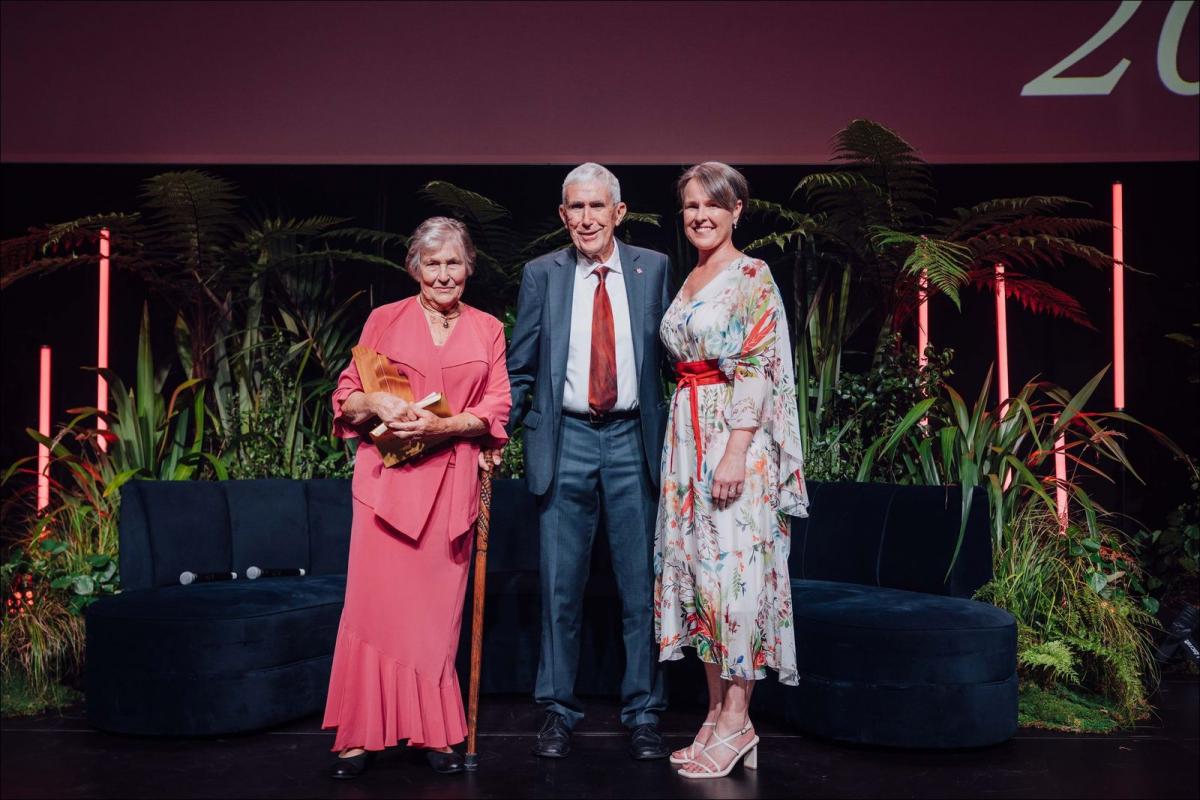
Alan and Hazel Kerr share Senior New Zealander of the Year Award 2026
Dr Alan and Hazel Kerr describe themselves as ‘just ordinary old Kiwis’, despite being named as the 2026 Ryman Healthcare Senior New Zealanders of the Year Te Mātāpuputu o te Tau.
The amazing couple prompted a standing ovation at a star-studded Auckland event which recognised their tireless efforts, with Alan travelling to and from Gaza and the West Bank 40 times to help children over 20 years, and Hazel travelling 20 times.
Click read more to find out more.
 Loading…