





Grace Millane murder accused keeps name suppression, reasons and judgment also suppressed
The now 27-year-old Auckland man appeared in the High Court at Auckland last month in a bid to convince Justice Simon Moore that revealing his identity would prejudice his fair trial rights. Today the judge released his decision to the media. However, the judgment and the reasons given by Justice Moore have been suppressed. The name suppression hearing had been held behind closed doors, preventing members of the public from attending. Several members of the media, however, were present as was the officer in charge of the case, Detective Inspector Scott Beard. The arguments made at the hearing by the defendant's lawyer Ian Brookie, the Crown Solicitor at Auckland Brian Dickey, the Herald, and Stuff were suppressed by Justice Moore.
When the defendant first appeared in the Auckland District Court after his arrest in December, Judge Evangelos Thomas declined granting interim name suppression. However, the accused kept his name out of New Zealand media after Brookie indicated an appeal. Such an appeal automatically imposes a 20 working day suppression order under New Zealand law. Because of the closure of courts over Christmas and New Year the name suppression hearing wasn't heard until last month.
Brookie had initially sought to appeal of Judge Thomas' decision but decided to abandon the process and instead he made a fresh application for name suppression. He did so on the basis of fair trial grounds as a result of events between his client's first appearance and transfer to the High Court. Despite the suppression order, some British media named the accused in its papers, online and on-air. The media later revealed two London newspapers' explanations for naming the accused, after objections were raised with the UK papers by a close friend of the Millane family. "Whilst [we] takes into consideration the laws of other countries when it comes to naming suspects/those charged with a crime and the names of victims of crimes we should stress that the law in New Zealand does not apply to our reporting," the paper replied. Internet behemoth Google also breached the order when it named the accused in its "what's trending in New Zealand" mass email to New Zealand subscribers. The email also said there had been more than 100,000 searches on its search engine of the man's name. The Google breach led to a meeting with Justice Minister Andrew Little, Attorney-General David Parker, and executives from the Silicon Valley-based company. Social media users on Twitter and Facebook also published the man's name. The accused is charged with murdering Millane between December 1 and December 2 last year, court documents viewed by the Herald show. He pleaded not guilty at his first High Court appearance and a trial was set for November. Millane, a university graduate, came to New Zealand in November last year as part of a year-long solo OE. She arrived in Auckland just days before she was killed and was last seen alive on CCTV entering CityLife Hotel with the accused on December 1. According to court documents, the defendant was living at the Queen St hotel. Millane's body was later found in a section of bush just 10m off Scenic Drive in West Auckland's Waitakere Ranges on December 9. She would have turned 22 a week earlier.
A post-mortem examination was completed but police have not publicly released its details. Detectives, however, confirmed Millane's body was found intact. Her funeral was held earlier this year after her body was returned to Essex in England. David Millane, Grace's father, earlier said his "whole world turned upside down" when his daughter was declared missing and later found dead. "Grace was not born here and only managed to stay a few weeks, but you have taken her to your hearts and in some small way she will forever be a Kiwi," he said. A relative of the accused also spoke to the Herald in December. They said their entire family were also broken-hearted - and they were sorry for the Millane family's loss.
===========================================================

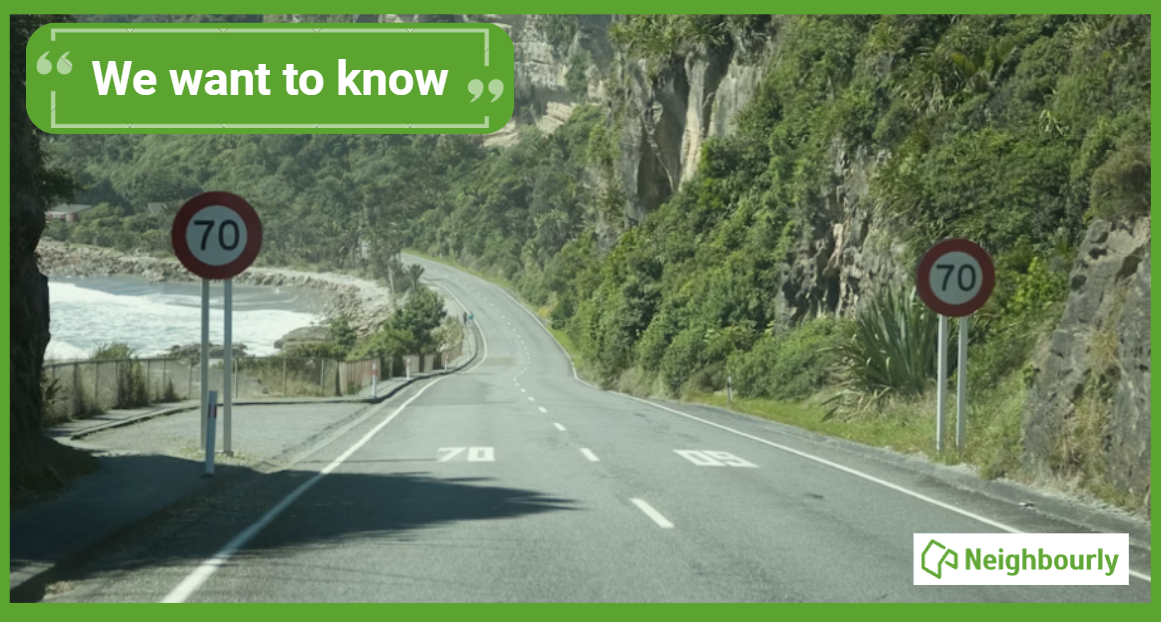
Poll: If we want to reduce speeding, what do you think actually changes driver behaviour? 🛻🚨🚓
In the Post's article on speeding penalties, the question is asked whether speeding fines are truly about road safety, or are they just a way to boost revenue for the Crown?
What do you think? Should speeding motorists receive speeding fines or demerit points?
-
35.5% The sting of a fine (Money talks!)
-
64.5% The threat of demerit points (Nobody wants to lose their license!)

Some Choice News!
DOC is rolling out a new tool to help figure out what to tackle first when it comes to protecting our threatened species and the things putting them at risk.
Why does this matter? As Nikki Macdonald from The Post points out, we’re a country with around 4,400 threatened species. With limited time and funding, conservation has always meant making tough calls about what gets attention first.
For the first time, DOC has put real numbers around what it would take to do everything needed to properly safeguard our unique natural environment. The new BioInvest tool shows the scale of the challenge: 310,177 actions across 28,007 sites.
Now that we can see the full picture, it brings the big question into focus: how much do we, as Kiwis, truly value protecting nature — and what are we prepared to invest to make it happen?
We hope this brings a smile!

Poll: Is Auckland’s economy improving?
The latest reporting from The Post suggests a wave of optimism for 2026. With interest rates finally heading south, businesses are feeling more positive. But for many on the ground, the real-world recovery feels a bit like a slow-moving commute on Auckland's motorways.
We want to know: Are you seeing signs of Auckland's economy improving in your industry or neighbourhood? Whether it's busier shops, new projects kicking off, or just a shift in the mood ...

-
17.2% Yes
-
65.6% No
-
17.2% A little
 Loading…