






New Clean Car Discount rebates and fees from 1 April 2022
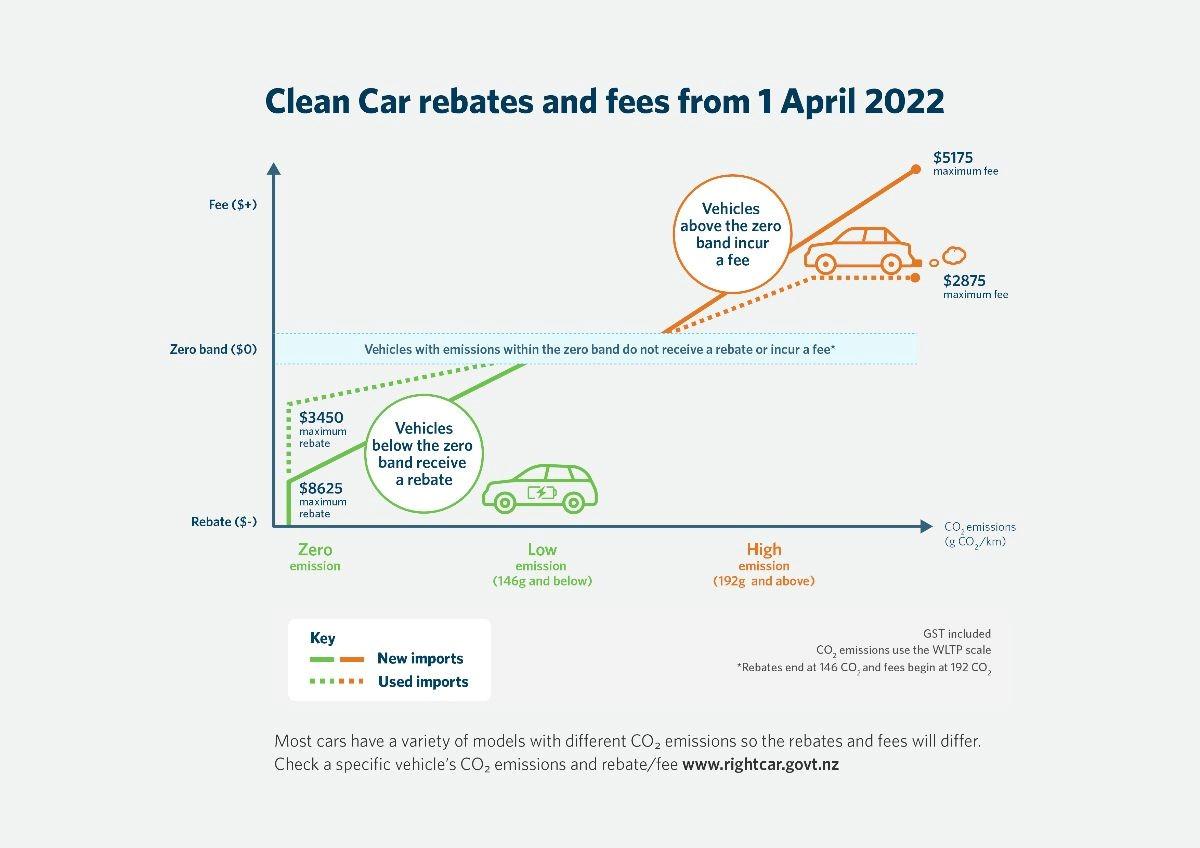
So far only rebates have been granted for fully electric (EV) and plug-in hybrid (PHEV) vehicles coming to NZ, but from 1 April 2022 the fee component of the Clean Car Discount scheme for dirty vehicles that emit 192g/km CO2 or more will kick in. It's shown in the orange part of the image below.
Right-wing political parties and Groundswell NZ were quick to call the fee a "ute tax", but of course we all know that this is actually nonsense - it's not a fee for that particular type of vehicle. It just so happens that pretty much all utes brought into NZ exceed the above CO2 emissions threshold. Automobile manufacturers are used to NZ being a willing market for their dirtiest and highest-emitting vehicles. We're only too happy to buy them because we're uneducated or indifferent enough to care about carbon emissions and air pollution, or because we pretend that we don't have an alternative (which makes this story all the more enjoyable).
For those of us who need a high-emitting ute (or think we do, because Brian two doors down has got one, and we need to keep up), the best way to avoid the "ute tax", ahem, fee is to buy a used vehicle that is already in NZ and has been polluting here for a while. And there is a healthy market developing for those, as more and more of us switch to fuel-efficient vehicles and trade in our guzzlers - which is actually not paying that well. So there will be heaps of great-looking utes available shortly, as the wealthy among us replace our Remuera tractors with Teslas, and cheap as dirt, literally.
The fee is only charged on new or used high-emitting vehicles that enter NZ for the first time, which is exactly what we don't want - more dirty cars that spend up to 20 years on our roads. So let's just stick with what's here already, and voila - no fee, no tax, and cheap to buy, too - just as we like it.

Poll: 🤖 What skills do you think give a CV the ultimate edge in a robot-filled workplace?
The Reserve Bank has shared some pretty blunt advice: there’s no such thing as a “safe” job anymore 🛟😑
Robots are stepping into repetitive roles in factories, plants and warehouses. AI is taking care of the admin tasks that once filled many mid-level office jobs.
We want to know: As the world evolves, what skills do you think give a CV the ultimate edge in a robot-filled workplace?
Want to read more? The Press has you covered!

-
53.1% Human-centred experience and communication
-
14.7% Critical thinking
-
29.5% Resilience and adaptability
-
2.7% Other - I will share below!

🧩😏 Riddle me this, Neighbours…
I am an odd number. Take away a letter and I become even. What number am I?
Do you think you know the answer? Simply 'Like' this post and we'll post the answer in the comments below at 2pm on the day!
Want to stop seeing these in your newsfeed? No worries! Simply head here and click once on the Following button.


Some Choice News!
DOC is rolling out a new tool to help figure out what to tackle first when it comes to protecting our threatened species and the things putting them at risk.
Why does this matter? As Nikki Macdonald from The Post points out, we’re a country with around 4,400 threatened species. With limited time and funding, conservation has always meant making tough calls about what gets attention first.
For the first time, DOC has put real numbers around what it would take to do everything needed to properly safeguard our unique natural environment. The new BioInvest tool shows the scale of the challenge: 310,177 actions across 28,007 sites.
Now that we can see the full picture, it brings the big question into focus: how much do we, as Kiwis, truly value protecting nature — and what are we prepared to invest to make it happen?
We hope this brings a smile!

 Loading…