






For a truly personal funeral experience - talk to the experts
Morris & Morris have been serving the communities of Northland for over 60 years. We are proud of our reputation as experts in our profession. Believing in the importance of a meaningful farewell as part of healthy grieving forms the basis to all that we do.
We have funerals for many essential reasons, including a means of expressing our beliefs, thoughts, and feelings about life and death. The purposes of the funeral ceremony can be summed up in the following ways:
Reality: It's hard to truly accept the finality of death, but the funeral helps us to begin to do so. At first, we accept it with our heads, and only over time do we come to accept it with our hearts.
Recall: Funerals help us begin to convert our relationship with the person who has died from one of presence to one of memory. When we come together to share our memories, we learn things we didn't know, and we see how the person's life touched others.
Support: Funerals are social gatherings that bring together people who cared about the person who died. Funerals are in remembrance of the person who passed, but they are for the living. The funeral is a special time and place to support one another in grief.
Expression: When we grieve but don't mourn, our sadness can feel unbearable, and our many other emotions can fester inside of us. Mourning helps us heal, and the funeral is an essential rite of initiation for mourning. It helps us get off to a good start and sets our mourning in motion.
Meaning: Did the person I love have a good life? What is life, anyway?
Why Do We Die?: There are no simple explanations, but the funeral gives us a time and a place to hold the questions in our hearts and begin to find our way to answers that give us peace.
For the answers to all your questions and for advice and assistance, give us a call on 09 437 5799 or email us: office@morrisandmorris.co.nz


🧩😏 Riddle me this, Neighbours…
I am an odd number. Take away a letter and I become even. What number am I?
Do you think you know the answer?
Want to stop seeing these in your newsfeed? No worries! Simply head here and click once on the Following button.

Scam Alert: Bank cold calls
ASB is warning customers about reports of cold calls from scammers claiming to be from ASB. These scammers are trying to obtain personal information, including usernames, dates of birth, and verification codes sent to your mobile phone.
🛡️ The "Caller Check" Test
If you get a call from someone claiming to be from ASB and you’re unsure, just ask them for a Caller Check. You will then be able to verify the call through the app.
Remember, banks will:
❌ Never ask for your banking passwords, PINs, or verification codes
❌ Never need to know your full credit card number – especially the CVC
❌ Never ask you to download software or remotely access your device
❌ Never ask you to purchase gift cards or transfer funds.
If you have received a phone call and think your account has been compromised, call ASB on 0800 ASB FRAUD (0800 272 372), or visit your local branch.

Some Choice News!
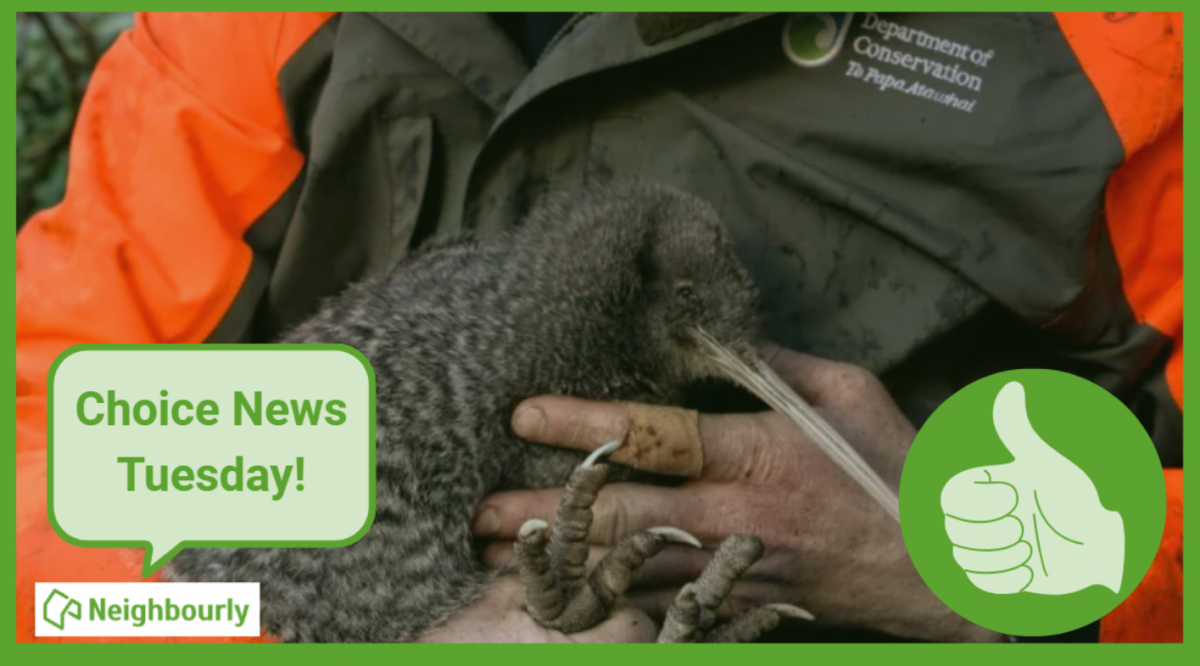
DOC is rolling out a new tool to help figure out what to tackle first when it comes to protecting our threatened species and the things putting them at risk.
Why does this matter? As Nikki Macdonald from The Post points out, we’re a country with around 4,400 threatened species. With limited time and funding, conservation has always meant making tough calls about what gets attention first.
For the first time, DOC has put real numbers around what it would take to do everything needed to properly safeguard our unique natural environment. The new BioInvest tool shows the scale of the challenge: 310,177 actions across 28,007 sites.
Now that we can see the full picture, it brings the big question into focus: how much do we, as Kiwis, truly value protecting nature — and what are we prepared to invest to make it happen?
We hope this brings a smile!
 Loading…