






Do we need a fresh approach to local government?
Terry Archer won the by-election in the NRC urban constituency with 1,671 out of 6,074 votes, with a 20.8% voter turnout. That means he was elected by 5.73% of eligible voters.
His predecessor John Bain resigned over his disagreement with a majority council vote to establish Māori constituencies, triggering the $80,000 by-election. He then - together with others - went to organise a petition to force a poll, which will most likely not go ahead if previously announced local government legislation is passed in Parliament.
A few years back councillors in our neighbouring district Kaipara were overwhelmed by the complexity of a wastewater scheme, that they were in no position to understand well enough to cast an informed vote on. Recently Invercargill City Council saw its long-standing mayor's competency being questioned and its deputy mayor resign, triggering another by-election. Tauranga's mayor resigned over irreconcilable differences around the council table, with a bunch of councillors being accused of holding the city back. Commissioners have now been installed, just like in Kaipara a few years back.
By and large many councillors lack the expertise to make tough decisions on an ever-increasing list of complex issues, and lack the time and ability to upskill themselves to be able to cope with this workload. Funding of major infrastructure deficits and the big unknowns ahead, particularly the looming threat of cost imposed by climate change adaptation, is uncertain. And we ratepayers expect and demand more than ever that rates should go down, while the property owners among us make $50 or more per day in tax-free capital gain by doing nothing.
Does anybody else think that we might need a fresh approach to local government, where informed decisions are made after listening to the experts, considering all the facts, and debating the pros and cons in a civilised and productive manner? Maybe by a Citizens' Assembly?

Scam Alert: Bank cold calls
ASB is warning customers about reports of cold calls from scammers claiming to be from ASB. These scammers are trying to obtain personal information, including usernames, dates of birth, and verification codes sent to your mobile phone.
🛡️ The "Caller Check" Test
If you get a call from someone claiming to be from ASB and you’re unsure, just ask them for a Caller Check. You will then be able to verify the call through the app.
Remember, banks will:
❌ Never ask for your banking passwords, PINs, or verification codes
❌ Never need to know your full credit card number – especially the CVC
❌ Never ask you to download software or remotely access your device
❌ Never ask you to purchase gift cards or transfer funds.
If you have received a phone call and think your account has been compromised, call ASB on 0800 ASB FRAUD (0800 272 372), or visit your local branch.

🧩😏 Riddle me this, Neighbours…
I am an odd number. Take away a letter and I become even. What number am I?
Do you think you know the answer?
Want to stop seeing these in your newsfeed? No worries! Simply head here and click once on the Following button.


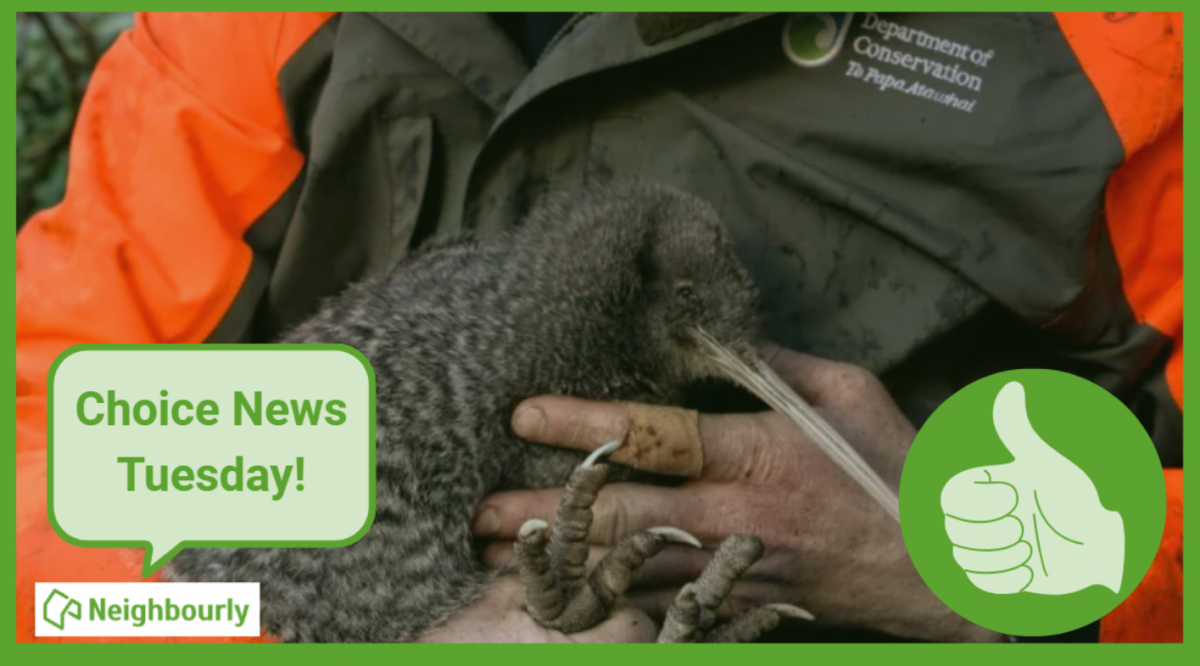
Some Choice News!
DOC is rolling out a new tool to help figure out what to tackle first when it comes to protecting our threatened species and the things putting them at risk.
Why does this matter? As Nikki Macdonald from The Post points out, we’re a country with around 4,400 threatened species. With limited time and funding, conservation has always meant making tough calls about what gets attention first.
For the first time, DOC has put real numbers around what it would take to do everything needed to properly safeguard our unique natural environment. The new BioInvest tool shows the scale of the challenge: 310,177 actions across 28,007 sites.
Now that we can see the full picture, it brings the big question into focus: how much do we, as Kiwis, truly value protecting nature — and what are we prepared to invest to make it happen?
We hope this brings a smile!
 Loading…