





Important calculations when looking to invest...
When choosing to make a property investment, the most important thing you can do is to approach the transaction
as a business decision.
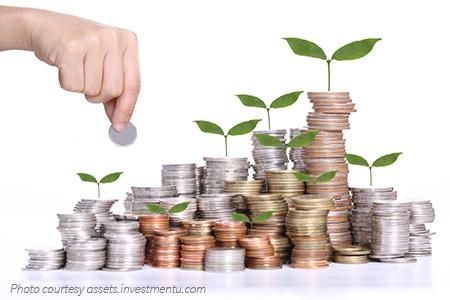
You are not buying a home - which is an emotional purchase, and as much about listening to your heart as to your head. The property investment dream is to secure a high yield property in an area which will ultimately allow you to make good capital gains.
Therefore one of the most important calculations you will need to make is what the yield of a particular property will be. Yield is simply the rent a property could earn over a year, expressed as a percentage of the purchase price: Example, a $350,000 property rented at $350 a week will return a gross rental yield of 5.2%.
You can then use this figure to compare the returns you could get from a property against those provided by other types of investments, such as shares or bank deposits.
Whilst the gross rental yield is a simple calculation to use it's important to note that it doesn't take expenses into account. A property may have a high rental yield but may also have high expenses, making the rental return low when taken into consideration.
If you do want to want a more precise calculation you will need to know (or estimate) the total expenses of property including both purchasing and transaction costs (legal fees, building inspections, any start up loan fees, etc.) and annual costs such as vacancy costs (lost rent and advertising), repairs and maintenance, property management fees, home and contents insurance, rates etc.
As a general rule of thumb, cheaper houses will achieve better yields than more expensive properties.
Knowing all the extra costs can be daunting, however a Harcourts Twiss-Keir property manager can put you in touch with finance and tax specialists for assistance when deciding on an investment property.

Poll: 🤖 What skills do you think give a CV the ultimate edge in a robot-filled workplace?
The Reserve Bank has shared some pretty blunt advice: there’s no such thing as a “safe” job anymore 🛟😑
Robots are stepping into repetitive roles in factories, plants and warehouses. AI is taking care of the admin tasks that once filled many mid-level office jobs.
We want to know: As the world evolves, what skills do you think give a CV the ultimate edge in a robot-filled workplace?
Want to read more? The Press has you covered!

-
52.9% Human-centred experience and communication
-
14.7% Critical thinking
-
29.7% Resilience and adaptability
-
2.7% Other - I will share below!

🧩😏 Riddle me this, Neighbours…
I am an odd number. Take away a letter and I become even. What number am I?
Do you think you know the answer? Simply 'Like' this post and we'll post the answer in the comments below at 2pm on the day!
Want to stop seeing these in your newsfeed? No worries! Simply head here and click once on the Following button.


Some Choice News!
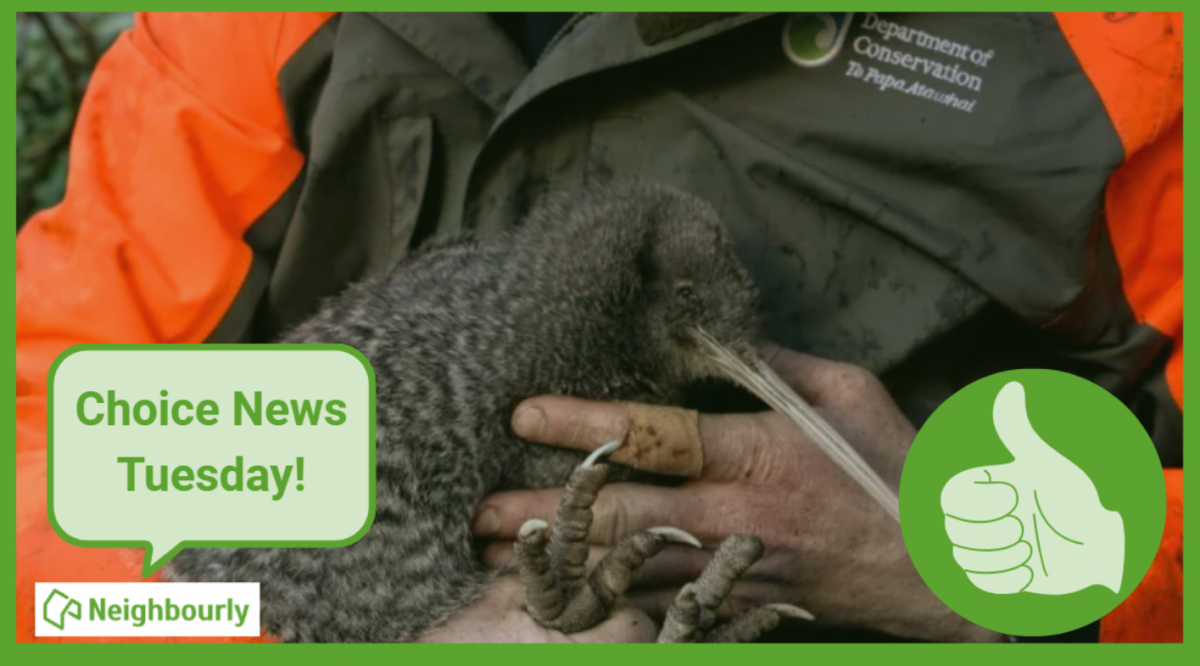
DOC is rolling out a new tool to help figure out what to tackle first when it comes to protecting our threatened species and the things putting them at risk.
Why does this matter? As Nikki Macdonald from The Post points out, we’re a country with around 4,400 threatened species. With limited time and funding, conservation has always meant making tough calls about what gets attention first.
For the first time, DOC has put real numbers around what it would take to do everything needed to properly safeguard our unique natural environment. The new BioInvest tool shows the scale of the challenge: 310,177 actions across 28,007 sites.
Now that we can see the full picture, it brings the big question into focus: how much do we, as Kiwis, truly value protecting nature — and what are we prepared to invest to make it happen?
We hope this brings a smile!
 Loading…