




Human waste sludge being trucked to treatment plant in southern landfill # update 2 (20/03/2020)
High-tech repair solution for Moa Point pipelines delayed by Covid-19 response
"Wellington Water has worked with a leading international engineering firm to develop an innovative solution to repair the high pressure sludge pipelines between the Moa Point Wastewater Treatment Plant and the Carey’s Gully landfill. However the global response to the Covid-19 pandemic will delay its installation.
The repair presents a significant engineering challenge, as it must be completed within the 1.8 km section of the pipelines running through a tunnel deep beneath Mt Albert. The solution that has been developed is a polyester woven liner which will be winched from one end of each pipe to the other, then expanded to essentially act as a new pipeline within the old.
The liner will be installed through the full length of the pipelines under Mt Albert, where they are most inaccessible. This will be the largest-scale deployment of this technology in Australasia.
Once in Wellington, the estimated timeframe for installation of the pipe liner is eight days.
Wellington Water CEO Colin Crampton says due to restrictions on business imposed this week by the German government, delivery of the liner by the supplier has been pushed back.
“This is a high-quality, robust and resilient solution that will get the pipelines back up and running, and reduce the risk of further bursts. It’s a high-tech specialist product which is not manufactured in New Zealand. Unfortunately, due the importance of protecting their workforce and community from the spread of Covid-19, production at our supplier’s factory has slowed.”
Mr Crampton says that current estimates are for the liners to arrive in Wellington by mid-May.
“We appreciate the ongoing patience and understanding of the communities in the area. Trucking operations are not ideal from anyone’s perspective, but they are successfully keeping millions of litres of wastewater from flowing into Cook Strait,” says Mr Crampton.
Mr Crampton says the long-term approach should be to decommission the underground sludge pipelines entirely.
“The solution we have developed has a working life of 10 years. This provides an opportunity for Wellington City Council to receive advice on what is the best way to manage sludge going forward. We are now developing alternative options for Council to consider which would enable us to stop disposing of sludge into the landfill entirely.”
Alexander van Paassen Manager, Community Engagement
Wellington Water

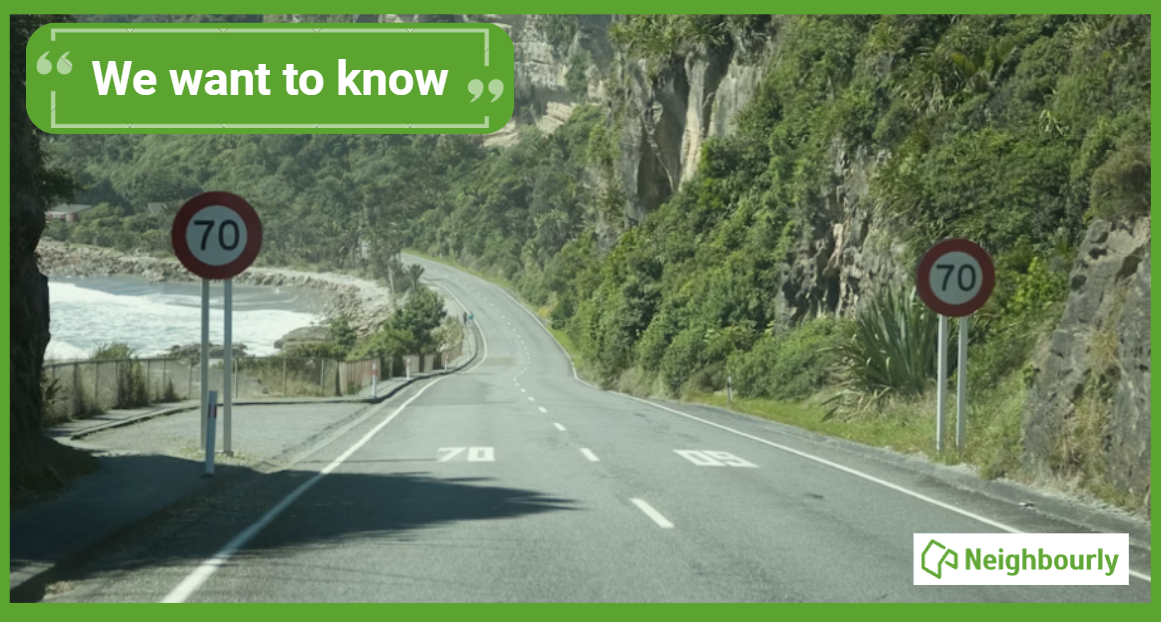
Poll: If we want to reduce speeding, what do you think actually changes driver behaviour? 🛻🚨🚓
In the Post's article on speeding penalties, the question is asked whether speeding fines are truly about road safety, or are they just a way to boost revenue for the Crown?
What do you think? Should speeding motorists receive speeding fines or demerit points?
-
36.3% The sting of a fine (Money talks!)
-
63.7% The threat of demerit points (Nobody wants to lose their license!)
Scam Alert: Bank cold calls
ASB is warning customers about reports of cold calls from scammers claiming to be from ASB. These scammers are trying to obtain personal information, including usernames, dates of birth, and verification codes sent to your mobile phone.
🛡️ The "Caller Check" Test
If you get a call from someone claiming to be from ASB and you’re unsure, just ask them for a Caller Check. You will then be able to verify the call through the app.
Remember, banks will:
❌ Never ask for your banking passwords, PINs, or verification codes
❌ Never need to know your full credit card number – especially the CVC
❌ Never ask you to download software or remotely access your device
❌ Never ask you to purchase gift cards or transfer funds.
If you have received a phone call and think your account has been compromised, call ASB on 0800 ASB FRAUD (0800 272 372), or visit your local branch.


Some Choice News!
DOC is rolling out a new tool to help figure out what to tackle first when it comes to protecting our threatened species and the things putting them at risk.
Why does this matter? As Nikki Macdonald from The Post points out, we’re a country with around 4,400 threatened species. With limited time and funding, conservation has always meant making tough calls about what gets attention first.
For the first time, DOC has put real numbers around what it would take to do everything needed to properly safeguard our unique natural environment. The new BioInvest tool shows the scale of the challenge: 310,177 actions across 28,007 sites.
Now that we can see the full picture, it brings the big question into focus: how much do we, as Kiwis, truly value protecting nature — and what are we prepared to invest to make it happen?
We hope this brings a smile!

 Loading…