





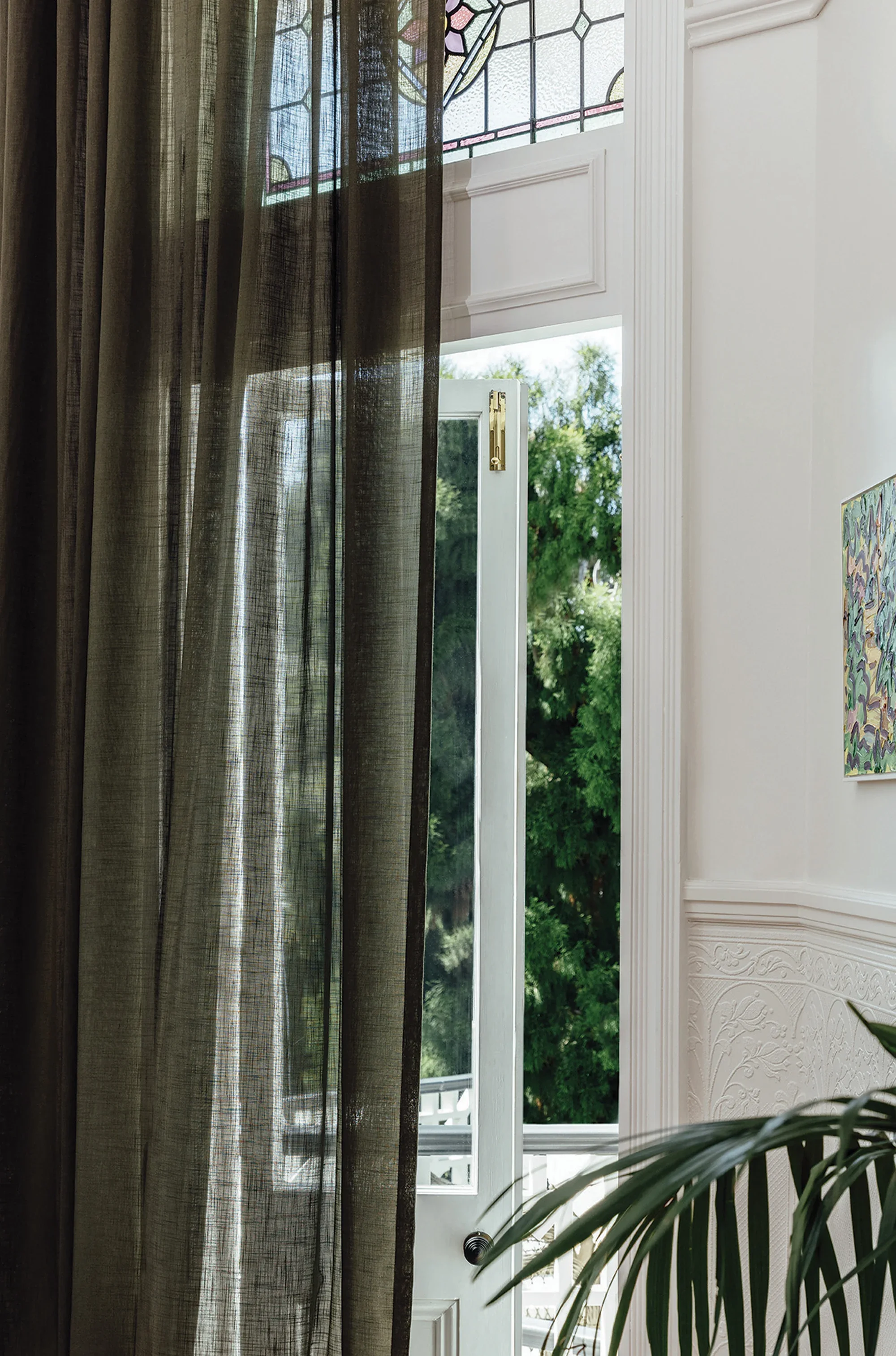
Recycled polyester
Along our journey to creating a more sustainable future, our studios are working to incorporate innovative textiles into our product offering. The technical advancement of recycled yarn production has led to textiles which are not only more environmentally friendly, but emulate the soft handle of virgin fibres. In this article we explain the process of transforming post-consumer plastic bottles into recycled polyester yarn, through an investigation into the production of our first recycled product Kumo Recycled by James Dunlop.
Woven in 92% recycled polyester and 8% polyester yarn, Kumo Recycled presents a modern perspective on fibre construction. Available in 15 decorative shades, Kumo Recycled is suitable for those seeking a high-performance wide width sheer that is fire retardant and has a weighted selvedge in both residential and commercial applications, elegantly framing the view in any setting.
THE RECYCLING PROCESS:
At the recycling facility, post-consumer PET bottles are magnetically sorted by a metal detector and the labels are washed off with water in a revolving cylinder called a Tromel. The clean PET bottles are then sorted into types and colours by a near infrared ray and spectrum camera before being shredded into flakes underwater.
Separation occurs as lighter plastics float to the tank’s surface. The flakes are dried in a tumbler, then rinsed with sodium hydroxide, dried, rinsed in water, and dried once more. Residual contaminants and metals are then blown out and the flakes are shredded into smaller flakes, ready to be used to produce a liquid polymer (resin).
Keep reading: www.curtainclean.co.nz...

🧩😏 Riddle me this, Neighbours…
I am an odd number. Take away a letter and I become even. What number am I?
Do you think you know the answer? Simply 'Like' this post and we'll post the answer in the comments below at 2pm on the day!
Want to stop seeing these in your newsfeed? No worries! Simply head here and click once on the Following button.


Some Choice News!
DOC is rolling out a new tool to help figure out what to tackle first when it comes to protecting our threatened species and the things putting them at risk.
Why does this matter? As Nikki Macdonald from The Post points out, we’re a country with around 4,400 threatened species. With limited time and funding, conservation has always meant making tough calls about what gets attention first.
For the first time, DOC has put real numbers around what it would take to do everything needed to properly safeguard our unique natural environment. The new BioInvest tool shows the scale of the challenge: 310,177 actions across 28,007 sites.
Now that we can see the full picture, it brings the big question into focus: how much do we, as Kiwis, truly value protecting nature — and what are we prepared to invest to make it happen?
We hope this brings a smile!


Have you got New Zealand's best shed? Show us and win!
Once again, Resene and NZ Gardener are on the hunt for New Zealand’s best shed! Send in the photos and the stories behind your man caves, she sheds, clever upcycled spaces, potty potting sheds and colourful chicken coops. The Resene Shed of the Year 2026 winner receives $1000 Resene ColorShop voucher, a $908 large Vegepod Starter Pack and a one-year subscription to NZ Gardener. To enter, tell us in writing (no more than 500 words) why your garden shed is New Zealand’s best, and send up to five high-quality photos by email to mailbox@nzgardener.co.nz. Entries close February 23, 2026.
 Loading…