






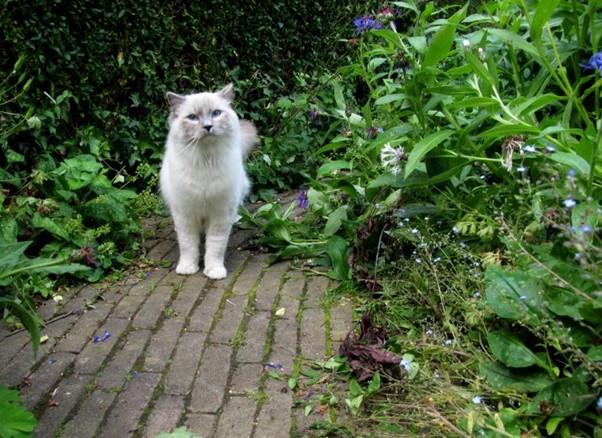
Always finding your neighbour’s cats in your garden?
Even though we all love animals, we are not always fans of other people’s cats doing their business in our gardens. Luckily, there is a handy, and animal-friendly, trick for this!
Cats are wonderful and cute animals, of course, but they’re a bit less cute when they pee, poo and dig all over our garden. This can cause a lot of trouble for you and your garden, so you might be looking for some tips to help prevent this! Because we are animal lovers, we don’t like the idea of scaring off cats with chemicals or nasty methods that aren’t animal friendly. We believe keeping cats out of your garden can also be done in a natural way.
There are several ways to discourage cats from coming into your garden that are in no way harmful to the cat but do give the required result. For instance, cats don’t like certain scents, which means you can use those to keep them out.
After asking around for a bit, we found out that a lot of people have trouble with neighbourhood cats in their garden. Some people love seeing those cute animals wandering around their garden, but other people would rather chase them away immediately. Everybody has their own methods for this as well. The most common method seems to be trying to scare the cat by yelling and waving your arms. Others go outside with a glass of water to try to pour over the cat. Of course, these methods don’t have the desired result. Some people get so frustrated that they end up in the newspaper because they tried shooting at the cats! That’s not what we want, so we’ve got a few tips for you instead.
Cats don’t like the smells of vinegar and citrus peel.
So, you can keep cats out of your garden pretty easily by putting bowls of vinegar or citrus peel in various places around the garden (in particular those places the cat likes to visit). The cat will then definitely stay away from those places. Another thing cats hate is cayenne pepper. So, it may be worth scattering a generous amount of cayenne pepper in places the cats like to visit. Then again, this may cause the cat to start sneezing violently, which make us feel a bit sorry for it.
If you don’t have any of these products at home and don’t feel like going to the supermarket, you could also try using garlic, ground coffee or chili pepper. Did you know about these natural, cat-resistant tips? Share them with your friends!

Poll: Are you still heading to your local for your caffeine fix, or has the $$ changed your habits? ☕
Wellington’s identity is built on its cafe culture, but with costs climbing, that culture is under pressure. We’ve seen the headlines about recent closures, and it’s a tough pill to swallow along with a $6+ coffee.
We all want our favourite spots to stay open, but we also have to balance our own budgets ⚖️
We want to know: How are you handling the "coffee math" in 2026? Are you still heading to your local for a chat and a caffeine fix, or has the cost of living changed your habits?
Keen to read more about "coffee math"? The Post has you covered.

-
40.8% I avoid spending money on coffee
-
49% I still indulge at my local cafe
-
10.2% Irrelevant - coffee is not for me
Scam Alert: Bank cold calls
ASB is warning customers about reports of cold calls from scammers claiming to be from ASB. These scammers are trying to obtain personal information, including usernames, dates of birth, and verification codes sent to your mobile phone.
🛡️ The "Caller Check" Test
If you get a call from someone claiming to be from ASB and you’re unsure, just ask them for a Caller Check. You will then be able to verify the call through the app.
Remember, banks will:
❌ Never ask for your banking passwords, PINs, or verification codes
❌ Never need to know your full credit card number – especially the CVC
❌ Never ask you to download software or remotely access your device
❌ Never ask you to purchase gift cards or transfer funds.
If you have received a phone call and think your account has been compromised, call ASB on 0800 ASB FRAUD (0800 272 372), or visit your local branch.

Some Choice News!
DOC is rolling out a new tool to help figure out what to tackle first when it comes to protecting our threatened species and the things putting them at risk.
Why does this matter? As Nikki Macdonald from The Post points out, we’re a country with around 4,400 threatened species. With limited time and funding, conservation has always meant making tough calls about what gets attention first.
For the first time, DOC has put real numbers around what it would take to do everything needed to properly safeguard our unique natural environment. The new BioInvest tool shows the scale of the challenge: 310,177 actions across 28,007 sites.
Now that we can see the full picture, it brings the big question into focus: how much do we, as Kiwis, truly value protecting nature — and what are we prepared to invest to make it happen?
We hope this brings a smile!

 Loading…