






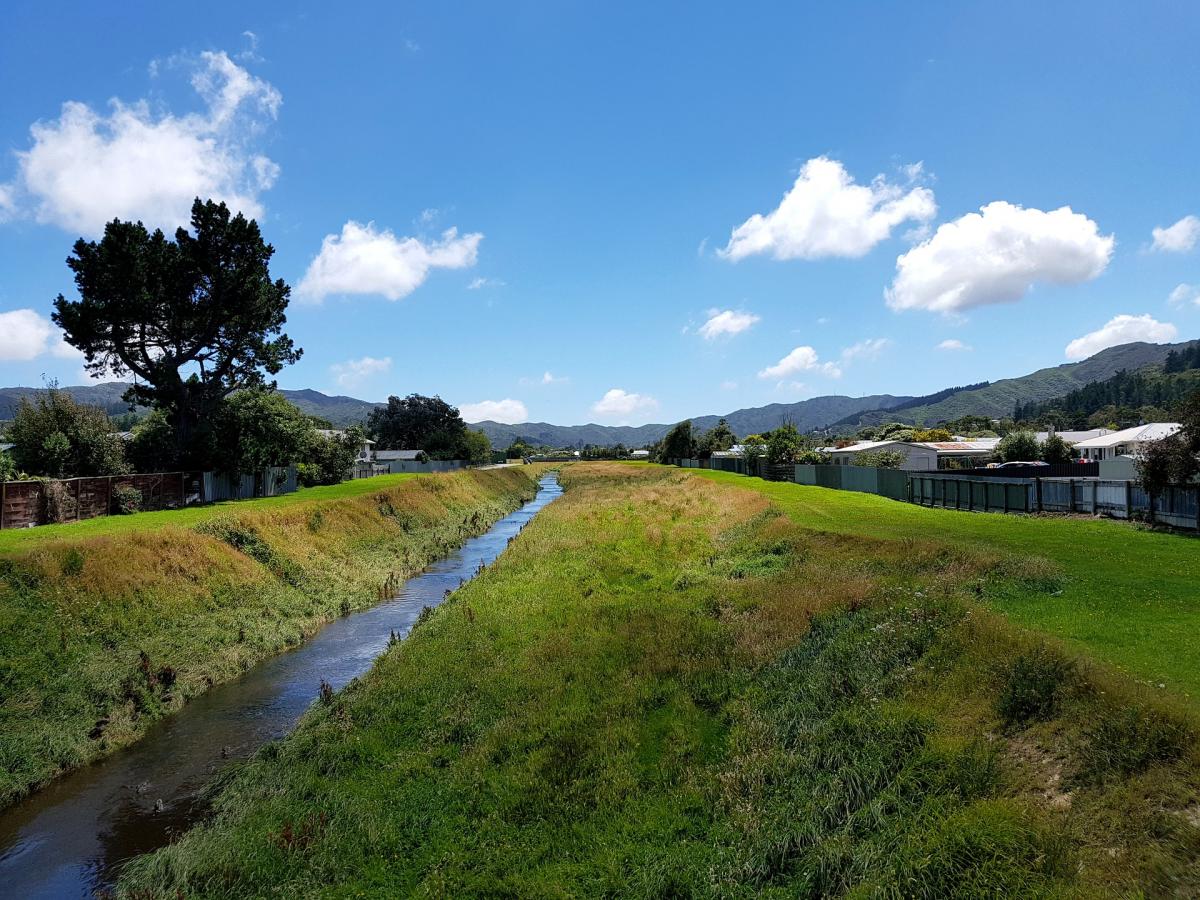
Playing safely in urban streams
As we approach the school holidays and children head outdoors exploring our beautiful parks and streams we’d like to remind you how to play safely in urban streams.
The water quality of our streams can be variable.
Stormwater run-off and other contaminants can affect the water quality of our urban streams.
While there are actions being taken by council and interest groups to improve the water quality in our streams, the water can contain ‘bugs’ that can make people sick. To keep people safe it’s important to follow the tips below.
Here are some tips on enjoying our streams safely:
- Children should always be supervised when playing in or around water.
- Always avoid contact with streams during heavy rain and for 48 hours after it stops raining.
- Never drink stream water.
- Always wash your hands after coming into contact with stream water and before eating.
- Keep stream water out of your eyes, ears, mouth, or any open sores. If your children are too young to understand these precautions please avoid contact with streams.
- Wading and exploring is ok, but the water in streams is not suitable for swimming. To check out the best places for swimming in our region see www.gw.govt.nz...
How you can help:
- Report cracked or leaking pipes (and if you spot a leak on your own property organise for a plumber to check the pipes as soon as possible).
- Make sure rubbish is not left near streams including picking up dog poo.
- Only rain should go down the drain - empty detergents and paintbrush residue onto the lawn, or tip down the sink, not into drains leading to stormwater.
- Wash cars on the lawn, or at an approved carwash.
- Use non-toxic pesticides and fertilisers on your gardens.
- Reduce run-off by using porous landscaping, such as bark chips or lawn.

Some Choice News!
DOC is rolling out a new tool to help figure out what to tackle first when it comes to protecting our threatened species and the things putting them at risk.
Why does this matter? As Nikki Macdonald from The Post points out, we’re a country with around 4,400 threatened species. With limited time and funding, conservation has always meant making tough calls about what gets attention first.
For the first time, DOC has put real numbers around what it would take to do everything needed to properly safeguard our unique natural environment. The new BioInvest tool shows the scale of the challenge: 310,177 actions across 28,007 sites.
Now that we can see the full picture, it brings the big question into focus: how much do we, as Kiwis, truly value protecting nature — and what are we prepared to invest to make it happen?
We hope this brings a smile!


Get up to $30,000 back* with your new home
Sign up to an independent apartment or townhouse at a participating Ryman village by 31 March 2026 and receive a $30,000 credit on settlement or sign up to a serviced apartment and receive a $10,000 credit on settlement*.
Imagine a new smart TV, your next getaway or furniture for your new home. With more money staying in your pocket, it’s yours to spend!
Discover the lifestyle that awaits.
*Participating villages only, Terms and conditions apply.


🎉 Riddle me this, legends! 🎉
He/She who makes it, sells it.
He/She who buys it, doesn't use it.
The user doesn't know they are using it.
What is it?
(Shezz from Ngāruawāhia kindly provided this head-scratcher ... thanks, Shezz!)
Do you think you know the answer? Simply 'Like' this post if you know the answer and the big reveal will be posted in the comments at 2pm on the day!
Want to stop seeing these in your newsfeed?
Head here and hover on the Following button on the top right of the page (and it will show Unfollow) and then click it. If it is giving you the option to Follow, then you've successfully unfollowed the Riddles page.
 Loading…