





'Bishops, Boozers, Brethren & Burkas: A Cartoon History of Religion in New Zealand' by Mike Grimshaw
Date: Friday, 21 June, 2019
Time: 12:10pm to 1:00pm
Cost: Free. You don't need to book.
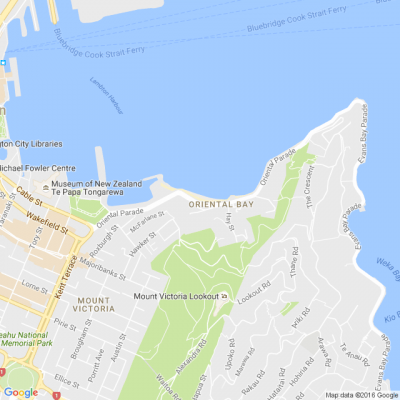
Location: Te Ahumairangi (ground floor), National Library, corner Molesworth and Aitken Streets, Thorndon
Author Mike Grimshaw discusses his book
Mike Grimshaw discusses his new book, 'Bishops, Boozers, Brethren & Burkas', published in June 2019 as part of the New Zealand Cartoon Archive’s monograph series. Grimshaw will use cartoons from 1860s to the present day to discuss the way religion in New Zealand has been represented by our cartoonists.
History via cartoons
There is no general history of religion in New Zealand, so this book is a unique contribution, providing not only a cartoon history of religion in this country but also a history via cartoons.
Changing views on religion
From the 1860s, settlers viewed issues of religion and politics as problematic, but in the main, religion remained part of the fabric of society. However, religion was more of a concern for our cartoonists as New Zealand became an increasingly secular nation from the 1970s onwards. This not only reflects the generation of cartoonists whose work was published from the 1970s but also a shift in New Zealand society more generally.
Overall, when religion was less of a contested identity and influence, cartoonists tended to leave religion — and the church alone. However, as the country became, very quickly, a secular society from the 1970s onwards, religion was a target of cartoonists. Religion and the religious were increasingly presented as representing religious and social attitudes and beliefs regarded as out of step with a modern society.
About the speaker
Mike Grimshaw (PhD Otago) is Associate Professor in Sociology at University of Canterbury, New Zealand. A founding series editor for Radical Theologies and Philosophies (Palgrave Macmillan) and founding co-editor of Continental Thought & Theory (), he toils at the intersections of radical theology, continental thought and cultural and social theory.
Mike also has a focus on New Zealand religious and intellectual history; recently publishing a book of interviews with the New Zealand radical religious thinker Sir Lloyd Geering 'Geering Interviews'(Polebridge, USA, 2018), and edited the letters of the noted New Zealand philosopher Arthur Prior "Arthur Prior, ‘a young progressive'" (Canterbury University Press, 2018).
Image: Cover of 'Bishops, Boozers, Brethren & Burkas' by Mike Grimshaw (New Zealalnd Cartoon Archive, 2019)


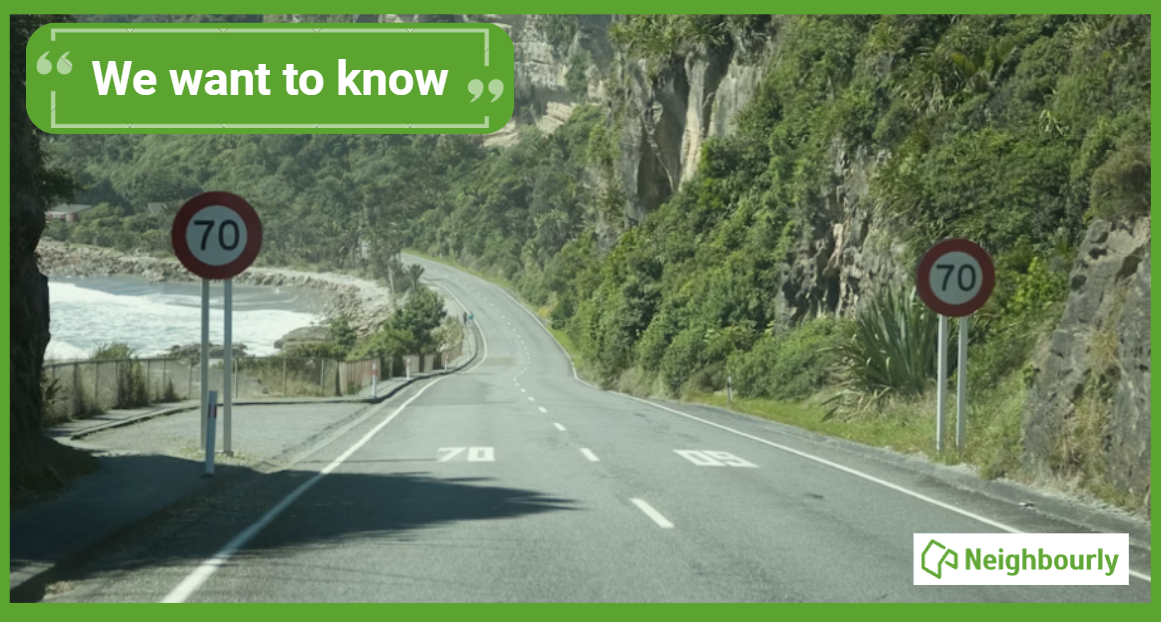
Poll: If we want to reduce speeding, what do you think actually changes driver behaviour? 🛻🚨🚓
In the Post's article on speeding penalties, the question is asked whether speeding fines are truly about road safety, or are they just a way to boost revenue for the Crown?
What do you think? Should speeding motorists receive speeding fines or demerit points?
-
40.7% The sting of a fine (Money talks!)
-
59.3% The threat of demerit points (Nobody wants to lose their license!)
Poll: Are you still heading to your local for your caffeine fix, or has the $$ changed your habits? ☕
Wellington’s identity is built on its cafe culture, but with costs climbing, that culture is under pressure. We’ve seen the headlines about recent closures, and it’s a tough pill to swallow along with a $6+ coffee.
We all want our favourite spots to stay open, but we also have to balance our own budgets ⚖️
We want to know: How are you handling the "coffee math" in 2026? Are you still heading to your local for a chat and a caffeine fix, or has the cost of living changed your habits?
Keen to read more about "coffee math"? The Post has you covered.

-
46.3% I avoid spending money on coffee
-
44.3% I still indulge at my local cafe
-
9.4% Irrelevant - coffee is not for me

Addictive Eaters Anonymous
How much does it cost to join AEA?
There are no dues or fees for joining AEA or attending AEA meetings. We are self-supporting through our own voluntary contributions. At some point during each meeting we pass the basket to help cover expenses, such as the cost of rent and literature. Members are not obliged to contribute, but we usually do so to the extent we are able.
 Loading…