





Alex’s Adventures in Masterland
Celebrating New Zealand music
Wednesday 29 May 2019
5.30pm - 6.30pm
National Library Tiakiwai Auditorium, Cnr Molesworth and Aitken Streets, Thorndon
Collecting original hi-fidelity sources
Popular music has become a major focus of music archiving around the world during recent decades. Public institutions and community-organised archives alike have recognised the value of collecting, for instance, ephemera, instruments and artefacts, recordings, and oral history.
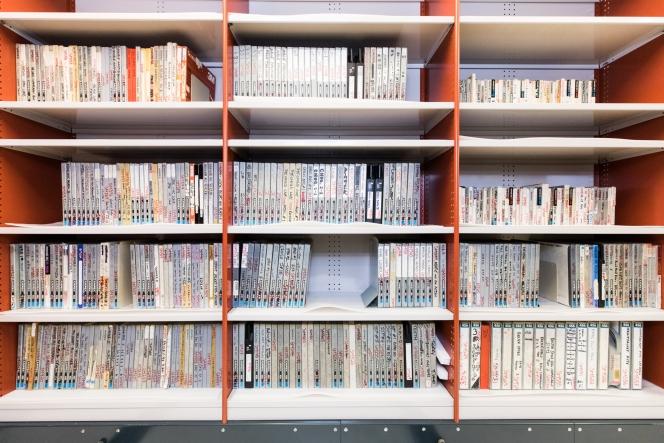
In this talk, Michael Brown discusses recent experiences at the Alexander Turnbull Library around collecting of master recordings: the original hi-fidelity sources of commercial releases. The talk concentrates mainly on the Viking and Ode record labels, who have been progressively donating their master tapes to the Library’s Archive of New Zealand Music. Each collection contains different types of “masters” – production masters, copy masters, outtakes, field recordings, etc. – along with accompanying documentation. The Library has developed a new acquisition model around these collections, in which audio digitisation serves both the Library’s preservation mandate and the labels’ own needs.
Historical insights into music production in New Zealand
Given the effort required to preserve such magnetic-tape media, the question can be asked: what is the value of masters for researchers and future generations? These recordings in fact provide numerous historical insights into music production in New Zealand. The quality of the master audio, meanwhile, which considerably exceeds that of the original releases, can serve as a primary source for phonomusicological study as well as enabling re-release via online digital platforms.
About the speaker
Dr Michael Brown is Curator, Music at the Alexander Turnbull Library (part of the National Library of New Zealand). His publications include the co-edited volume Searches for Tradition: Essays on New Zealand Music, Part and Present, published in 2017 by Victoria University Press.
Image: Master tapes from the Flying Nun Records collection, Alexander Turnbull Library. Photo: Mark Beatty.

Poll: 🤖 What skills do you think give a CV the ultimate edge in a robot-filled workplace?
The Reserve Bank has shared some pretty blunt advice: there’s no such thing as a “safe” job anymore 🛟😑
Robots are stepping into repetitive roles in factories, plants and warehouses. AI is taking care of the admin tasks that once filled many mid-level office jobs.
We want to know: As the world evolves, what skills do you think give a CV the ultimate edge in a robot-filled workplace?
Want to read more? The Press has you covered!

-
53% Human-centred experience and communication
-
14.7% Critical thinking
-
29.6% Resilience and adaptability
-
2.7% Other - I will share below!

🧩😏 Riddle me this, Neighbours…
I am an odd number. Take away a letter and I become even. What number am I?
Do you think you know the answer? Simply 'Like' this post and we'll post the answer in the comments below at 2pm on the day!
Want to stop seeing these in your newsfeed? No worries! Simply head here and click once on the Following button.


Some Choice News!
DOC is rolling out a new tool to help figure out what to tackle first when it comes to protecting our threatened species and the things putting them at risk.
Why does this matter? As Nikki Macdonald from The Post points out, we’re a country with around 4,400 threatened species. With limited time and funding, conservation has always meant making tough calls about what gets attention first.
For the first time, DOC has put real numbers around what it would take to do everything needed to properly safeguard our unique natural environment. The new BioInvest tool shows the scale of the challenge: 310,177 actions across 28,007 sites.
Now that we can see the full picture, it brings the big question into focus: how much do we, as Kiwis, truly value protecting nature — and what are we prepared to invest to make it happen?
We hope this brings a smile!

 Loading…