





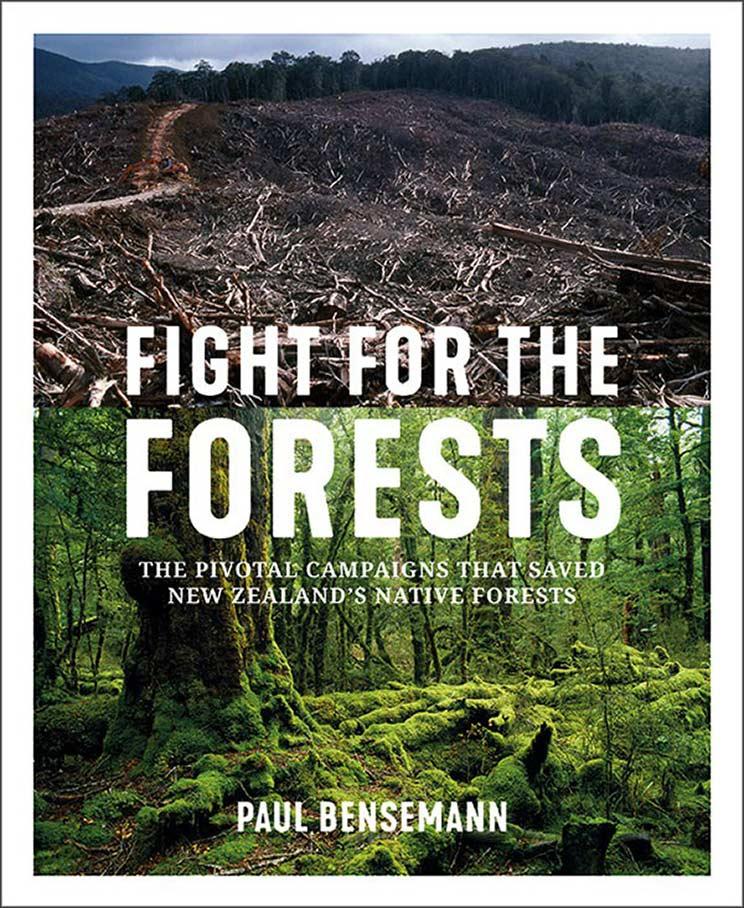
Fight for the Forests: The Pivotal Campaigns that Saved New Zealand’s Native Forests
Date: Wednesday 25 March 2020, 5:30pm to 6:30pm
Cost: Free. Koha from non-members appreciated
Location: Taiwhanga Kahau — Auditorium, National Library Wellington. Entrance on Aitken Street.
Part of the Friends of the Turnbull Public Programme — 2020 series
Hear Paul Bensemann talk about the ‘Save Manoupori’ campaign. From small beginnings, a much larger movement grew. Bensemann’s book ‘Fight for the forests’ was a finalist in the 2019 Ockham NZ Book Awards.
A remarkable story of activism
Involved in conservation issues since he joined the ‘Save Manapouri’ campaign at 19, Paul Bensemann tells the remarkable story of how a group of young activists became aware of government plans to mill vast areas of West Coast beech forest and began campaigning to halt this. From small beginnings, a much larger movement grew, initially centred on the work of the Native Forests Action Council, and eventually Forest and Bird and Native Forest Action.
Research at the Alexander Turnbull Library
Paul’s book research started with a NZ Society of Authors/Copyright Licencing NZ grant that provided a six weeks’ fellowship at the Stout Research Centre. He spent most of that time at the Turnbull (using the Sir Charles Fleming and Action for Environment collections), with many follow-up visits to the Library during his three-year full-time writing project. He also interviewed many campaigners and collected many old photographs to supplement photographer Craig Potton’s beautiful forest scenes. Fight for the Forests was a finalist in the 2019 Ockham NZ Book Awards.

Poll: Are you still heading to your local for your caffeine fix, or has the $$ changed your habits? ☕
Wellington’s identity is built on its cafe culture, but with costs climbing, that culture is under pressure. We’ve seen the headlines about recent closures, and it’s a tough pill to swallow along with a $6+ coffee.
We all want our favourite spots to stay open, but we also have to balance our own budgets ⚖️
We want to know: How are you handling the "coffee math" in 2026? Are you still heading to your local for a chat and a caffeine fix, or has the cost of living changed your habits?
Keen to read more about "coffee math"? The Post has you covered.

-
45.6% I avoid spending money on coffee
-
42% I still indulge at my local cafe
-
12.4% Irrelevant - coffee is not for me

🌉🛶 Early Birds Might Crack This One First… or Not? 🥚🧠
A person is crossing a bridge and sees a boat full of people, yet there isn't a single person on board.
How is this possible?
(Susan from Massey kindly provided this head-scratcher ... thanks, Susan!)
Do you think you know the answer? Simply 'Like' this post if you know the answer and the big reveal will be posted in the comments at 2pm on the day!
Want to stop seeing these in your newsfeed?
Head here and hover on the Following button on the top right of the page (and it will show Unfollow) and then click it. If it is giving you the option to Follow, then you've successfully unfollowed the Riddles page.
🪱🐦 When are you the most productive? 🌙🦉
The Post has been diving into our daily habits, and research suggests being an early bird or a night owl isn’t just a choice—it’s biology! We all have that specific time when our brains finally "click" into gear.
This raises a big question for the modern workplace. To get the best out of everyone, should employers accommodate our natural body clocks? This idea is at the heart of the four-day work week and flexible scheduling movements.
We want to hear from you:
1. When does your brain "click" into gear?
2. Would a flexible (or shortened) schedule change the way you work?
 Loading…