







Winter Wellness Series: SLEEP 💤🥱😴
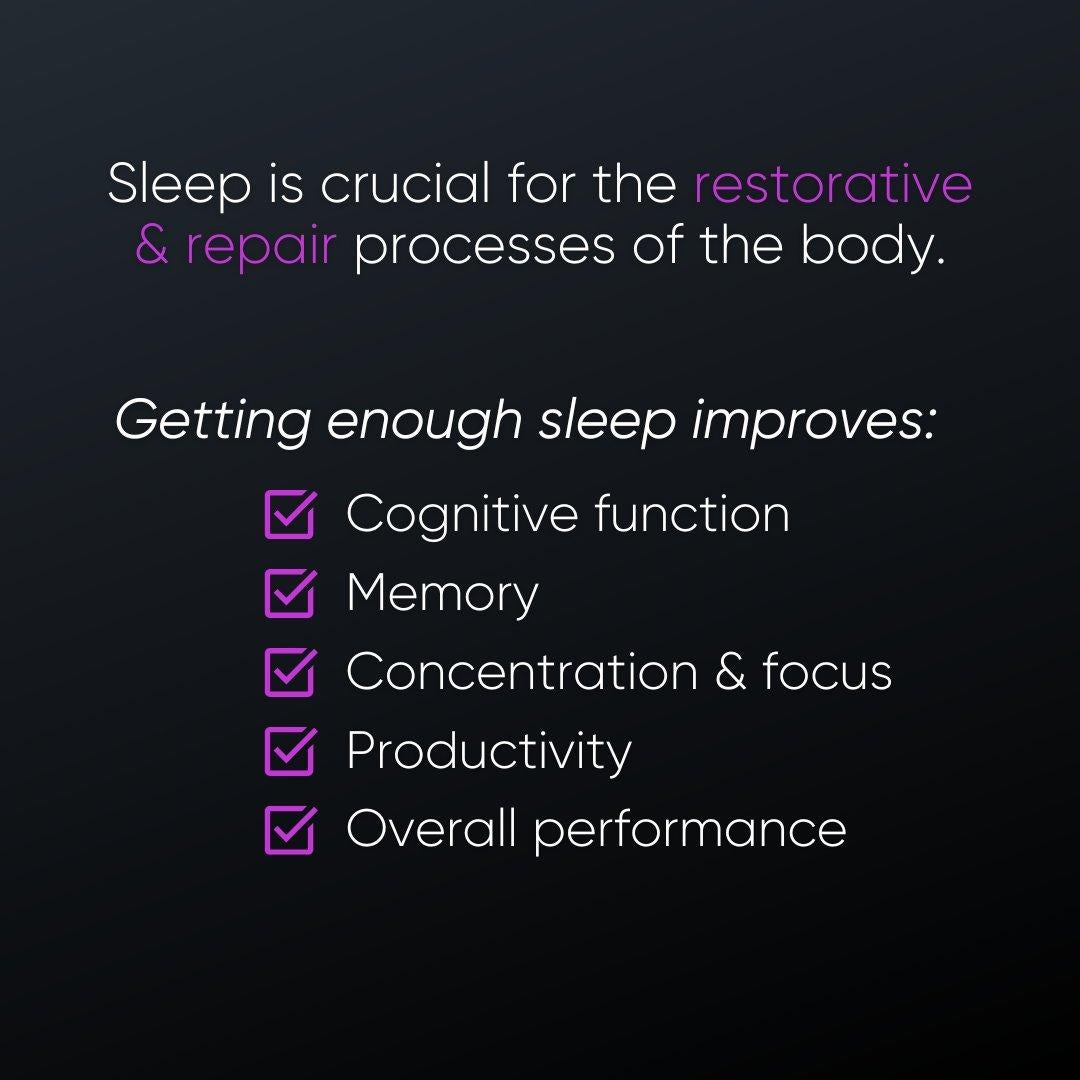
Sleep is crucial for maintaining optimal physical & mental health. It plays a key role in how the body restores & repairs itself, whilst also improving cognitive function, memory, concentration, productivity and overall performance. 🤯🧐💪🧠
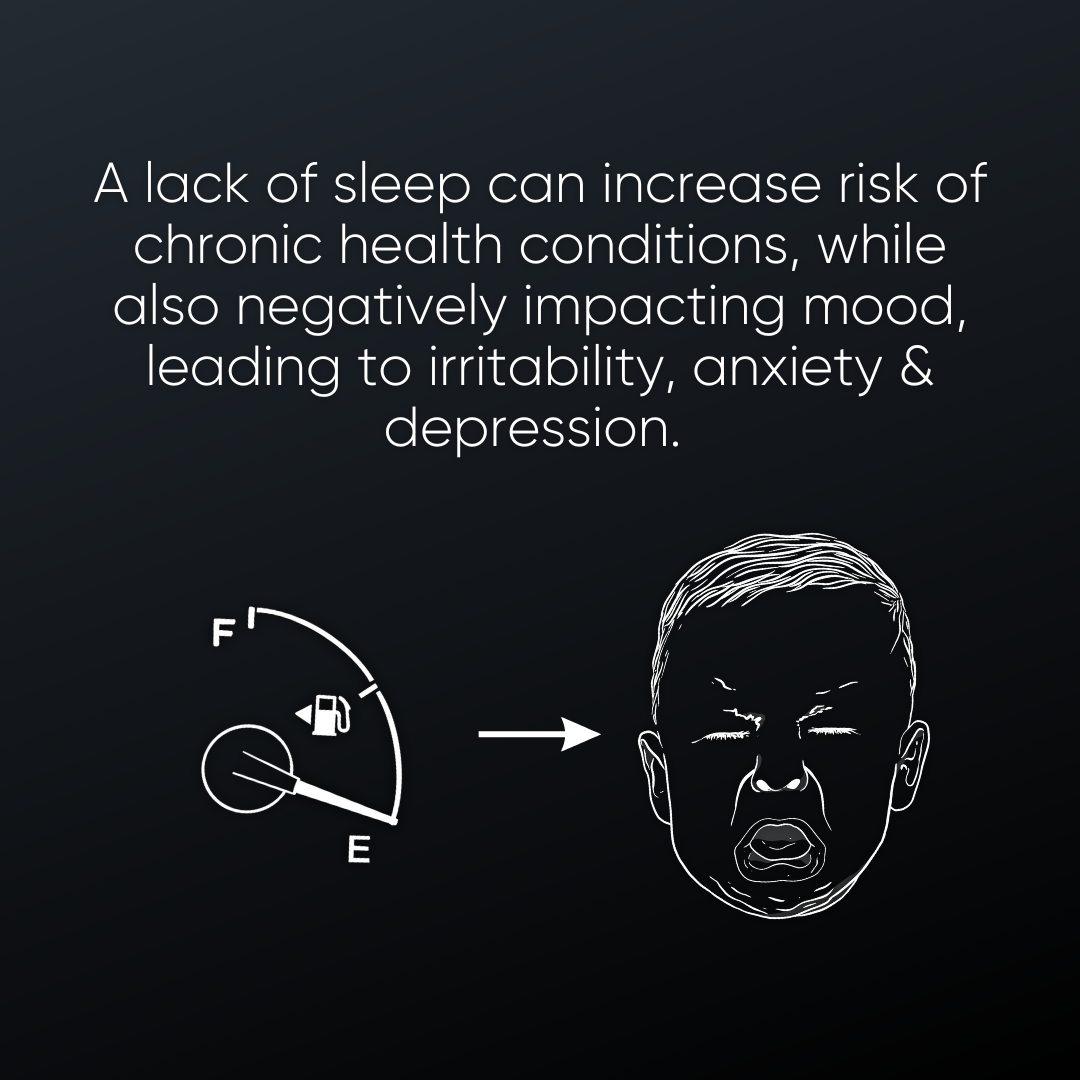
Lack of sleep plays a direct role in increasing the risk of chronic health conditions like obesity, diabetes and heart disease, while also contributing to development of irritability, anxiety and depression.
Sleep deprivation may also contribute to impairing immune function 🦠🧬 - which is especially important during the colder months. Start prioritising sleep QUALITY to enhance your wellness!
Keys to optimise your sleep performance 🔑:
✅ Stick to a sleep schedule: getting into bed and falling asleep at the same time every night help's set the body's biological clock, making it easier to fall asleep.
✅ Bedroom should be dark, quiet, and cool: Limit distractions, and keep the room cool for optimal sleep.
✅ Get off screens 30mins before sleep: Blue light from screen use may interfere with melatonin secretion, which is important for sleep. This can also reduce the amount of deep sleep overall, which is important for recovery and restoration.
✅ Avoid caffeine after 2pm: Caffeine blocks the effects of adenosine, which is a neurotransmitter that makes us feel tired.
✅ Limit alcohol: Alcohol intake can inhibit REM sleep, which keeps you in lighter stages of sleep for longer.
✅ Exercise regularly: Exercise for at least 30 minutes per day, but try to avoid exercising 2-3 hours before bedtime to allow the body to relax.
#optimalsleep #sleepquality #deepsleep #recovery #restoration #whywesleep #optimalfunction #wellness #nervesystem #brainpower #chiropracticnz #betterwithchiropractic #autonomicnervesystem #parasympathetic #thechironz #winterwellness #wevegotyourback

🪱🐦 When are you the most productive? 🌙🦉
The Post has been diving into our daily habits, and research suggests being an early bird or a night owl isn’t just a choice—it’s biology! We all have that specific time when our brains finally "click" into gear.
This raises a big question for the modern workplace. To get the best out of everyone, should employers accommodate our natural body clocks? This idea is at the heart of the four-day work week and flexible scheduling movements.
We want to hear from you:
1. When does your brain "click" into gear?
2. Would a flexible (or shortened) schedule change the way you work?

Poll: Are you still heading to your local for your caffeine fix, or has the $$ changed your habits? ☕
Wellington’s identity is built on its cafe culture, but with costs climbing, that culture is under pressure. We’ve seen the headlines about recent closures, and it’s a tough pill to swallow along with a $6+ coffee.
We all want our favourite spots to stay open, but we also have to balance our own budgets ⚖️
We want to know: How are you handling the "coffee math" in 2026? Are you still heading to your local for a chat and a caffeine fix, or has the cost of living changed your habits?
Keen to read more about "coffee math"? The Post has you covered.

-
45.8% I avoid spending money on coffee
-
42.4% I still indulge at my local cafe
-
11.8% Irrelevant - coffee is not for me
Poll: If we want to reduce speeding, what do you think actually changes driver behaviour? 🛻🚨🚓
In the Post's article on speeding penalties, the question is asked whether speeding fines are truly about road safety, or are they just a way to boost revenue for the Crown?
What do you think? Should speeding motorists receive speeding fines or demerit points?

-
35.8% The sting of a fine (Money talks!)
-
64.2% The threat of demerit points (Nobody wants to lose their license!)
 Loading…