




Stories of early Wadestown
‘Fernhill’ and her families
Last month, when we went hunting for the stables in Hanover Street, we unearthed the story of the ‘Fernhill’ stables that housed Winnie, the beautiful black horse that a former pupil remembers being ridden by Euphemia Maxwell, who owned and was school mistress at ‘Fernhill’ …
Farm cottage to family home
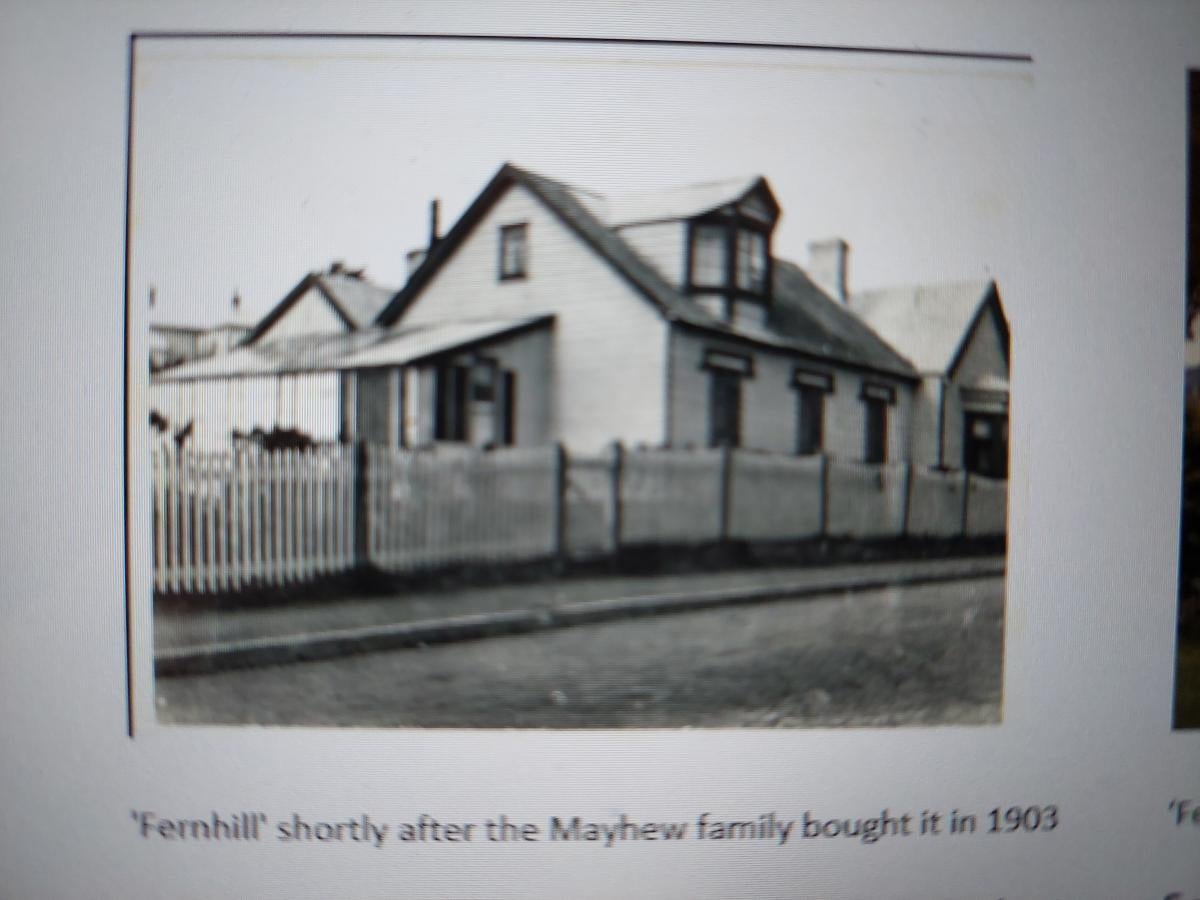
‘Fernhill’ is one of the earliest houses in Wellington, “a rare example of early Colonial architecture”. The oldest part was a humble cottage on five acres of farmland bought by Charles Pharazyn in 1845, after the 1841 subdivision of Wadestown by James Watt and John Wade. It was built from matai and totara cut on the site. Additions in 1860 made it the family home that a young widow, Euphemia Maxwell, bought in early 1866 for her four children, her mother and her 8’6” grand piano! Before they moved in, a conservatory and lean-to were added. There is a delightful description of the bullock cart journey of her piano over the steep hill from Wellington to ‘Fernhill’, in Julie Green’s book “Family Connections - Fernhill, Crofton and The Elms”.
Wadestown’s earliest school
From 1874 until 1881, when Wadestown School was established, Euphemia’s home served as a school and Sunday school for local children. In 1878, she added a large room to better accommodate her grand piano and her school and church activities.
Fernhill subdivision
In 1888, after the Maxwell family moved to Tauranga, the property was subdivided, making 26 sections in Fernhill Terrace as it now is, and 12 sections on the west side of Pitt Street. The building sites were in “the most picturesque and healthy suburb of Wellington ...[with] a charming view of bush scenery... well sheltered from the southerly winds.” It sold as 39 lots over the next decade. The large section between Fernhill Terrace, Pitt St and Wadestown Rd was later sold by Euphemia to St Luke’s Church. ‘Fernhill’ itself was on a larger section, and its stable on one of the new Pitt St sections. ‘Fernhill’ was not sold until 1894, after seven years of deterioration as a tenanted property.
Later ‘Fernhill’ families
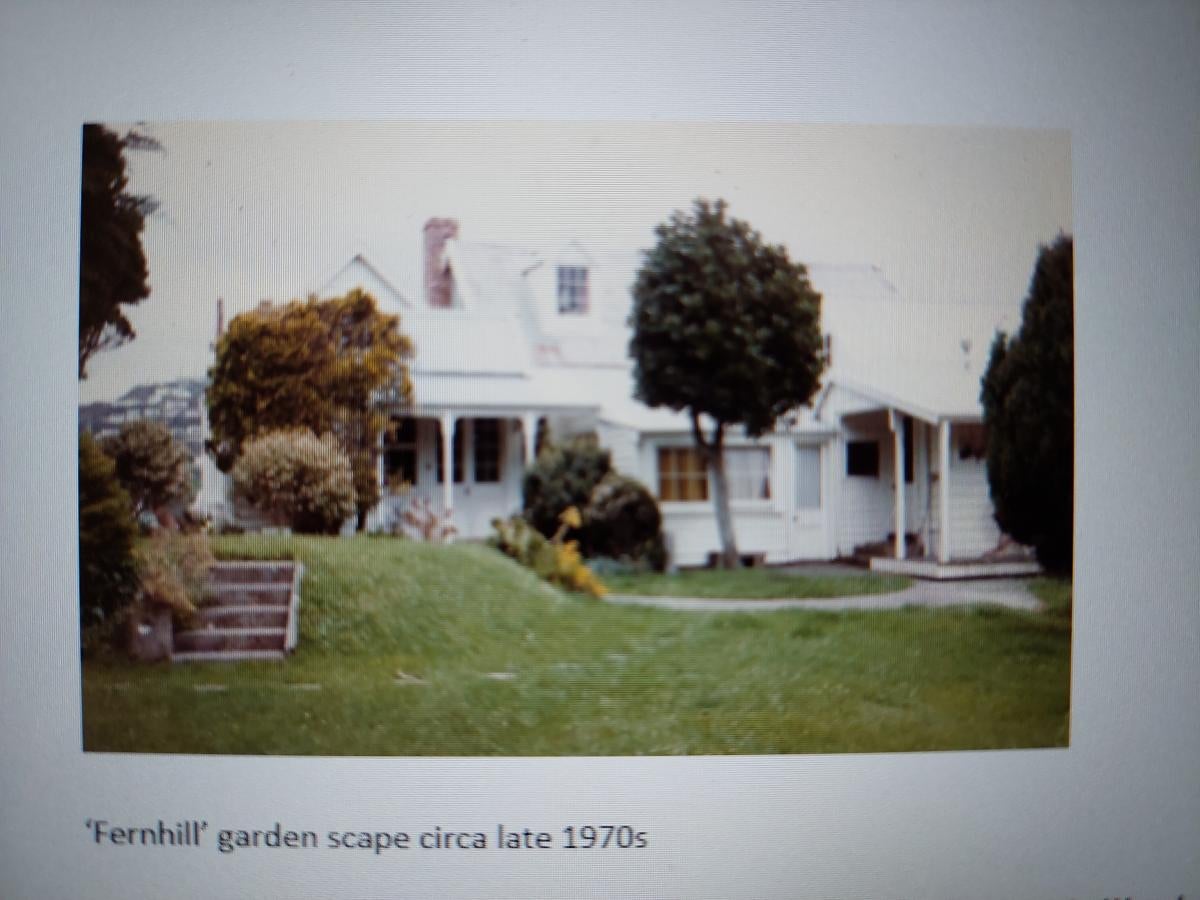
‘Fernhill’ continued as a family home throughout the rest of the 19th, 20th and 21st centuries, to date. From 1903, it has been home for a combined 115 years, to just two families.
Edward and Ellen Mayhew lived here with their four children for 47 years, until Ed’s death in 1950. There are some lovely anecdotes in Julie Green’s book, like Ed grazing his horses in the gully between Fernhill Terrace and Weld St!
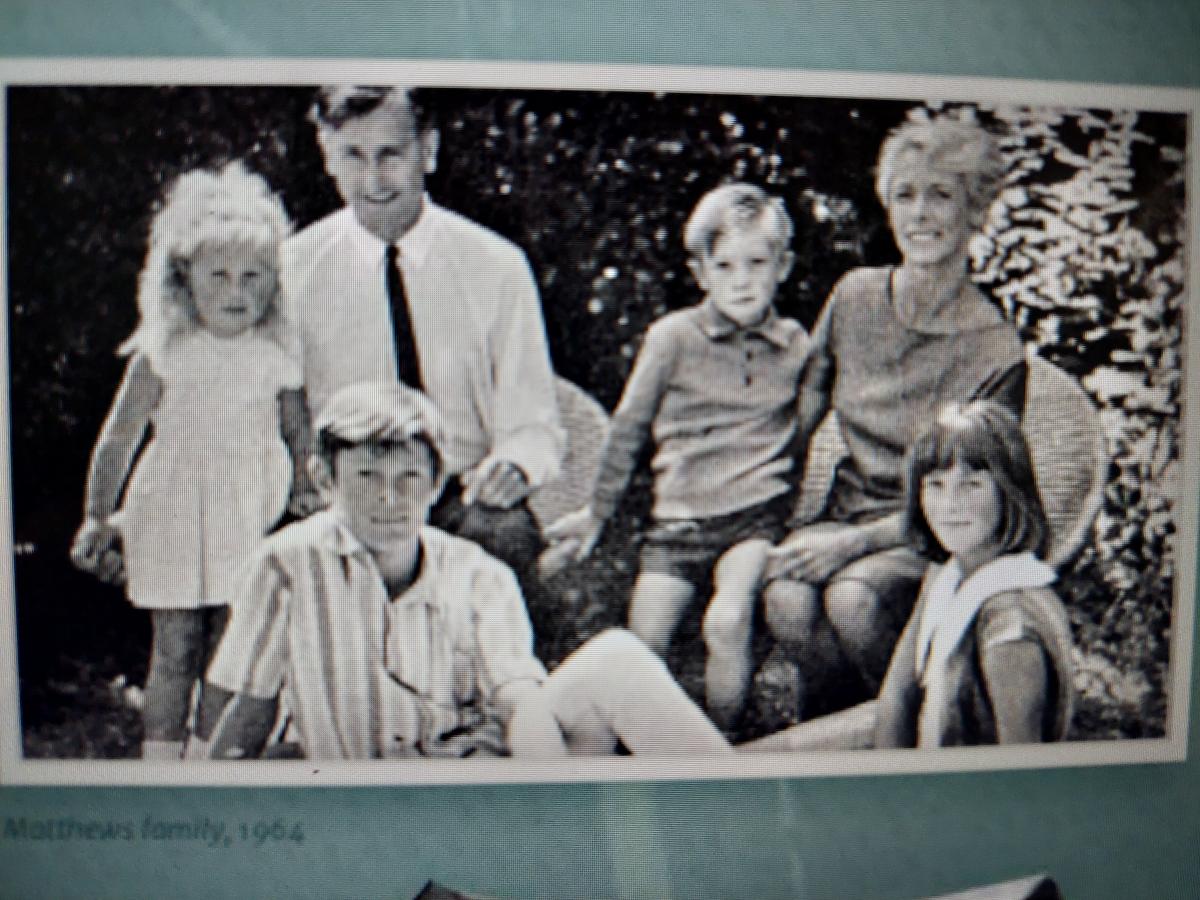
In 1956, on the 75th anniversary of Wadestown School, Keith and Jackie Matthews acquired ‘Fernhill’ where Jackie was still living, in 2024, after 68 years. They raised their four children in ‘Fernhill’ and made sympathetic additions in 1960 and the late 1970s. Keith and Jackie retained the ‘street scape’, footprint and quirkiness of the house Euphemia left behind, but created better visual and physical access to the pleasant garden at the rear, changes that Jackie hoped will be recognized, like Euphemia’s, as part of ‘Fernhill’s history.
Heritage covenant – a lasting tribute to Jackie Matthews 1926-2024
In June 2012, Jackie Matthews signed a heritage covenant with the NZ Historic Places Trust “to protect, maintain and preserve Fernhill as an historic place”.
ϗ With thanks to the Matthews family, and to Julie Green ϗ
Footnote: the ‘Fernhill’, ‘Crofton’ and Hanover Street farmhouse connections
There are some fascinating connections between ‘Fernhill’, ‘Crofton’ and the Hanover Street farmhouses.
An “H. Ashworth” and his wife and children were tenants at ‘Fernhill’ in 1893 and probably longer, while the Fernhill subdivision was in progress (‘Fernhill’ was tenanted from 1887 until sold in 1894). If this was Nettie (Henrietta) Ashworth (daughter of John Holmes of Kaiwharawhara) and her husband Henry, it seems likely that they rented ‘Fernhill’ before they moved to 27 Hanover Street when her father purchased it in 1896.
As a footnote to our February post on 27 Hanover Street, we note that the same John Holmes bought the historic Crofton homestead in Ngaio in 1895, which his family owned until 1931. Shortly after, a “Mr and Mrs John Holmes” bought sections 37 and 38 of the Fernhill subdivision in January 1898, with frontage to Fernhill Terrace and Elizabeth Street (now lower Weld Street, which backs onto Hanover Street) [“Family Connections Fernhill, Crofton and The Elms” pages 47 and 31]. Was this the same John Holmes, and did he build on his sections in Fernhill Terrace if he was living in ‘Crofton’? Yet another piece of the heritage jigsaw for someone to explore and fit into place!

🧩😏 Riddle me this, Neighbours…
I am an odd number. Take away a letter and I become even. What number am I?
Do you think you know the answer?
Want to stop seeing these in your newsfeed? No worries! Simply head here and click once on the Following button.


Some Choice News!
DOC is rolling out a new tool to help figure out what to tackle first when it comes to protecting our threatened species and the things putting them at risk.
Why does this matter? As Nikki Macdonald from The Post points out, we’re a country with around 4,400 threatened species. With limited time and funding, conservation has always meant making tough calls about what gets attention first.
For the first time, DOC has put real numbers around what it would take to do everything needed to properly safeguard our unique natural environment. The new BioInvest tool shows the scale of the challenge: 310,177 actions across 28,007 sites.
Now that we can see the full picture, it brings the big question into focus: how much do we, as Kiwis, truly value protecting nature — and what are we prepared to invest to make it happen?
We hope this brings a smile!


Poll: Are you still heading to your local for your caffeine fix, or has the $$ changed your habits? ☕
Wellington’s identity is built on its cafe culture, but with costs climbing, that culture is under pressure. We’ve seen the headlines about recent closures, and it’s a tough pill to swallow along with a $6+ coffee.
We all want our favourite spots to stay open, but we also have to balance our own budgets ⚖️
We want to know: How are you handling the "coffee math" in 2026? Are you still heading to your local for a chat and a caffeine fix, or has the cost of living changed your habits?
Keen to read more about "coffee math"? The Post has you covered.

-
42.4% I avoid spending money on coffee
-
46.4% I still indulge at my local cafe
-
11.2% Irrelevant - coffee is not for me
 Loading…