




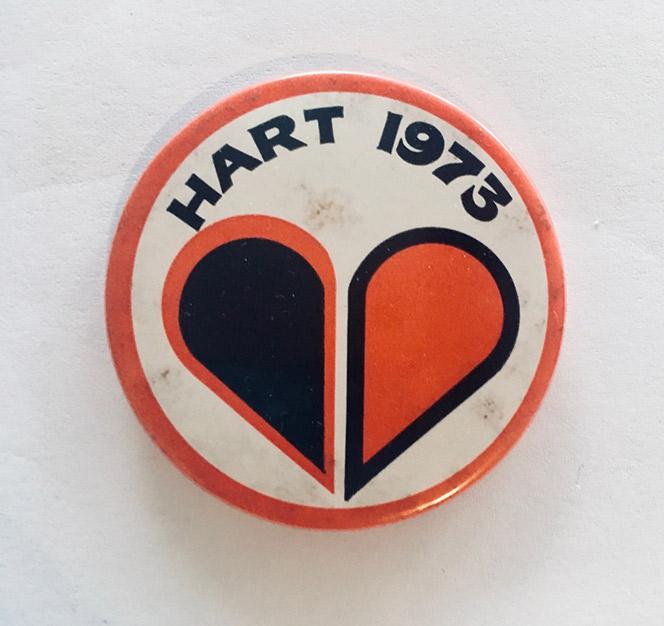
The Halt All Racist Tours movement at 50: the power of protest
Date: Saturday, 12 October, 2019
Time: 9:30am to 1:30pm
Cost: $10 door sales
Location: Taiwhanaga Kahau — Auditorium (lower ground floor), Corner Molesworth and Aitken Streets, Wellington. Entrance on Aitken Street.
Prominent New Zealand activists discuss the importance and future of protest and dissent
50 years on from the formation of the Halt All Racist Tours movement (HART), join prominent New Zealand activists for a discussion on the importance and future of protest and dissent.
Protest and how it changed New Zealand
The years between 1969 and 1985 irrevocably changed New Zealand and the way we see ourselves and the wider world.
From the 1969 formation of HART to the cancellation of the 1973 tour, the 1976 Montreal Olympic boycott, the 56 days of unprecedented protest against the 1981 Springboks rugby tour to the decision by the New Zealand High Court to grant an injunction stopping the All Blacks from touring South Africa in 1985, New Zealand was at war with itself.
HARTS’s protest and what did it achieve
By 1981, the issue of sporting contact with South Africa, for a long time a litmus test for a wide-ranging set of New Zealand values, had become, sublimely at least, more about New Zealand than South Africa.
As New Zealand moved from being a grey, conservative, post second world-war society to a country with a more bi-cultural approach to domestic race issues and a more liberal, internationalist approach to world issues, what was the role played by HART and other anti-apartheid and anti-racist groups to effecting this change? How powerful was HART’s protest and what did it achieve?
Join us for a dynamic exchange of ideas focussing on the past and present with a view to the future.
About the speakers
Sessions will be chaired by Simon Wilson and Rosslyn Noonan. Presenters include:
•Sue Bradford — activist, academic and former New Zealand politician
•Bob Burgess — former New Zealand Rugby player, All Black from 1971 to 1973
•Linda Burgess — short story writer, script and televisions writer, novelist and reviewer
•Moana Jackson — lawyer specialising in Treaty of Waitangi and constitutional issues
•Trevor Richards — HART founding chairman
•John Minto — national organiser of HART
•Dave Wickham — sports fanatic HART activist
•Morgan Godfery — writer and trade unionist

Poll: If we want to reduce speeding, what do you think actually changes driver behaviour? 🛻🚨🚓
In the Post's article on speeding penalties, the question is asked whether speeding fines are truly about road safety, or are they just a way to boost revenue for the Crown?
What do you think? Should speeding motorists receive speeding fines or demerit points?

-
37.3% The sting of a fine (Money talks!)
-
62.7% The threat of demerit points (Nobody wants to lose their license!)
Scam Alert: Bank cold calls
ASB is warning customers about reports of cold calls from scammers claiming to be from ASB. These scammers are trying to obtain personal information, including usernames, dates of birth, and verification codes sent to your mobile phone.
🛡️ The "Caller Check" Test
If you get a call from someone claiming to be from ASB and you’re unsure, just ask them for a Caller Check. You will then be able to verify the call through the app.
Remember, banks will:
❌ Never ask for your banking passwords, PINs, or verification codes
❌ Never need to know your full credit card number – especially the CVC
❌ Never ask you to download software or remotely access your device
❌ Never ask you to purchase gift cards or transfer funds.
If you have received a phone call and think your account has been compromised, call ASB on 0800 ASB FRAUD (0800 272 372), or visit your local branch.


Some Choice News!
DOC is rolling out a new tool to help figure out what to tackle first when it comes to protecting our threatened species and the things putting them at risk.
Why does this matter? As Nikki Macdonald from The Post points out, we’re a country with around 4,400 threatened species. With limited time and funding, conservation has always meant making tough calls about what gets attention first.
For the first time, DOC has put real numbers around what it would take to do everything needed to properly safeguard our unique natural environment. The new BioInvest tool shows the scale of the challenge: 310,177 actions across 28,007 sites.
Now that we can see the full picture, it brings the big question into focus: how much do we, as Kiwis, truly value protecting nature — and what are we prepared to invest to make it happen?
We hope this brings a smile!

 Loading…