





ELDER ABUSE HITS CLOSE TO HOME
ELDER ABUSE HITS CLOSE TO HOME
Over the recent months of COVID-19, a small percentage of older people have experienced more vulnerability to elder abuse and neglect. At Age Concern, we are focusing on why ‘Elder Abuse hits close to home’, and how Age Concerns work to reduce the harmful effects of this often-hidden issue on older people in our society.
Elder abuse and neglect is a single or repeated act, or lack of appropriate action, occurring within any relationship where there is an expectation of trust, which causes harm or distress to an older person. Elder abuse is a violation of Human Rights and a significant cause of injury, illness, lost productivity, isolation, and despair.
Elder abuse is classified into different types. The abuse experienced by an older person / kaumātua usually involves more than one type of abuse. In the cases seen by Age Concern’s Elder Abuse services in the past year:
• Psychological abuse
• Financial abuse
• Physical abuse
• Neglect
• Self-neglect
More than half of abused older people are over the age of 75. Forty per cent of abused older people live alone and more than half of alleged abusers are adult children or grandchildren. In more than two out of five cases the alleged abusers live with the older person.
There are simple things we can do to be kind and prevent abuse:
• Love and cherish your older relatives
• Phone, zoom or facetime older people
• Visit older people in your neighbourhood.
• Involve older people in your social activities.
• Encourage older people to make their own decisions.
• Support older people to use their money for their needs.
• Honour older people’s wisdom.
• Enable older people to set their own pace.
• Speak respectfully and listen to older people’s stories.
• Seek advice from any Elder Abuse Service or Age Concern if you think an older person is being abused or neglected.
Age Concern Wellington is a charity and relies on the support of volunteers and public donations to do much of the work we do. To help us help older people, please consider making a donation of your time or money. Every donation, no matter the size, will make a remarkable difference: you can mail a cheque to the address at the bottom of this newsletter, or donate online by clicking going to. www.acwellington.org.nz...

Poll: If we want to reduce speeding, what do you think actually changes driver behaviour? 🛻🚨🚓
In the Post's article on speeding penalties, the question is asked whether speeding fines are truly about road safety, or are they just a way to boost revenue for the Crown?
What do you think? Should speeding motorists receive speeding fines or demerit points?
-
38.1% The sting of a fine (Money talks!)
-
61.9% The threat of demerit points (Nobody wants to lose their license!)

Some Choice News!
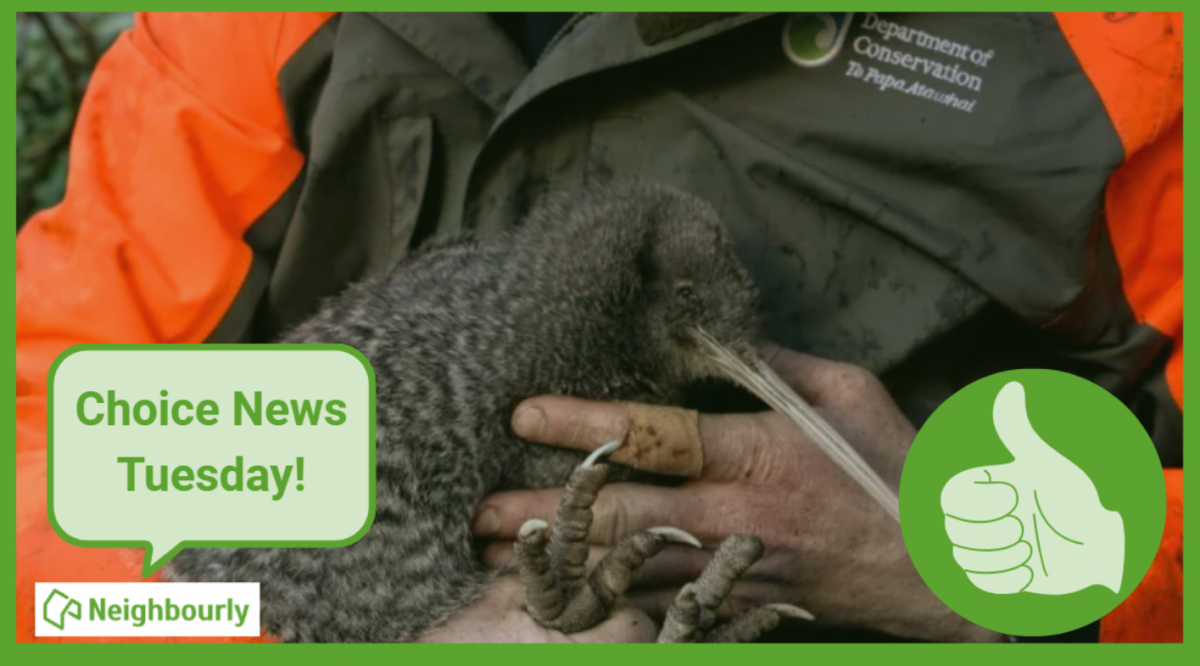
DOC is rolling out a new tool to help figure out what to tackle first when it comes to protecting our threatened species and the things putting them at risk.
Why does this matter? As Nikki Macdonald from The Post points out, we’re a country with around 4,400 threatened species. With limited time and funding, conservation has always meant making tough calls about what gets attention first.
For the first time, DOC has put real numbers around what it would take to do everything needed to properly safeguard our unique natural environment. The new BioInvest tool shows the scale of the challenge: 310,177 actions across 28,007 sites.
Now that we can see the full picture, it brings the big question into focus: how much do we, as Kiwis, truly value protecting nature — and what are we prepared to invest to make it happen?
We hope this brings a smile!

🎉 Riddle me this, legends! 🎉
He/She who makes it, sells it.
He/She who buys it, doesn't use it.
The user doesn't know they are using it.
What is it?
(Shezz from Ngāruawāhia kindly provided this head-scratcher ... thanks, Shezz!)
Do you think you know the answer? Simply 'Like' this post if you know the answer and the big reveal will be posted in the comments at 2pm on the day!
Want to stop seeing these in your newsfeed?
Head here and hover on the Following button on the top right of the page (and it will show Unfollow) and then click it. If it is giving you the option to Follow, then you've successfully unfollowed the Riddles page.
 Loading…