




Cable Car turns 119
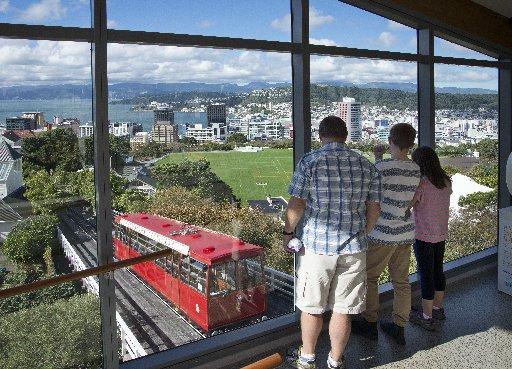
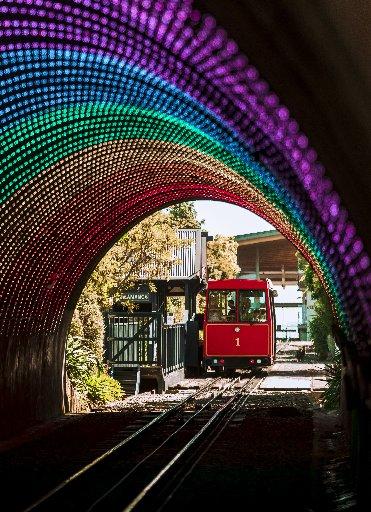
Wellington’s Cable Car is turning 119 this month.
Here are some interesting facts and figures.
- The Cable Car is a funicular railway rising 120 metres over a length of 609 metres. The line rises at a constant grade of 1 in 5 (18%), through three tunnels and over three bridges.
- The Cable Car has two cars, which start from opposite ends of the line and pass in the middle. They are attached to each other by a 30 mm diameter cable, guided by 120 rollers, which runs round a pulley at the top of the hill.
-The normal operating speed is 14.5 kmh, with a maximum load of about 75 passengers. Each car weighs about 13 tonnes when empty and 20 tonnes when full.
- It is used by about 1.1 million people each year.
- The original Cable Car railway was built and operated by the Kelburne & Karori Tramway Company. The line opened to the public on 22 February 1902.
- The hilltop location of Victoria University’s main campus was influenced by the company’s offer of a donation of £1000 if the university were located in Kelburn, so students would patronise the car when travelling between the city and the university.
- The designer of the system was James Fulton, a Dunedin-born engineer who had earlier helped build and operate the privately-owned Wellington-Manawatu railway.
- The Cable Car’s original steam-powered winding gear was replaced by an electric motor in 1933.
- In the 1940s the Cable Car suffered from increased competition: City Council buses ran to Karori and other western suburbs, bypassing it. The company believed that it was wrong for the City Council to compete with a private company, and a legal dispute broke out. The argument ended when the City Council agreed to purchase the company in 1947.
- The safety of the original Cable Car system, including its antique carriages, became a major issue in the 1970s. At that time the Ministry of Works concluded that aspects of the Cable Car were unsafe, particularly the use of unbraked trailers, and called for the system to be scrapped. Luckily for us, instead the Cable Car was replaced in 1979 with the design that we have today.
- Since the replacement, each car has completed over 993K trips, which is a total distance of over 605,000 km. That is 15 times around the earth, or 290 trips from Bluff to Cape Reinga

Don't overthink this riddle...
I have a silver sole
but no feet,
I make my living by bringing the heat.
What am I?
Do you think you know the answer? Simply 'Like' this post if you know the answer and the big reveal will be posted in the comments at 2pm on the day!
Want to stop seeing these in your newsfeed?
Head here and hover on the Following button on the top right of the page (and it will show Unfollow) and then click it. If it is giving you the option to Follow, then you've successfully unfollowed the Riddles page.


Poll: Should we ditch daylight saving? 🕰️
First introduced in New Zealand in 1927 with the passing of the Summer Time Act, it's what we know as 'Daylight Saving' and this year it ends on the first Sunday in April.
While we do get to sleep in this time around, some people would like to scrap the clock tinkering for good.
And why? Some evidence suggests the time changes are bad for our health as they mess with sleep patterns leading to short-term fatigue and affecting mood. Meanwhile the hour change is frustrating for farmers and a nightmare for getting the littlies to sleep. But what's your take?

-
41% Yes - get rid of the clock changes
-
57.3% No, I enjoy it
-
1.7% Other - I'll share below
We're taking the bus!
The number of Wellingtonians taking the bus and train rose by 3% last week compared to the same time last year, according to Metlink.
Not surprising given petrol prices at the moment. But if you're considering giving up your car commute for a leisurely bus ride in the mornings, it would be worth it.
It's about to get even easier: In April, e-pay will be launched, meaning you can tap on with your credit cards as well as smart devices.
It's better on the environment too: With most Metlink trains running on electricity, 25% of the bus fleet being EV’s and the Ika Rere electric ferry, Metlink is able to move more people using less fuel than any other transport option.
With fuel costs so high, it's a good idea to jump on board if you can. If you've become a public transport convert recently, how have you found it?
 Loading…