






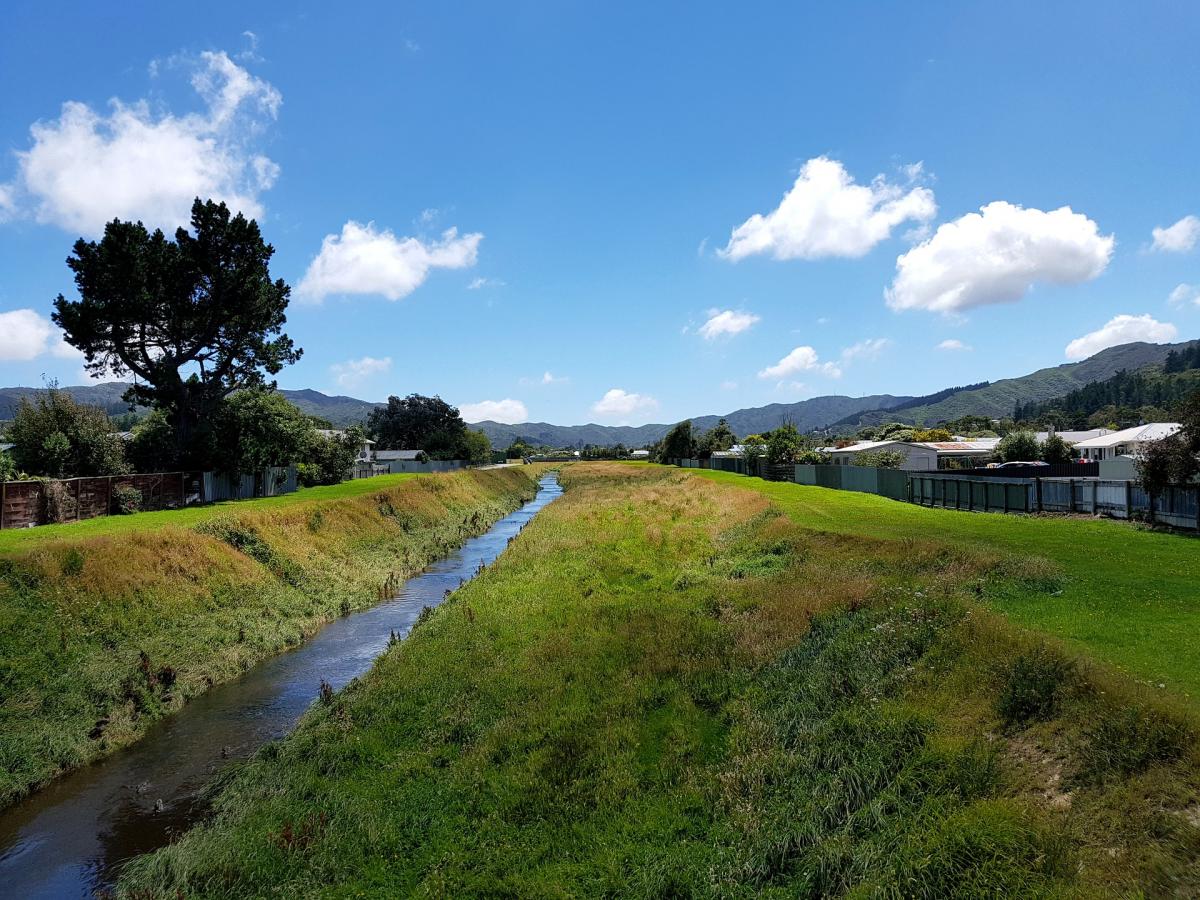
Playing safely in urban streams
As we approach the school holidays and children head outdoors exploring our beautiful parks and streams we’d like to remind you how to play safely in urban streams.
The water quality of our streams can be variable.
Stormwater run-off and other contaminants can affect the water quality of our urban streams.
While there are actions being taken by council and interest groups to improve the water quality in our streams, the water can contain ‘bugs’ that can make people sick. To keep people safe it’s important to follow the tips below.
Here are some tips on enjoying our streams safely:
- Children should always be supervised when playing in or around water.
- Always avoid contact with streams during heavy rain and for 48 hours after it stops raining.
- Never drink stream water.
- Always wash your hands after coming into contact with stream water and before eating.
- Keep stream water out of your eyes, ears, mouth, or any open sores. If your children are too young to understand these precautions please avoid contact with streams.
- Wading and exploring is ok, but the water in streams is not suitable for swimming. To check out the best places for swimming in our region see www.gw.govt.nz...
How you can help:
- Report cracked or leaking pipes (and if you spot a leak on your own property organise for a plumber to check the pipes as soon as possible).
- Make sure rubbish is not left near streams including picking up dog poo.
- Only rain should go down the drain - empty detergents and paintbrush residue onto the lawn, or tip down the sink, not into drains leading to stormwater.
- Wash cars on the lawn, or at an approved carwash.
- Use non-toxic pesticides and fertilisers on your gardens.
- Reduce run-off by using porous landscaping, such as bark chips or lawn.

Poll: Are you still heading to your local for your caffeine fix, or has the $$ changed your habits? ☕
Wellington’s identity is built on its cafe culture, but with costs climbing, that culture is under pressure. We’ve seen the headlines about recent closures, and it’s a tough pill to swallow along with a $6+ coffee.
We all want our favourite spots to stay open, but we also have to balance our own budgets ⚖️
We want to know: How are you handling the "coffee math" in 2026? Are you still heading to your local for a chat and a caffeine fix, or has the cost of living changed your habits?
Keen to read more about "coffee math"? The Post has you covered.

-
45.6% I avoid spending money on coffee
-
42% I still indulge at my local cafe
-
12.4% Irrelevant - coffee is not for me

🌉🛶 Early Birds Might Crack This One First… or Not? 🥚🧠
A person is crossing a bridge and sees a boat full of people, yet there isn't a single person on board.
How is this possible?
(Susan from Massey kindly provided this head-scratcher ... thanks, Susan!)
Do you think you know the answer? Simply 'Like' this post if you know the answer and the big reveal will be posted in the comments at 2pm on the day!
Want to stop seeing these in your newsfeed?
Head here and hover on the Following button on the top right of the page (and it will show Unfollow) and then click it. If it is giving you the option to Follow, then you've successfully unfollowed the Riddles page.

🪱🐦 When are you the most productive? 🌙🦉
The Post has been diving into our daily habits, and research suggests being an early bird or a night owl isn’t just a choice—it’s biology! We all have that specific time when our brains finally "click" into gear.
This raises a big question for the modern workplace. To get the best out of everyone, should employers accommodate our natural body clocks? This idea is at the heart of the four-day work week and flexible scheduling movements.
We want to hear from you:
1. When does your brain "click" into gear?
2. Would a flexible (or shortened) schedule change the way you work?
 Loading…