






DESIGNING FOR OUTDOOR LIVING
Making best use of the flow from the indoor to the outdoor area can add a sense of space and ambience to your home. We look at what you need to consider for decks and balconies.
Decks
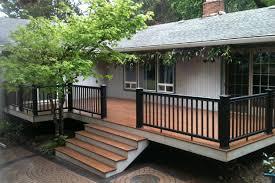
Indoor/outdoor living and long summer evenings on the deck and around the barbeque are a favourite part of family life for many New Zealanders. Plan for good indoor/outdoor flow in your design and consider your decking needs. The position of the house in relation to sun and boundaries will dictate the size and shape of the deck to a certain extent. Be aware that there may be local council restrictions on how much ground a deck can cover.
Other matters to consider are shading and shelter from the prevailing wind. To make the deck more interesting, consider in-built seating, steps, planters and unusual floor shapes.
If you are building a deck as part of a renovation, you will need building consent if the deck is more than one metre above the ground. Contact your local council for advice. Decks more than one metre above the ground must have a barrier (of at least one metre high – Clause F4.3.1 Building Code). Your council will be able to advise you about fencing requirements, any boundary restrictions and any resource consents required.
If you are doing the work yourself, make sure you use the correct grade of timber treatment, have the right gaps between decking boards (approximately 6mm between decking boards and 12mm between the deck and building walls). This is important to allow drainage and resist rotting.
Use bolts and flashing suitable for decks and make sure barriers comply with the Building Code.
Balconies
There are important design and construction requirements for balconies to make sure they don’t leak and rot, such as:
A step-down from the doorsill
A slope on the balcony floor
A gap between the balcony and the wall claddings
Taking care around junctions to ensure weathertightness
Using correctly treated timber
Rotting balconies, decks and balustrades have been identified as a significant safety hazard.
Source: www.consumer.org.nz...

🧩😏 Riddle me this, Neighbours…
I am an odd number. Take away a letter and I become even. What number am I?
Do you think you know the answer?
Want to stop seeing these in your newsfeed? No worries! Simply head here and click once on the Following button.


Poll: Are you still heading to your local for your caffeine fix, or has the $$ changed your habits? ☕
Wellington’s identity is built on its cafe culture, but with costs climbing, that culture is under pressure. We’ve seen the headlines about recent closures, and it’s a tough pill to swallow along with a $6+ coffee.
We all want our favourite spots to stay open, but we also have to balance our own budgets ⚖️
We want to know: How are you handling the "coffee math" in 2026? Are you still heading to your local for a chat and a caffeine fix, or has the cost of living changed your habits?
Keen to read more about "coffee math"? The Post has you covered.

-
41% I avoid spending money on coffee
-
47.8% I still indulge at my local cafe
-
11.2% Irrelevant - coffee is not for me
Scam Alert: Bank cold calls
ASB is warning customers about reports of cold calls from scammers claiming to be from ASB. These scammers are trying to obtain personal information, including usernames, dates of birth, and verification codes sent to your mobile phone.
🛡️ The "Caller Check" Test
If you get a call from someone claiming to be from ASB and you’re unsure, just ask them for a Caller Check. You will then be able to verify the call through the app.
Remember, banks will:
❌ Never ask for your banking passwords, PINs, or verification codes
❌ Never need to know your full credit card number – especially the CVC
❌ Never ask you to download software or remotely access your device
❌ Never ask you to purchase gift cards or transfer funds.
If you have received a phone call and think your account has been compromised, call ASB on 0800 ASB FRAUD (0800 272 372), or visit your local branch.
 Loading…