





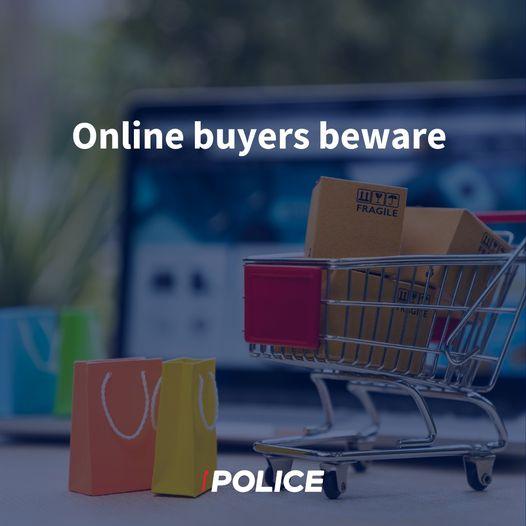
Online Shopping warning
As we come up to the festive season, a lot of us want to shop online and look for good bargains 🛍️🛒
Here’s a few tips to help you stay safe, avoid buying stolen property, and not get taken advantage of:
💸If it is too good to be true, it probably is, or it could be stolen property.
💸If it’s being sold as new, ask for the receipt for the warranty. If they can’t provide it, that’s a red flag.
💸Check the seller’s profile, is it new or relatively blank?
💸If you make a purchase and need to meet somebody to get it, choose somewhere well-lit and well populated in public, near CCTV. If it has to be somebody’s home, take someone with you and let someone else know where you’re going and when.
💸Be especially cautious when buying power tools or high-end toy brick building block sets.
Sadly, if you unknowingly buy stolen property, you’re aiding criminals and inadvertently supporting them to steal more.
If you find a suspect listing or social media scam, call 105, or report it with us online at 105.police.govt.nz

🧩😏 Riddle me this, Neighbours…
I am an odd number. Take away a letter and I become even. What number am I?
Do you think you know the answer?
Want to stop seeing these in your newsfeed? No worries! Simply head here and click once on the Following button.


Some Choice News!
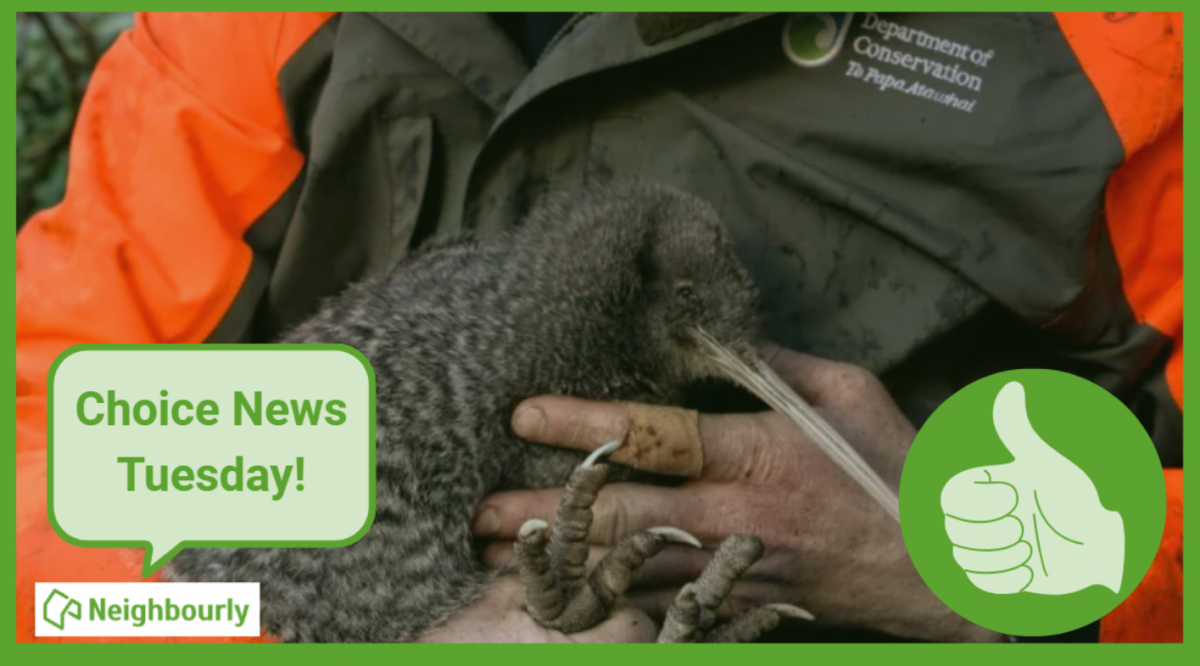
DOC is rolling out a new tool to help figure out what to tackle first when it comes to protecting our threatened species and the things putting them at risk.
Why does this matter? As Nikki Macdonald from The Post points out, we’re a country with around 4,400 threatened species. With limited time and funding, conservation has always meant making tough calls about what gets attention first.
For the first time, DOC has put real numbers around what it would take to do everything needed to properly safeguard our unique natural environment. The new BioInvest tool shows the scale of the challenge: 310,177 actions across 28,007 sites.
Now that we can see the full picture, it brings the big question into focus: how much do we, as Kiwis, truly value protecting nature — and what are we prepared to invest to make it happen?
We hope this brings a smile!

Poll: Are you still heading to your local for your caffeine fix, or has the $$ changed your habits? ☕
Wellington’s identity is built on its cafe culture, but with costs climbing, that culture is under pressure. We’ve seen the headlines about recent closures, and it’s a tough pill to swallow along with a $6+ coffee.
We all want our favourite spots to stay open, but we also have to balance our own budgets ⚖️
We want to know: How are you handling the "coffee math" in 2026? Are you still heading to your local for a chat and a caffeine fix, or has the cost of living changed your habits?
Keen to read more about "coffee math"? The Post has you covered.

-
42.4% I avoid spending money on coffee
-
46.4% I still indulge at my local cafe
-
11.2% Irrelevant - coffee is not for me
 Loading…