





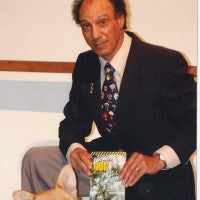
CAT FEEDING FURORE
Cats within a suburb in Christchurch are getting fed by a neighbour or neighbours and within some of the food given are poisonous substances enough to kill some of them and make others seriously ill requiring vet attention.
This is bad and sad.
People should never feed a cat unless they know for sure that the cat is an absolute stray who is extremely and obviously hungry. I know it is difficult for some people to resist.
Less than dogs, but nonetheless, cats can suffer from food allergies and so these allergies can be from any one of the proteins (meats) or in fact all protein as well as many other types of food. So a person who feeds a wandering cat may be harming the cat seriously simply through lack of knowledge in not being the owner of the cat. Same thing here in giving a cat "treats".
Of course, giving a cat food often means that the cat will use your property as a second home.
The other thing is double dipping on food ie - the owner and a neighbour, can create unwanted obesity in a cat.
One of my son's experienced a Siamese cat coming into his stand-alone flat and he said that he didn't have any food to give the cat. Thank goodness for that. It is 100% unlikely that an expensive Siamese cat in any case is a stray.
There is a cat problem where everyone lives in NZ (there are a million cats here) apart from any new housing areas where cats are banned. There is a cat problem growing in the Wallaceville Estate in Wallaceville. More than twice a week, someone is missing their cat is one issue. Just recently on three occasions I noticed an almost pure white coated cat coming through my fenced property late at night - well into the time a cat should be kept indoors in their own owner's property.

Scam Alert: Bank cold calls
ASB is warning customers about reports of cold calls from scammers claiming to be from ASB. These scammers are trying to obtain personal information, including usernames, dates of birth, and verification codes sent to your mobile phone.
🛡️ The "Caller Check" Test
If you get a call from someone claiming to be from ASB and you’re unsure, just ask them for a Caller Check. You will then be able to verify the call through the app.
Remember, banks will:
❌ Never ask for your banking passwords, PINs, or verification codes
❌ Never need to know your full credit card number – especially the CVC
❌ Never ask you to download software or remotely access your device
❌ Never ask you to purchase gift cards or transfer funds.
If you have received a phone call and think your account has been compromised, call ASB on 0800 ASB FRAUD (0800 272 372), or visit your local branch.
Poll: Are you still heading to your local for your caffeine fix, or has the $$ changed your habits? ☕
Wellington’s identity is built on its cafe culture, but with costs climbing, that culture is under pressure. We’ve seen the headlines about recent closures, and it’s a tough pill to swallow along with a $6+ coffee.
We all want our favourite spots to stay open, but we also have to balance our own budgets ⚖️
We want to know: How are you handling the "coffee math" in 2026? Are you still heading to your local for a chat and a caffeine fix, or has the cost of living changed your habits?
Keen to read more about "coffee math"? The Post has you covered.

-
40.8% I avoid spending money on coffee
-
49% I still indulge at my local cafe
-
10.2% Irrelevant - coffee is not for me

Some Choice News!
DOC is rolling out a new tool to help figure out what to tackle first when it comes to protecting our threatened species and the things putting them at risk.
Why does this matter? As Nikki Macdonald from The Post points out, we’re a country with around 4,400 threatened species. With limited time and funding, conservation has always meant making tough calls about what gets attention first.
For the first time, DOC has put real numbers around what it would take to do everything needed to properly safeguard our unique natural environment. The new BioInvest tool shows the scale of the challenge: 310,177 actions across 28,007 sites.
Now that we can see the full picture, it brings the big question into focus: how much do we, as Kiwis, truly value protecting nature — and what are we prepared to invest to make it happen?
We hope this brings a smile!

 Loading…