





Warning Against Spending Spree Based On Council Valuations
Property Institute of New Zealand Chief Executive, Ashley Church, has strongly endorsed a warning, by new Housing Minister Phil Twyford, that Aucklanders should not go out and binge on the basis of big increases in the Council-assessed value of their homes.
The new Council Valuations on Auckland homes will be available on the Council website from 9am tomorrow but Housing Minister Phil Twyford has warned that it would be unwise for Auckland home owners to assume they've hit the jackpot based on the large increases in values likely to be reflected in the new assessments.
Mr Church agrees that Aucklanders shouldn’t read too much into the council figures and has repeated his recent reminder that they are a ‘guesstimate’ rather than an accurate indicator of what a home is actually worth.
Councils throughout New Zealand are required to update Council Valuations (CVs) on residential, commercial, industrial and rural land once every three years in order to set rates and Mr Church says that there is a common misunderstanding about what this Valuation is and how much weight should be placed on it.
“CVs are conducted once every 3 years and they’re a ‘snapshot’ of the approximate value of any given property at that moment in time. They shouldn’t be regarded as an exact measure of the value of a home – and they’re certainly not intended to provide an ongoing price guide."
Mr Church says that the methodology for a Council Valuation is very different to a formal valuation.
“A CV is a blunt instrument. It’s a computer based assessment of the value of your home based on what other homes in your area have sold for – whereas a formal Registered Valuation is conducted onsite and takes account of the condition of your home, any renovations you might have made, whether you have a pool, the number of bedrooms you might have, the condition of your home – all of the things that make it unique. There’s no comparison between the two."
Mr Church says that, for many people, the Council valuation of their home is matter of curiosity and academic interest – but he says that some people might see it as a measure of wealth and be tempted to go out and spend on that basis.
“That would be a mistake."
He says that, while there’s little doubt that home values have increased substantially, people should be wary of taking on major new debt unless they have an accurate idea of what their home is currently worth.

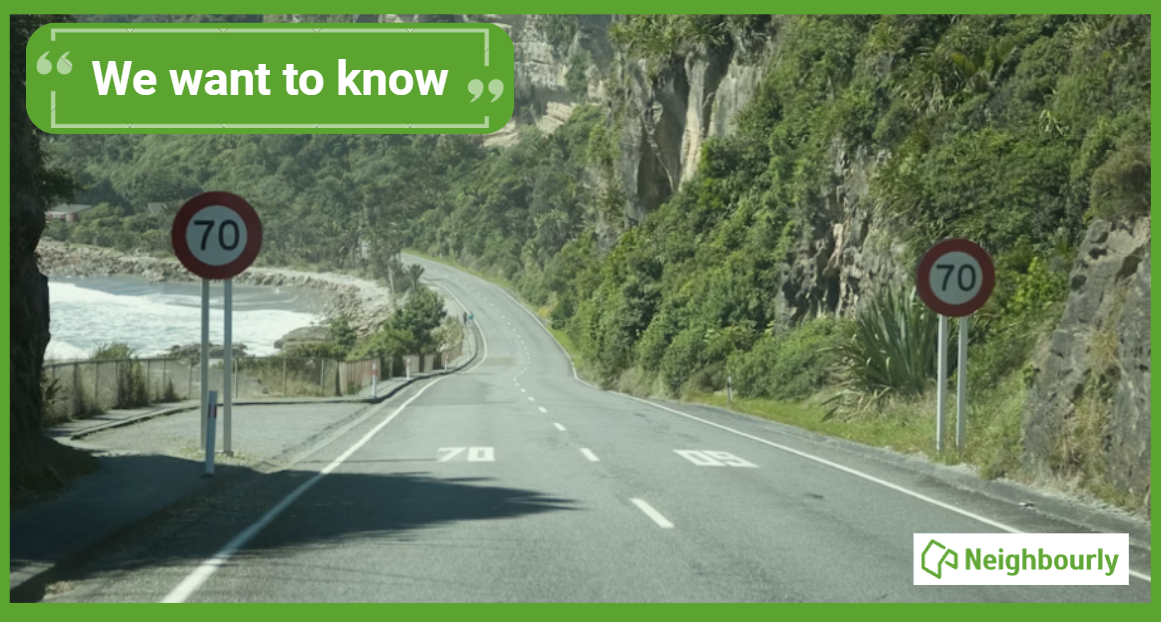
Poll: If we want to reduce speeding, what do you think actually changes driver behaviour? 🛻🚨🚓
In the Post's article on speeding penalties, the question is asked whether speeding fines are truly about road safety, or are they just a way to boost revenue for the Crown?
What do you think? Should speeding motorists receive speeding fines or demerit points?
-
37% The sting of a fine (Money talks!)
-
63% The threat of demerit points (Nobody wants to lose their license!)
Scam Alert: Bank cold calls
ASB is warning customers about reports of cold calls from scammers claiming to be from ASB. These scammers are trying to obtain personal information, including usernames, dates of birth, and verification codes sent to your mobile phone.
🛡️ The "Caller Check" Test
If you get a call from someone claiming to be from ASB and you’re unsure, just ask them for a Caller Check. You will then be able to verify the call through the app.
Remember, banks will:
❌ Never ask for your banking passwords, PINs, or verification codes
❌ Never need to know your full credit card number – especially the CVC
❌ Never ask you to download software or remotely access your device
❌ Never ask you to purchase gift cards or transfer funds.
If you have received a phone call and think your account has been compromised, call ASB on 0800 ASB FRAUD (0800 272 372), or visit your local branch.

Some Choice News!
DOC is rolling out a new tool to help figure out what to tackle first when it comes to protecting our threatened species and the things putting them at risk.
Why does this matter? As Nikki Macdonald from The Post points out, we’re a country with around 4,400 threatened species. With limited time and funding, conservation has always meant making tough calls about what gets attention first.
For the first time, DOC has put real numbers around what it would take to do everything needed to properly safeguard our unique natural environment. The new BioInvest tool shows the scale of the challenge: 310,177 actions across 28,007 sites.
Now that we can see the full picture, it brings the big question into focus: how much do we, as Kiwis, truly value protecting nature — and what are we prepared to invest to make it happen?
We hope this brings a smile!

 Loading…