






Trentham Kindy outgrows the rest with their sunflowers
The garden out the back of Trentham Kindergarten has sunflowers that tower over the kids playing outside.
Their tallest sunflower reaches a height of 1.86 metres and has been officially named the tallest in the region under the Daltons Sunflowers in Kindergartens Project.
The kindy planted several sunflowers earlier in the year and the children watched as the flowers grew.
Teacher Debbie Hawinkels said the project had been a great way for the children to learn how plants grew.
“Growing the sunflowers is always popular with the children, who are keen to plant their seeds and then watch their sunflower grow taller,” she said.
She said children, parents and teachers all worked together to look after the plants as they grew.
“We are all so proud that our efforts in this year’s sunflower competition have resulted in the tallest sunflower in our region,” she said.
The Daltons Sunflower competition is run every other year to teach preschoolers gardening skills.
In the Wellington region 1363 children from kindergartens under the Wellington Kindergarten Association took part in the competition.
The final measurements took place on December 6, with all the Trentham Kindergarten students gathering on the sunny day to watch the tape measure being pulled out.
More than 220 kindergartens in 10 regions took part in growing their own flowers. The tallest sunflower was grown by the kids at Frankton Kindergarten in the Waikato. Their sunflower grew 3.2 metres tall.
The budding gardeners have a long way to go before they break any world records however - the tallest sunflower in the world is currently 9.17 metres, grown by Hans-Peter Schiffer in Karst, Germany.
Daltons general manager Colin Parker said the project was all about growing an interest in gardening by giving kids’ hands a chance to get dirty.
“The children love taking a tiny seed, caring for it and watching it turn into a huge blooming flower. The results delivered smiles to both teachers and children, which was everything we hoped for,” he said.


🧩😏 Riddle me this, Neighbours…
I am an odd number. Take away a letter and I become even. What number am I?
Do you think you know the answer?
Want to stop seeing these in your newsfeed? No worries! Simply head here and click once on the Following button.


Some Choice News!
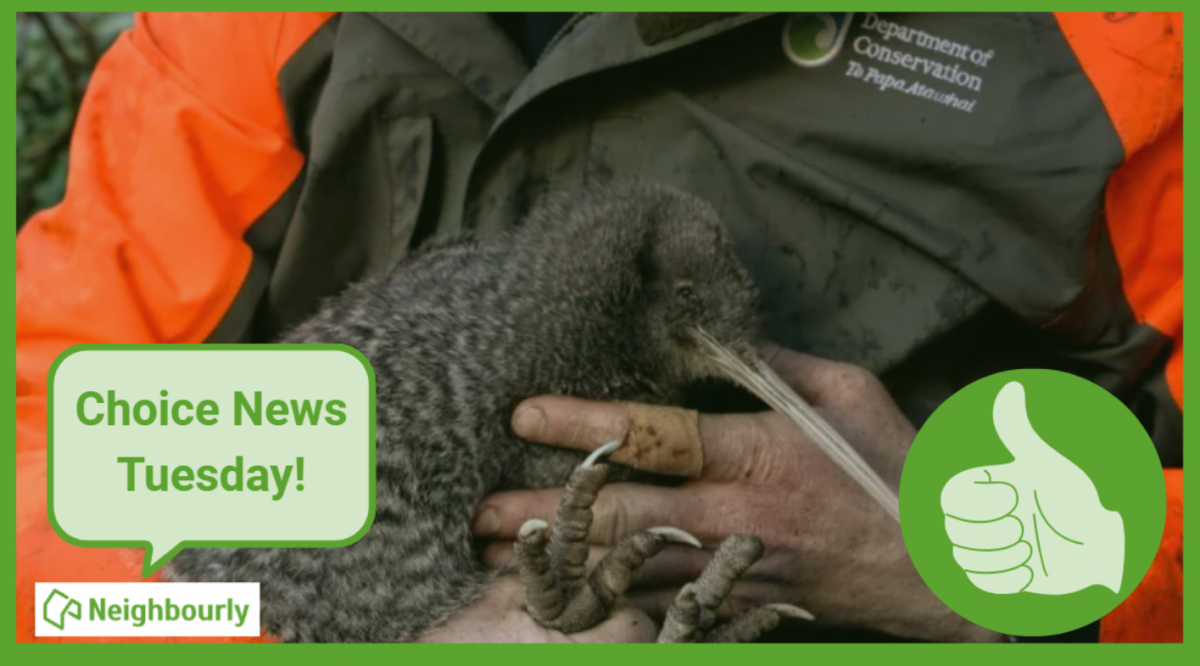
DOC is rolling out a new tool to help figure out what to tackle first when it comes to protecting our threatened species and the things putting them at risk.
Why does this matter? As Nikki Macdonald from The Post points out, we’re a country with around 4,400 threatened species. With limited time and funding, conservation has always meant making tough calls about what gets attention first.
For the first time, DOC has put real numbers around what it would take to do everything needed to properly safeguard our unique natural environment. The new BioInvest tool shows the scale of the challenge: 310,177 actions across 28,007 sites.
Now that we can see the full picture, it brings the big question into focus: how much do we, as Kiwis, truly value protecting nature — and what are we prepared to invest to make it happen?
We hope this brings a smile!

Poll: Are you still heading to your local for your caffeine fix, or has the $$ changed your habits? ☕
Wellington’s identity is built on its cafe culture, but with costs climbing, that culture is under pressure. We’ve seen the headlines about recent closures, and it’s a tough pill to swallow along with a $6+ coffee.
We all want our favourite spots to stay open, but we also have to balance our own budgets ⚖️
We want to know: How are you handling the "coffee math" in 2026? Are you still heading to your local for a chat and a caffeine fix, or has the cost of living changed your habits?
Keen to read more about "coffee math"? The Post has you covered.

-
42.9% I avoid spending money on coffee
-
47.1% I still indulge at my local cafe
-
10% Irrelevant - coffee is not for me
 Loading…