





BENEFITS OF A SUSTAINABLE HOME
A sustainable home has less impact on the environment, but not at a cost to the occupiers.
You can make your home sustainable and reduce its impact on the surrounding environment in many ways.
THE PROBLEM
Each year, homes account for almost 30% of New Zealand's electricity consumption and are major contributors to greenhouse gas emissions. Residential gardens are often a source of invasive non-native species that replace unique New Zealand fauna and flora.
HOW WILL YOU BENEFIT FROM A SUSTAINABLE HOME
COMFORT
A sustainable home is designed to fit the occupants’ needs and adapt to their changing requirements.
HEALTH
Asthma, headaches, eczema and sneezing fits are linked to moulds and other toxins found in most households.
Damp homes are a key factor in respiratory problems such as asthma, colds and flu, according to Otago University research.
While the Energy Efficiency and Conservation Authority (EECA) says about 45% of New Zealand homes are too damp, technology can help eliminate the toxins, particulates and excessive moisture that cause respiratory diseases.
WARMTH
The Building Research Association of New Zealand (BRANZ) found that about 30% of New Zealand homes are colder than World Health Organisation recommended minimum temperatures (16°C in bedrooms, 18°C in living areas).
Sustainable homes use the sun’s energy, capturing heat for healthy, comfortable inside temperatures. A fully insulated house uses 50% less energy for heating than an uninsulated house.
Otago University research showed that householders in insulated homes took fewer sick days and visited their doctor less often than those living in houses without insulation.
COST
Insulation, smart heating options, and energy- and water-efficient appliances can make homes cheaper to run. The payback period for investing in insulation may be as little as 1 year for a simple hot water cylinder wrap, or 3 years for ceiling insulation.
INVESTMENT
Green homes also appear to be a wise investment. A survey conducted by Realestate.co.nz suggests that one in 10 people are prepared to pay up to 25% more for a sustainable home. Banks are starting to offer ‘green mortgages’ providing customers with a package of discounts on eco-friendly home products because they predict that these homes will better retain value over time.

🧩😏 Riddle me this, Neighbours…
I am an odd number. Take away a letter and I become even. What number am I?
Do you think you know the answer?
Want to stop seeing these in your newsfeed? No worries! Simply head here and click once on the Following button.

Poll: 🤖 What skills do you think give a CV the ultimate edge in a robot-filled workplace?
The Reserve Bank has shared some pretty blunt advice: there’s no such thing as a “safe” job anymore 🛟😑
Robots are stepping into repetitive roles in factories, plants and warehouses. AI is taking care of the admin tasks that once filled many mid-level office jobs.
We want to know: As the world evolves, what skills do you think give a CV the ultimate edge in a robot-filled workplace?
Want to read more? The Press has you covered!
-
53% Human-centred experience and communication
-
14.6% Critical thinking
-
29.6% Resilience and adaptability
-
2.7% Other - I will share below!

Some Choice News!
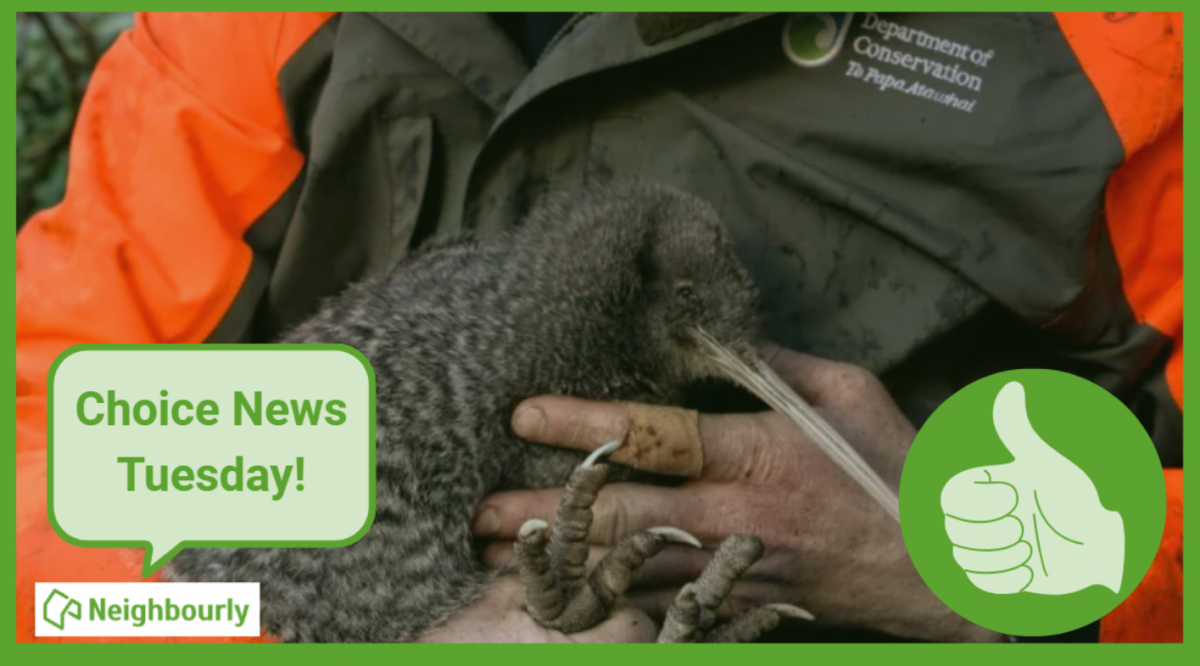
DOC is rolling out a new tool to help figure out what to tackle first when it comes to protecting our threatened species and the things putting them at risk.
Why does this matter? As Nikki Macdonald from The Post points out, we’re a country with around 4,400 threatened species. With limited time and funding, conservation has always meant making tough calls about what gets attention first.
For the first time, DOC has put real numbers around what it would take to do everything needed to properly safeguard our unique natural environment. The new BioInvest tool shows the scale of the challenge: 310,177 actions across 28,007 sites.
Now that we can see the full picture, it brings the big question into focus: how much do we, as Kiwis, truly value protecting nature — and what are we prepared to invest to make it happen?
We hope this brings a smile!
 Loading…