







Rangiora school looks beyond winning to grow sport uptake
By David Hill, Local Democracy Reporter
Rangiora High School has changed the way it manages sport as it looks to grow participation.
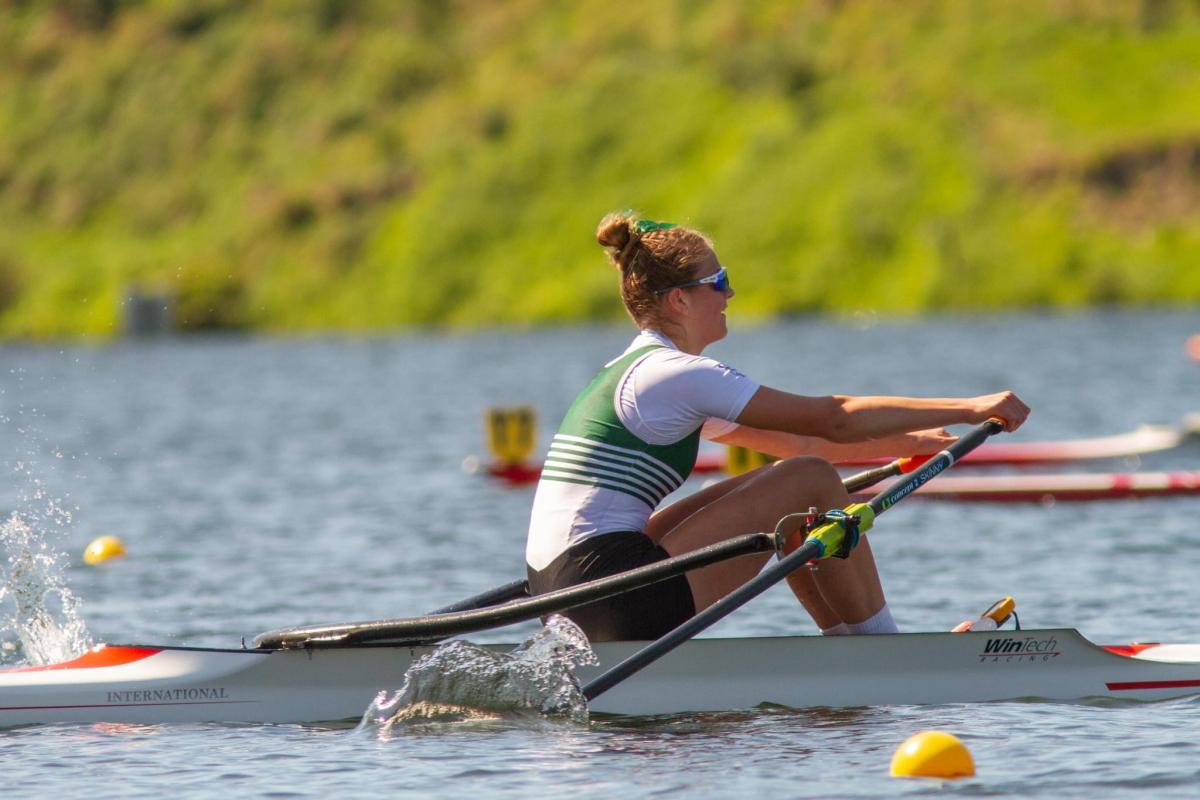
The school has produced several national sporting stars in recent years, including All Black Fletcher Newell and Football Ferns Gabi Rennie and Macey Fraser.
Associate principal Paul Donnelly said the school wanted to take a more holistic approach which was about more than "winning".
"Winning and losing is a part of life. You get out and do the best you can, even if the scoreline doesn’t go your way."
Sport taught young people transferable skills such as teamwork and collaboration to help prepare them for the world beyond school, he said.
Changes included disbanding the Rangiora High School Rugby Club and bringing the sport under the direct control of the school.
Donnelly said the move had not been popular, but the sports co-ordinators hoped to bring more equity across the different sporting codes by adopting the "rugby model".
Rugby would continue to have its own management committee, and the sports co-ordinators would gradually introduce committees for each sporting code over the next two to three years, beginning with basketball, volleyball and netball, he said.
"We looked at how do we offer the best service to kids in a very busy world. How do we develop coaches and managers, and how do we instil in our students that how we behave on the sports field and how we behave in school are the same?
"And we want to have more equity, with no code left behind"
PE teacher John MacDonald will take over as sports director next year, overseeing a team of four sports co-ordinators.
The school received no funding for its sports programme and relied on sponsorship from local businesses and donations from the wider community.
This year 30 sports were offered, including seven new sports introduced during the year.
Basketball was the most popular with 166 students participating, followed by rugby with 139 players and volleyball with 122.
About 40% (663 students) of the student body of 1670 participated in sport this year, a four percent growth compared to 2022 and matching pre-Covid levels.
But it was less than the peak of 750 students participating in sport in 2017, when the roll was well over 1700.
While there were 57 staff members involved in sport, MacDonald said the school was reliant on the support of the wider community and was seeking expressions of interest for coaches, managers and referees for next year.
Most sports teams had a coach and a manager, while higher level teams might have assistant coaches and assistant managers.
Development opportunities were available for coaches and referees through the North Canterbury Sport and Recreation Trust and through regional sporting bodies.
MacDonald was looking for equipment develop a weights room in the school gym for student athletes.
‘‘Not all of our students can afford a gym membership and it will also make it more cost effective to run team trainings.’’
The school also offered coach appreciation and induction evenings, where coaches from the different sporting codes could connect and exchange ideas.
Board of trustees presiding member Simon Green was contacted for comment.
■ Public interest journalism funded through New Zealand on Air.



Some Choice News!
DOC is rolling out a new tool to help figure out what to tackle first when it comes to protecting our threatened species and the things putting them at risk.
Why does this matter? As Nikki Macdonald from The Post points out, we’re a country with around 4,400 threatened species. With limited time and funding, conservation has always meant making tough calls about what gets attention first.
For the first time, DOC has put real numbers around what it would take to do everything needed to properly safeguard our unique natural environment. The new BioInvest tool shows the scale of the challenge: 310,177 actions across 28,007 sites.
Now that we can see the full picture, it brings the big question into focus: how much do we, as Kiwis, truly value protecting nature — and what are we prepared to invest to make it happen?
We hope this brings a smile!


Have you got New Zealand's best shed? Show us and win!
Once again, Resene and NZ Gardener are on the hunt for New Zealand’s best shed! Send in the photos and the stories behind your man caves, she sheds, clever upcycled spaces, potty potting sheds and colourful chicken coops. The Resene Shed of the Year 2026 winner receives $1000 Resene ColorShop voucher, a $908 large Vegepod Starter Pack and a one-year subscription to NZ Gardener. To enter, tell us in writing (no more than 500 words) why your garden shed is New Zealand’s best, and send up to five high-quality photos by email to mailbox@nzgardener.co.nz. Entries close February 23, 2026.

Share your favourite main crop potato recipe and win a copy of our mag!
Love potatoes? We will give away free copies of the May 2026 issue to readers whose potato recipes are used in our magazine. To be in the running, make sure you email your family's favourite way to enjoy potatoes: mailbox@nzgardener.co.nz, by March 1, 2026.

 Loading…