






First homes of 1300-house subdivison to be ready by Easter
By David Hill, Local Democracy Reporter
Families could be moving into Rangiora’s newest subdivision in March.
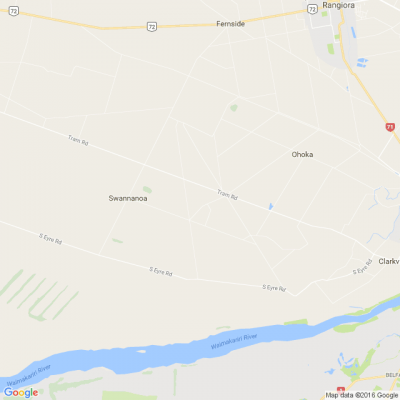
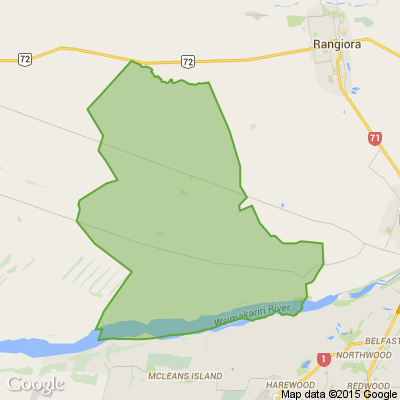
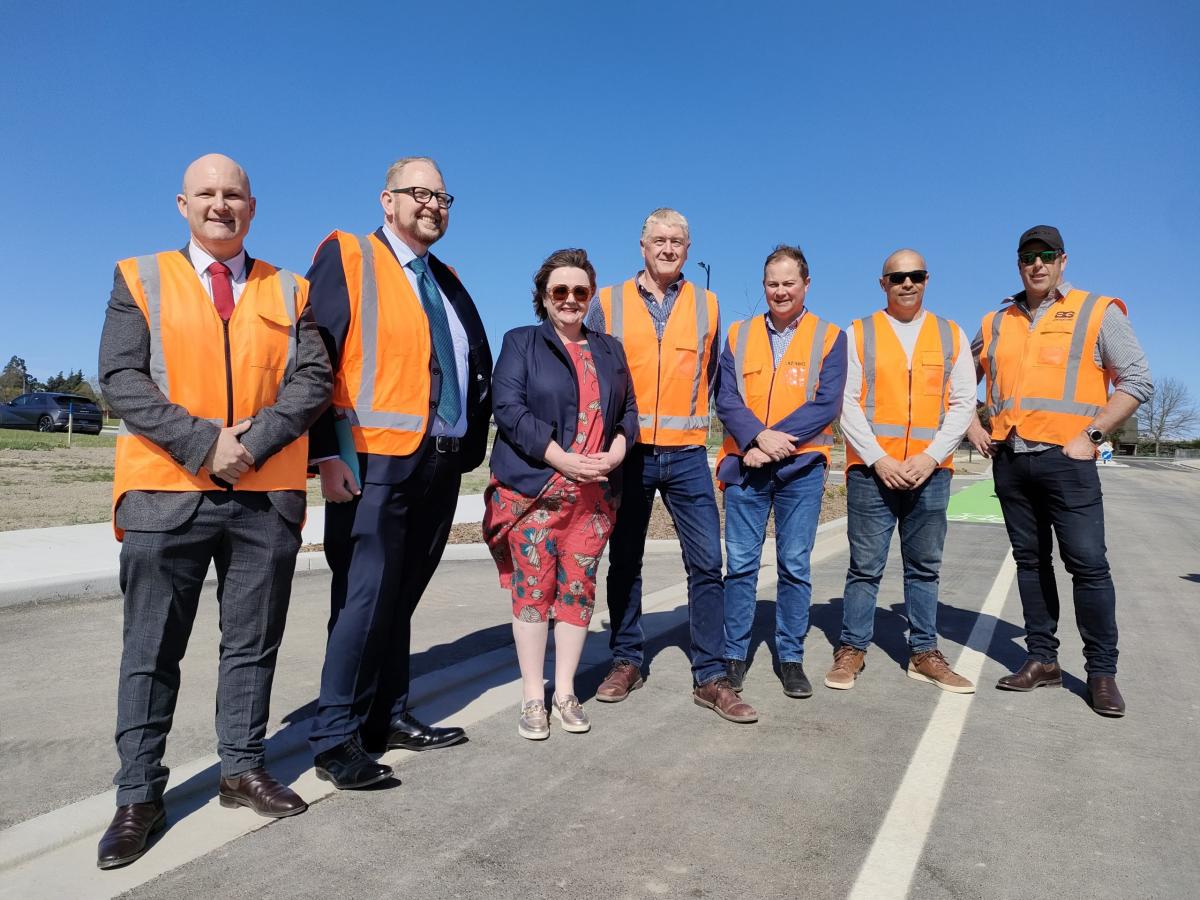
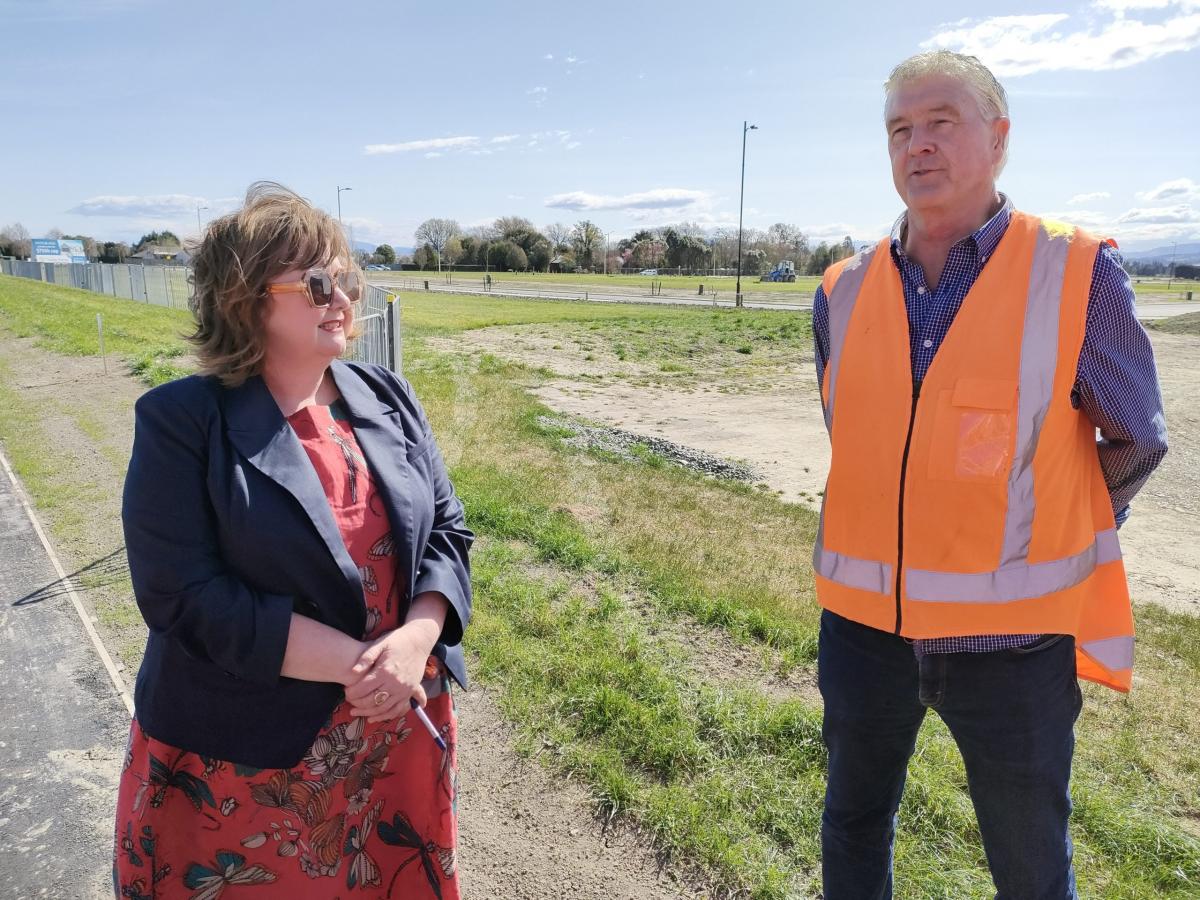
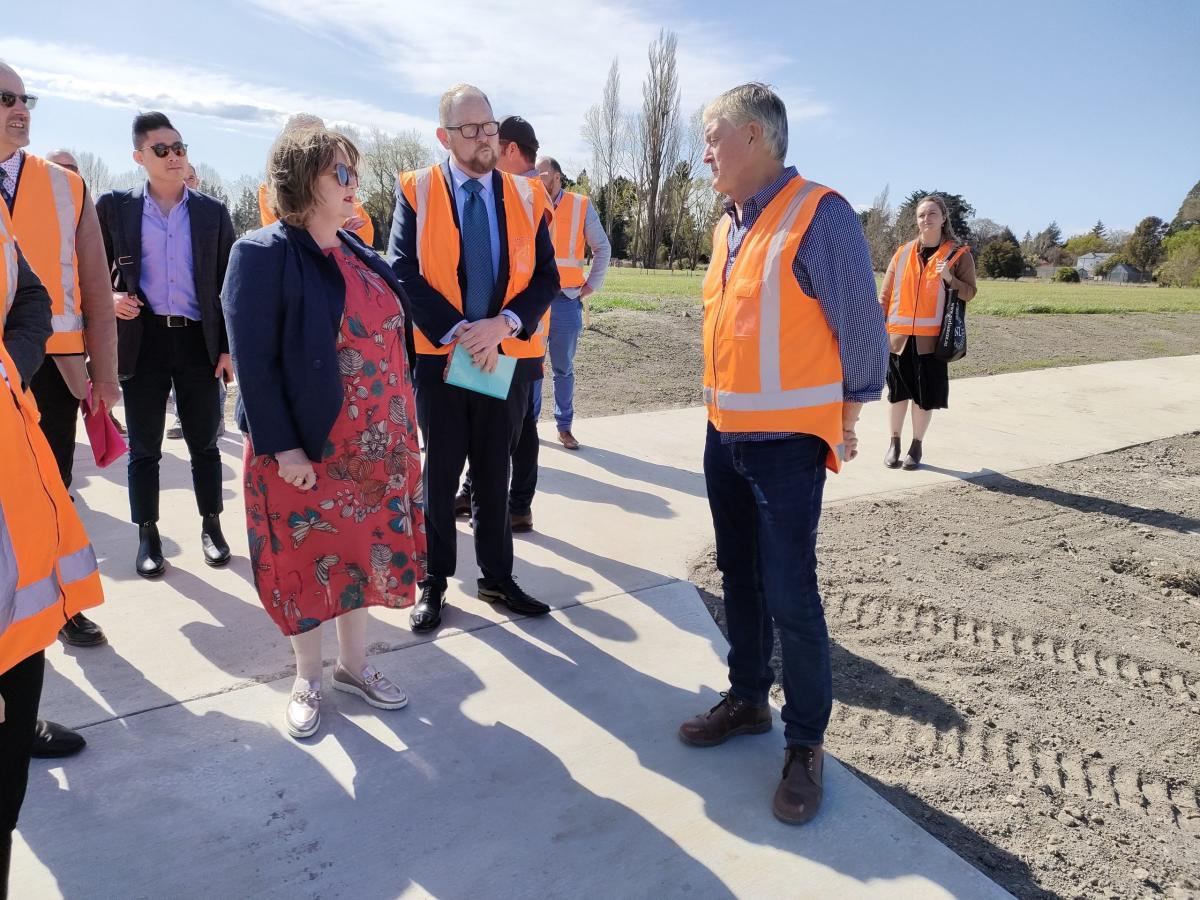
Waimakariri mayor Dan Gordon and Housing Minister Dr Megan Woods checked the progress of the Bellgrove subdivision in east Rangiora on Tuesday.
Mike Greer Homes North Canterbury director Mike Flutey told those gathered he expected to be breaking dirt on 15 homes in the next six weeks.
"We are hoping to have the roof and windows on the first homes by Christmas and we should see the first residents moving in by March or April."
The subdivision was fast-tracked under the government’s Covid legislation, before receiving $5.7 million from Kāinga Ora’s Infrastructure Acceleration Fund in October last year.
The 98-hectare site is expected to deliver 1300 new homes, with around half expected to be sold for less than the government’s $750,000 affordable housing cap.
Gordon said the new subdivision was badly needed, with Waimakariri’s population expected to grow from 70,000 to 100,000 by 2050.
"We have all been impressed to see the progress and the quality of the work.
"It is great to hear that sections will be available to build on this side of Christmas."
Woods and Gordon saw some of the infrastructure, including a stormwater retention pond and upgrades to Kippenberger Ave, up close during the visit.
"New Zealand simply does not have enough housing for it to be affordable and available to everyone who needs a home," Woods said.
"Programmes like the Infrastructure Acceleration Fund are deliberately targeted to grow affordable housing supply and see land get the critical infrastructure that will lay the foundations for development."
Bellgrove Rangiora project manager and director Paul McGowan said the stormwater had been built to withstand a one-in-200 year flood event.
He said 65% of the sections had been pre-sold, mostly to building firms.
The infrastructure was completed by Rangiora-based contractors, with Dormer Construction completing the earthworks and drainage, and BG Contracting the roading and services.
BG Contracting owner Stephen Rattray said 50 people were employed on the site between the two companies.
"I live here and it is a great story to hear with Rangiora getting ahead again and with some scale."
Flutey said enquiries for house and land packages had returned to pre-Covid levels, which was unusually high in the lead up to a general election.
He expected houses to sell from $589,000, for two bedroom units on a small section, up to homes of well over $1m.
"We have the ability to sell well over 50% of the homes for under the $750,000 price cap, but that depends on what the buyer wants."
Flutey said the homes were designed with floor levels of 400mm to 500mm of freeboard above the flood level.
"In a one-in-200 year flood event there should be no flooding through the houses."
■ Public interest journalism funded through New Zealand on Air.

Poll: 🤖 What skills do you think give a CV the ultimate edge in a robot-filled workplace?
The Reserve Bank has shared some pretty blunt advice: there’s no such thing as a “safe” job anymore 🛟😑
Robots are stepping into repetitive roles in factories, plants and warehouses. AI is taking care of the admin tasks that once filled many mid-level office jobs.
We want to know: As the world evolves, what skills do you think give a CV the ultimate edge in a robot-filled workplace?
Want to read more? The Press has you covered!

-
52.9% Human-centred experience and communication
-
14.7% Critical thinking
-
29.7% Resilience and adaptability
-
2.7% Other - I will share below!

🧩😏 Riddle me this, Neighbours…
I am an odd number. Take away a letter and I become even. What number am I?
Do you think you know the answer? Simply 'Like' this post and we'll post the answer in the comments below at 2pm on the day!
Want to stop seeing these in your newsfeed? No worries! Simply head here and click once on the Following button.


Some Choice News!
DOC is rolling out a new tool to help figure out what to tackle first when it comes to protecting our threatened species and the things putting them at risk.
Why does this matter? As Nikki Macdonald from The Post points out, we’re a country with around 4,400 threatened species. With limited time and funding, conservation has always meant making tough calls about what gets attention first.
For the first time, DOC has put real numbers around what it would take to do everything needed to properly safeguard our unique natural environment. The new BioInvest tool shows the scale of the challenge: 310,177 actions across 28,007 sites.
Now that we can see the full picture, it brings the big question into focus: how much do we, as Kiwis, truly value protecting nature — and what are we prepared to invest to make it happen?
We hope this brings a smile!

 Loading…