






Support for Waimakariri lifestylers
By David Hill, Local Democracy Reporter
Support is being offered to Waimakariri’s lifestyle block owners to meet their environmental commitments.
The Waimakariri Zone Committee, in partnership with Environment Canterbury and the Waimakariri District Council, has developed a resource to support the growing number of lifestyle block owners.
The Waimakariri district has more than 6500 lifestyle blocks, which is thought to be one of the highest number in the country.
Zone committee chairperson Carolyne Latham says it was found lifestylers often fell under the radar, during the process of developing the Waimakariri zone implementation plan in 2018, which became Plan Change 7 to the Canterbury Land and Water Regional Plan.
"We know that they want to be doing their bit for the environment, but sometimes it is difficult to know where to start."
Collectively, lifestyle blocks could have a significant impact on our environment as they typically had more people and infrastructure on a smaller land area.
The zone committee’s lifestyle block working group has produced a new resource called Top Ten Tips for Lifestylers.
"This resource condenses all the information available into the most important areas where improvements will make a difference," Latham says.
"It was surprisingly difficult to put it together because, while there is a lot of information out there on good management practice, we needed to look at it from a lifestyle perspective.
"Often they don’t have to do much, sometimes it might just be putting things in a different place, like moving fences or moving troughs."
Not all lifestyle blocks were the same, she says. Some were like mini farms, some were extended sections, some had sheds for storing vintage cars or machinery and others had businesses run out of them.
The tips included protecting waterways, understanding your land, taking care of plants and animals, monitoring septic tanks, managing fertiliser and manure, and being responsible with rubbish disposal.
Advice is also available from the New Zealand Landcare Trust, the Waimakariri Biodiversity Trust, Environment Canterbury and the Waimakariri District Council. Latham said the zone committee was working with the councils to launch a website with the top 10 tips, and a lifestyle workshop was in the pipeline.
■ Public interest journalism funded through New Zealand on Air.

Poll: 🤖 What skills do you think give a CV the ultimate edge in a robot-filled workplace?
The Reserve Bank has shared some pretty blunt advice: there’s no such thing as a “safe” job anymore 🛟😑
Robots are stepping into repetitive roles in factories, plants and warehouses. AI is taking care of the admin tasks that once filled many mid-level office jobs.
We want to know: As the world evolves, what skills do you think give a CV the ultimate edge in a robot-filled workplace?
Want to read more? The Press has you covered!

-
53.1% Human-centred experience and communication
-
14.7% Critical thinking
-
29.5% Resilience and adaptability
-
2.7% Other - I will share below!

🧩😏 Riddle me this, Neighbours…
I am an odd number. Take away a letter and I become even. What number am I?
Do you think you know the answer? Simply 'Like' this post and we'll post the answer in the comments below at 2pm on the day!
Want to stop seeing these in your newsfeed? No worries! Simply head here and click once on the Following button.


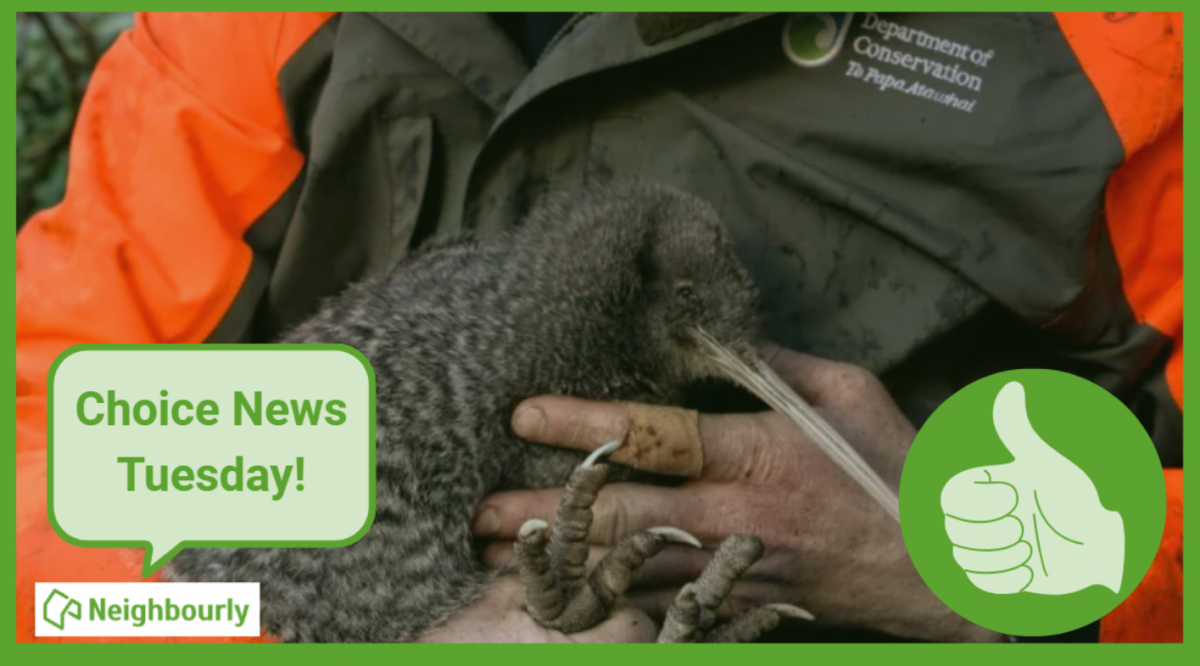
Some Choice News!
DOC is rolling out a new tool to help figure out what to tackle first when it comes to protecting our threatened species and the things putting them at risk.
Why does this matter? As Nikki Macdonald from The Post points out, we’re a country with around 4,400 threatened species. With limited time and funding, conservation has always meant making tough calls about what gets attention first.
For the first time, DOC has put real numbers around what it would take to do everything needed to properly safeguard our unique natural environment. The new BioInvest tool shows the scale of the challenge: 310,177 actions across 28,007 sites.
Now that we can see the full picture, it brings the big question into focus: how much do we, as Kiwis, truly value protecting nature — and what are we prepared to invest to make it happen?
We hope this brings a smile!
 Loading…