






Funding boost to monitor native birds
By David Hill, Local Democracy Reporter
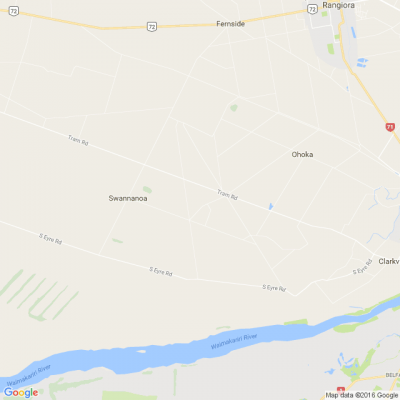
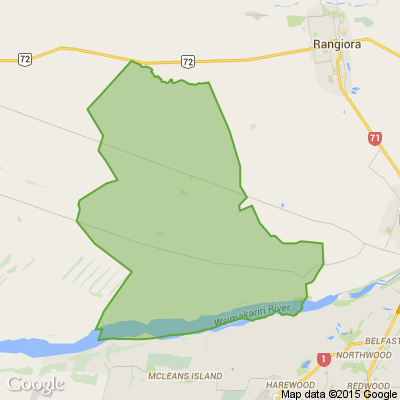
A project to monitor native birds on the Ashley Rakahuri River has received a funding boost from the Waimakariri Zone Committee.
The Ashley Rakahuri Rivercare Group will receive $9000 from the zone committee’s 2023-24 action plan budget to assist with the costs of its shorebird monitoring.
The group extended its monitoring efforts last year, engaging a postgraduate student from the University of Canterbury to undertake the work.
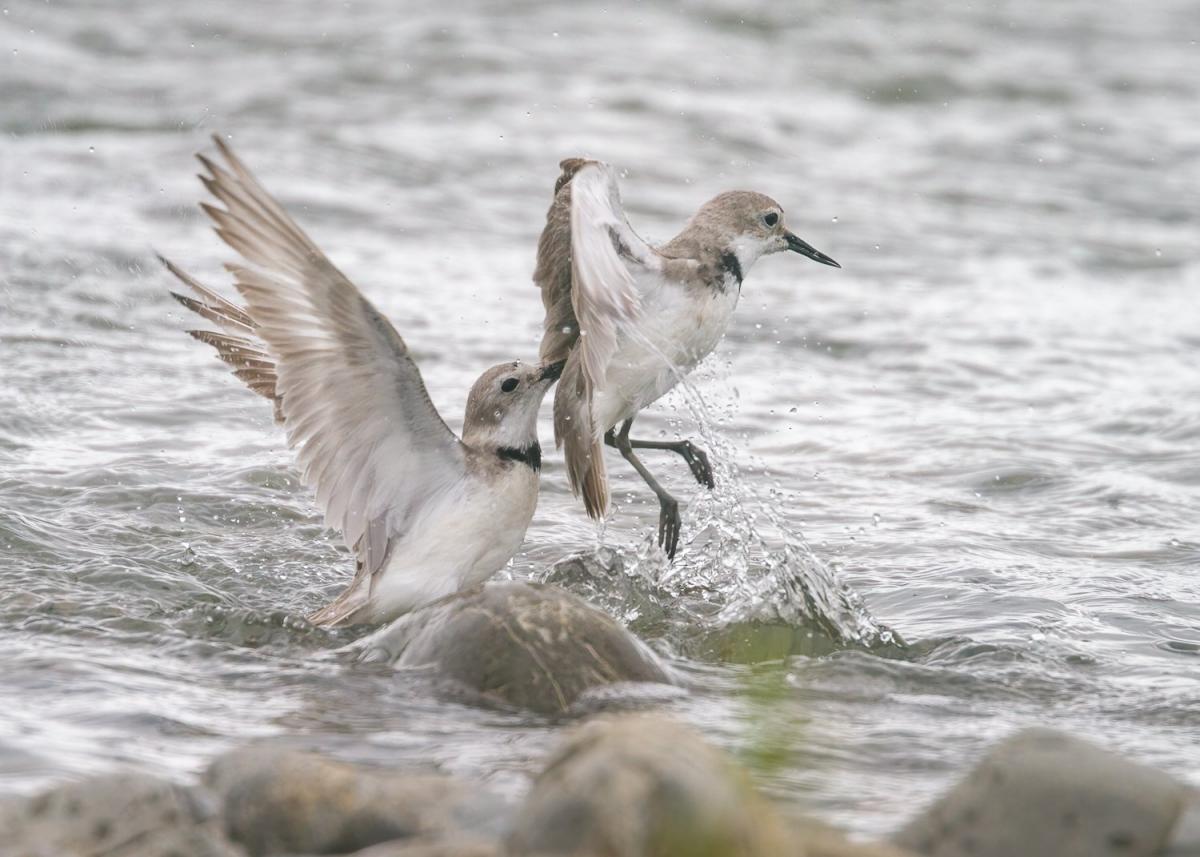
The project monitored banded dotterel/turiwhatu, pied stilt (poaka), black-fronted and white-fronted tern/tarapirohe and tara, South Island pied oystercatcher/tōrea and black-billed and black-backed gull/tarāpuka and karoro.
Zone committee chairperson Carolyne Latham said the rivercare group had been working to protect native birds on the river and estuary for several years.
"You have to admire them for getting on with the work," she said.
"We are pleased to be contributing to the extension of that work which will expand the data that we have on the birds."
The rivercare group has been working with Eleanor Gunby, who is studying for a masters of science degree under the supervision of Professor Jim Briskie.
The project was the first to receive funding for the new financial year.
The funding has increased from $50,000 to $75,000 this year and Latham said the committee was keen to hear from other groups working on projects to enhance the environment and water ways.
"We want to hit the ground running this year and so we encourage groups to get in contact with the zone committee if they have a project."
She said the action plan budget funding was similar to the "immediate steps" funding, which zone committees had allocated in the past, but it had greater flexibility.
"We have more scope to support a wider range of projects and an example of this is a water monitoring project by the Waimakariri Landcare Trust, which wouldn’t have qualified under the immediate steps funding. Identifying where groundwater and surface water monitoring is happening in the zone is something we have been talking about at the zone committee for a while.
"We are delighted the trust is proceeding with the project, which will also trial nitrate testing in private wells."
The Waimakariri Landcare Trust’s monitoring project received $26,400 out of the $50,000 available in the zone committee’s 2022-23 action plan budget.
The Waimakariri Zone Committee is a joint committee of Environment Canterbury and the Waimakariri District Council.
■ Public interest journalism funded through New Zealand on Air.
Photo: Banded dotterels (pohowera) pictured on on the the Ashley-Rakahuri River. Photo supplied by Grant Davey of the Ashley-Rakahuri Rivercare Group

Poll: 🤖 What skills do you think give a CV the ultimate edge in a robot-filled workplace?
The Reserve Bank has shared some pretty blunt advice: there’s no such thing as a “safe” job anymore 🛟😑
Robots are stepping into repetitive roles in factories, plants and warehouses. AI is taking care of the admin tasks that once filled many mid-level office jobs.
We want to know: As the world evolves, what skills do you think give a CV the ultimate edge in a robot-filled workplace?
Want to read more? The Press has you covered!

-
53.1% Human-centred experience and communication
-
14.7% Critical thinking
-
29.5% Resilience and adaptability
-
2.7% Other - I will share below!

🧩😏 Riddle me this, Neighbours…
I am an odd number. Take away a letter and I become even. What number am I?
Do you think you know the answer? Simply 'Like' this post and we'll post the answer in the comments below at 2pm on the day!
Want to stop seeing these in your newsfeed? No worries! Simply head here and click once on the Following button.


Some Choice News!
DOC is rolling out a new tool to help figure out what to tackle first when it comes to protecting our threatened species and the things putting them at risk.
Why does this matter? As Nikki Macdonald from The Post points out, we’re a country with around 4,400 threatened species. With limited time and funding, conservation has always meant making tough calls about what gets attention first.
For the first time, DOC has put real numbers around what it would take to do everything needed to properly safeguard our unique natural environment. The new BioInvest tool shows the scale of the challenge: 310,177 actions across 28,007 sites.
Now that we can see the full picture, it brings the big question into focus: how much do we, as Kiwis, truly value protecting nature — and what are we prepared to invest to make it happen?
We hope this brings a smile!
 Loading…