






Bylaw sought to tackle feral cat epidemic
By David Hill, local democracy reporter
Rangiora cat rescue volunteers are calling for a cat bylaw to combat the region’s feral cat epidemic.
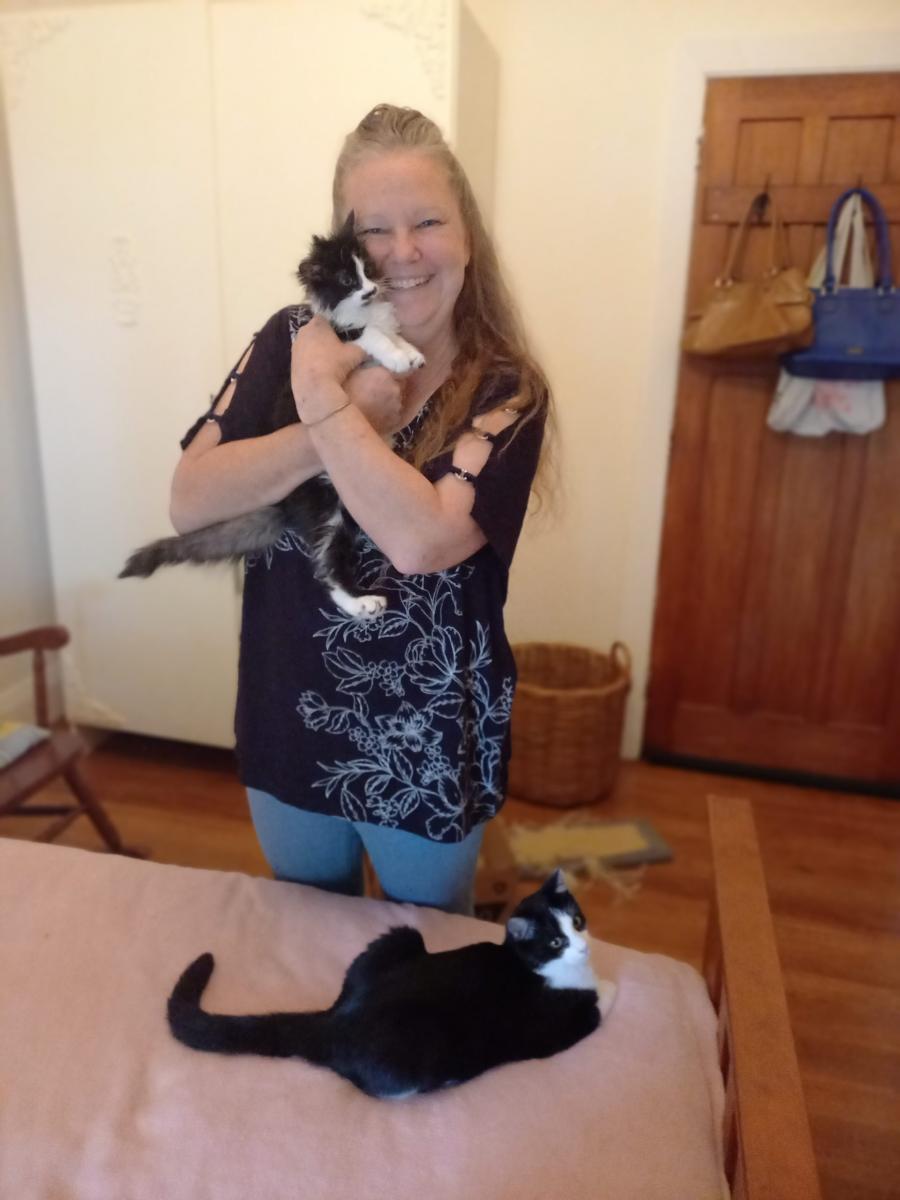
Karen Wilkes, founder of cat rescue organisation Kitty Kingdom Canterbury, and Tina Hartley are calling for a bylaw requiring owners to get their cat desexed and microchipped.
The pair recently met with Waimakariri mayor Dan Gordon and cited similar bylaws already adopted by the Selwyn District Council and the Wellington City Council.
The issue came to a head recently when a cat was found injured after being caught in a gin trap — normally used for catching possums — in central Rangiora.
"We got the call about this cat which people had been feeding over the last few years," Wilkes said.
"If he had been microchipped he probably wouldn’t have been walking the streets as a stray for so long."
But this was just the tip of the iceberg, as there were numerous instances of cats being dumped near rivers and in rural areas.
"People are just dumping cats and leaving them," Hartley said.
"And if people dump them at the Ashley River they will harm the birdlife because they need food.
"What Karen is trying to do is trap them, and then get them desexed, and rehomed, so we can stop this population explosion."
Wilkes said one female cat could have four or five litters of kittens in a year, with up to five kittens in a litter, if she was not desexed.
Over eight years, more than 2 million descendants could be bred from one female cat, she said.
"People are already threatening to poison or harm cats and some are already doing it, so something needs to be done."
Gordon said he was looking into the Selwyn bylaw and had written to the appropriate government minister.
He said it would be difficult to enforce a bylaw.
"I think in order for a bylaw like that to be successful it probably needs to be adopted by all councils in the region.
"This is to stop litters being born in Christchurch, where there is no bylaw, and being driven into rural areas to be dumped."
Kittens could be desexed at 10 weeks or when they reached one kilogram in weight.
They could be microchipped at the same time.
Wilkes called for a national database of microchipped cats to be developed.
"I’m always scanning rescued cats and hoping, ‘please let it be chipped’."
She was applying for grants to help people to get their pets desexed.

🧩😏 Riddle me this, Neighbours…
I am an odd number. Take away a letter and I become even. What number am I?
Do you think you know the answer?
Want to stop seeing these in your newsfeed? No worries! Simply head here and click once on the Following button.


Poll: 🤖 What skills do you think give a CV the ultimate edge in a robot-filled workplace?
The Reserve Bank has shared some pretty blunt advice: there’s no such thing as a “safe” job anymore 🛟😑
Robots are stepping into repetitive roles in factories, plants and warehouses. AI is taking care of the admin tasks that once filled many mid-level office jobs.
We want to know: As the world evolves, what skills do you think give a CV the ultimate edge in a robot-filled workplace?
Want to read more? The Press has you covered!

-
52.9% Human-centred experience and communication
-
14.6% Critical thinking
-
29.8% Resilience and adaptability
-
2.7% Other - I will share below!

Some Choice News!
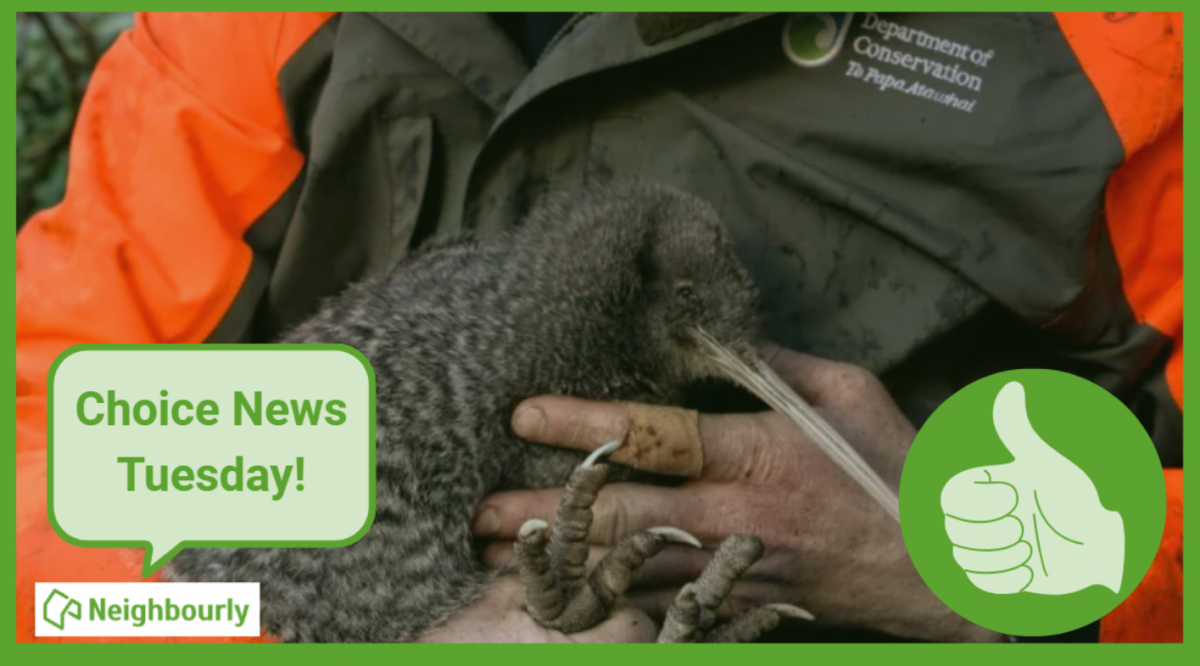
DOC is rolling out a new tool to help figure out what to tackle first when it comes to protecting our threatened species and the things putting them at risk.
Why does this matter? As Nikki Macdonald from The Post points out, we’re a country with around 4,400 threatened species. With limited time and funding, conservation has always meant making tough calls about what gets attention first.
For the first time, DOC has put real numbers around what it would take to do everything needed to properly safeguard our unique natural environment. The new BioInvest tool shows the scale of the challenge: 310,177 actions across 28,007 sites.
Now that we can see the full picture, it brings the big question into focus: how much do we, as Kiwis, truly value protecting nature — and what are we prepared to invest to make it happen?
We hope this brings a smile!
 Loading…