





Confusion over housing rules
By David Hill, Local Democracy Reporter
Bureaucracy has led to confusion over whether new housing rules apply to Woodend and Pegasus.
New housing rules were announced by the Government in October last year, setting medium density residential standards (MDRS) as the default position for towns in high growth areas, such as Greater Christchurch.
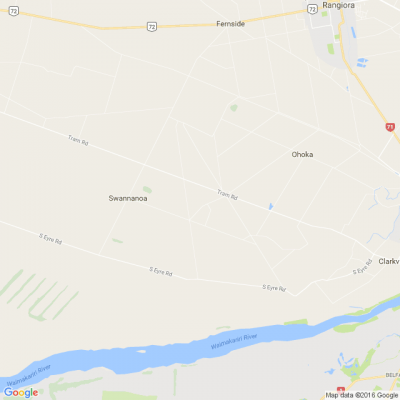
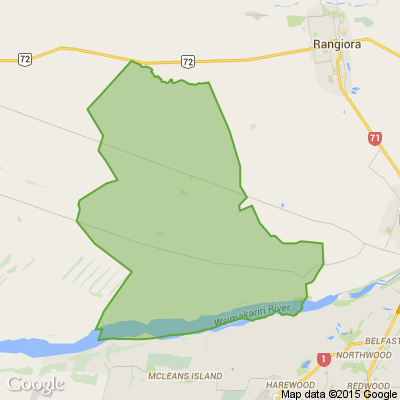
The Waimakariri District Council (WDC) notified variations to the proposed District Plan in August to apply the MDRS to Rangiora, Kaiapoi and Woodend / Pegasus.
But in an email to Local Democracy Reporting last month, Environment Minister David Parker said, based on advice from the Ministry for the Environment, the MDRS apply to Rangiora and Kaiapoi.
‘‘The MDRS does not apply to Woodend and Pegasus as the population of these settlements is less than 10,000.’’
Waimakariri District Council development planning manager Matt Bacon said the confusion came down to how the ‘area’ of Woodend was defined.
The Canterbury Regional Policy Statement identifies Woodend, Pegasus and Ravenswood as one urban area rather than separate towns.
‘‘This is why the MDRS were applied to Woodend/Pegasus/Ravenswood, although this is still subject to the submissions and hearings process,’’ Bacon said.
Adding to the confusion, the National Policy Statement (NPS) on Urban Development sets the criteria as a population in excess 10,000 residents for towns in high growth areas.
But the legislation, which gave effect to the NPS, set the criteria as: ‘‘an area predominantly urban in character that the 2018 census recorded as having a residential population of more than 5000’’.
At the time of the 2018 census, Woodend had a population of 2784 and Pegasus 2637 - a combined population of more than 5000.
The legislation, the Resource Management (Enabling Housing Supply and Other Matters) Amendment Act 2021 was backed by both Labour and National.
But a lack of consultation meant councils were ‘‘blindsided’’ and the Waimakariri District Council made a submission against the legislation.
Waimakariri MP Matt Doocey said he was surprised by the council’s position.
‘‘It’s quite contradictory for the council to say they oppose the legislation on one level because they don’t agree with it, but then seek to enforce some of the most punitive measures.’’
Doocey said central government never intended Woodend, Ravenswood and Pegasus to be treated as one urban area when applying the MDRS.
‘‘These towns individually don’t reach the population threshold, but with the council taking the interpretation to link those towns together it will have the unintended consequence of the intensification being focused on Woodend.’’
Covenants set in place when Pegasus was first established would likely prevent the new standards being applied in the township, he said.
Doocey encouraged the council to take the environment minister’s advice and not apply to the standards to Woodend and Pegasus.
The new standards allow for up to three homes and buildings of up to three storeys to be built on some sites without a resource consent, provided conditions are met.
Conditions include maximum heights, setbacks from boundaries, no more than 50% of land covered by buildings and at least 20% of the section must be landscaped with trees, grass or garden beds.
Building consents will still be required.
■ Public interest journalism is funded by New Zealand on Air.


🧩😏 Riddle me this, Neighbours…
I am an odd number. Take away a letter and I become even. What number am I?
Do you think you know the answer?
Want to stop seeing these in your newsfeed? No worries! Simply head here and click once on the Following button.


Some Choice News!
DOC is rolling out a new tool to help figure out what to tackle first when it comes to protecting our threatened species and the things putting them at risk.
Why does this matter? As Nikki Macdonald from The Post points out, we’re a country with around 4,400 threatened species. With limited time and funding, conservation has always meant making tough calls about what gets attention first.
For the first time, DOC has put real numbers around what it would take to do everything needed to properly safeguard our unique natural environment. The new BioInvest tool shows the scale of the challenge: 310,177 actions across 28,007 sites.
Now that we can see the full picture, it brings the big question into focus: how much do we, as Kiwis, truly value protecting nature — and what are we prepared to invest to make it happen?
We hope this brings a smile!


Poll: Canterbury is thriving on paper... but are you seeing evidence of Canterbury's improving economy?
As reported in the Press, Reserve Bank Governor Anna Breman recently gave a shout-out to our region, calling Canterbury a "stand-out" for how we recover from tough times. With tech firms growing and exporters investing, the business side of things is looking bright!
👉 But we know that "business growth" doesn't always mean the weekly shop gets any cheaper. While the city expands, many families feel like they’re just trying to keep their heads above water.
We want to know: With the business buzz of 2026, do you feel like things are finally looking up for your household, or does it still feel like a climb?
-
22.2% Yes
-
59.3% No
-
18.5% In some areas ...
 Loading…