




Wildlife hospital inundated with ducks affected by toxic spill after factory fire
A wildlife hospital is inundated with ducks covered in oil since a Kaiapoi factory fire spilled a toxic product into nearby rivers.
Fifteen ducks have been transferred to the South Island Wildlife Hospital in Christchurch since the blaze destroyed the factory, but three subsequently died.
Veterinarian Pauline Howard said the 12 remaining ducks were doing well but would need intensive care in the coming weeks to wash and waterproof their feathers.
Called wet feather, the condition occurs when a duck’s feathers become waterlogged, due to contamination with oil, detergents, lice or sooty black mould, causing them to lose their ability to repel water.
Howard said the ducks were unable to control their body temperature while they were covered in oil and that had caused two deaths, with one arriving too hot and another arriving too cold to save.
Sutton Tool NZ, Australasia’s largest drill bit manufacturer, suffered catastrophic damage in its main manufacturing facility after fire engulfed the building in the early hours of Sunday.
The blaze was so fierce a nearby resident described feeling a heat blast on his face after one explosion, and people from up to 40 houses had to be evacuated to a nearby school because of the risk of toxic fumes.
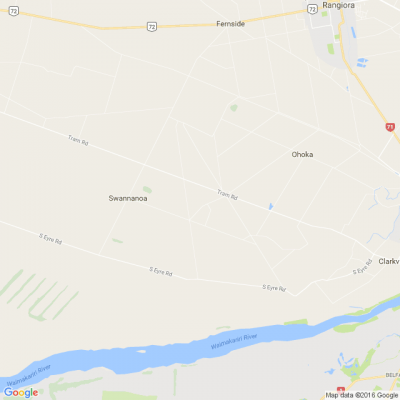
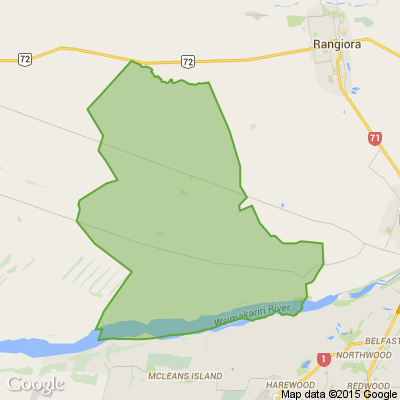
The fire also caused a product called quenching fluid to leak via stormwater drains into the Kaiapoi and Waimakariri rivers.
Designed to rapidly control the cooling of steel or other materials as part of the hardening process, the fluid produced oil slicks on the surface of the rivers.
Environment Canterbury on-scene commander Emma Parr said 18 New Zealand scaup – or black teal ducks – affected by oil had been captured and transported since the spill.
ECan advises anyone who sees oiled birds not to attempt to capture or clean them but to ring the incident response team with details of the location. “It can be distressing to see birds in this way, but the best way you can help them is by letting us know where they are.”
Parr said a final flush of the stormwater link between the site of the fire and the Cam/Ruataniwha River was carried out on Tuesday. The flush did discharge some oil, which booms collected and sucker trucks removed.
Brooklands lagoon and some less accessible areas are being surveyed for oil, both on water and by land, she said.
“To date, we’ve recovered approximately 2400 litres of oil from the water using sucker trucks and another approximately 250 litres of oil using sorbent materials.”
Oil at the site of the fire had been contained, she said.
Kevin Donovan, general manager of the Kaiapoi site, said while it was too early for the company’s Australian owners to make any decisions about the business and its 80 employees, Covid-19-affected supply chains meant the company played an important part in hardware supply in Australasia.
“A lot of what we manufacture is important for Australia and can’t easily be replicated at the quality standards or costs the market expects.”
Donovan said the company had been researching alternative sites, and said both the engineering facility and goods areas had not been damaged. “It’s one day at a time at the moment.”


🧩😏 Riddle me this, Neighbours…
I am an odd number. Take away a letter and I become even. What number am I?
Do you think you know the answer?
Want to stop seeing these in your newsfeed? No worries! Simply head here and click once on the Following button.


Some Choice News!
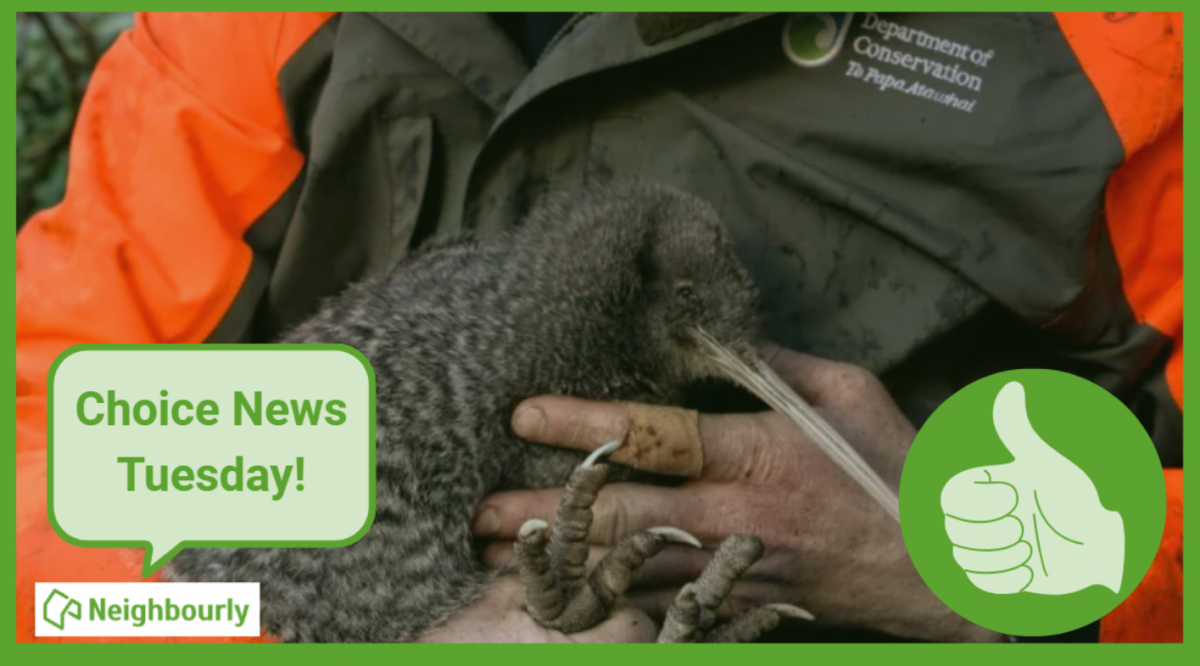
DOC is rolling out a new tool to help figure out what to tackle first when it comes to protecting our threatened species and the things putting them at risk.
Why does this matter? As Nikki Macdonald from The Post points out, we’re a country with around 4,400 threatened species. With limited time and funding, conservation has always meant making tough calls about what gets attention first.
For the first time, DOC has put real numbers around what it would take to do everything needed to properly safeguard our unique natural environment. The new BioInvest tool shows the scale of the challenge: 310,177 actions across 28,007 sites.
Now that we can see the full picture, it brings the big question into focus: how much do we, as Kiwis, truly value protecting nature — and what are we prepared to invest to make it happen?
We hope this brings a smile!

Poll: Canterbury is thriving on paper... but are you seeing evidence of Canterbury's improving economy?
As reported in the Press, Reserve Bank Governor Anna Breman recently gave a shout-out to our region, calling Canterbury a "stand-out" for how we recover from tough times. With tech firms growing and exporters investing, the business side of things is looking bright!
👉 But we know that "business growth" doesn't always mean the weekly shop gets any cheaper. While the city expands, many families feel like they’re just trying to keep their heads above water.
We want to know: With the business buzz of 2026, do you feel like things are finally looking up for your household, or does it still feel like a climb?
-
19.5% Yes
-
58.5% No
-
22% In some areas ...
 Loading…