





Natures Bounty | Bast is Best
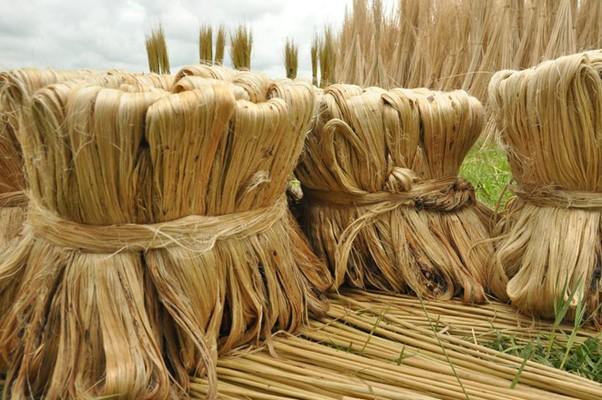
Commonly known as ‘soft’ fibres, bast fibres are the fine, flexible fibres obtained from the stems of dicotyledonous plants.
Bast fibres have been used to manufacture ropes, sacks, sails, and other industrial fabrics for hundreds of years. Commonly known as ‘soft’ fibres, bast fibres are the fine, flexible fibres obtained from the stems of dicotyledonous plants. A sustainable choice, bast fibres support regenerative agricultural practices that can help the soil sequester carbon and as a natural resource, are entirely biodegradable. In this article we will investigate four of the most utilised bast fibres: flax, hemp, ramie, and jute.
Between the epidermis (the outermost layer of cells) and the core of the plant’s stems are soft, woody fibre bundles or strands which can be over one metre long. The strands are composed of individual filaments made up of cellulose and hemicellulose cells bonded together by pectin or lignin, a cohesive gum which strengthens the stem of the plant.
During harvest the stems are cut close to the ground and the fibres are separated either through a natural decomposition process called retting (engaging moisture and bacteria to rot away the gummy cellular tissues) or by decortication (peeling the stems manually or mechanically). After retting, the fibres can be mechanically extracted through a process known as scutching.
In contrast to bast fibres, leaf fibres are obtained from the leaves of monocotyledonous plants with parallel-veined leaves, such as grasses, lilies, orchids, and palms. The long, stiff fibres of plants including abaca, cantala, Mauritius hemp, and sisal are generally used to create cordage or ropes, however, due to labour-intensive harvesting processes they are used less frequently than synthetic options.
Flax (Linen): Famously grown across northern France, Belgium, the Netherlands, and Ireland, flax is the most popular and strongest of the bast fibres. Wild flax fibres found in the Upper Palaeolithic layers of a Georgian cave indicate that humans have been crafting cords and weaving flax baskets for over 30,000 years.
Keep reading: www.curtainclean.co.nz...

It's nearly Showtime in Rotorua!
2 for 1 ticket offer
Get all those new year jobs sorted with a visit to the Show! It’s all about idea’s, inspiration and exclusive show specials at the Rotorua Home and Garden Show on from the 20th - 22nd of February at Energy Events Centre. Join the fun with our 2 for 1 Adult Ticket Offer
There’ll be a huge variety Home and Garden Exhibitors, featuring everything from Kitchens, Artists, Builders, Landscaping, Heating, Spas, Flooring, Heatlh & Well-being and more! Add to that good food, great coffee and you have the perfect day out. Get your to-do list ready and we'll see you at the Show.
Save the date in your diaries: 20 - 22 February
Fri & Sat 10 – 5, Sun 10 – 4
Energy Events Centre, Rotorua
Adults $6
Gold Card Friday $3
Under 16 free


Poll: As a customer, what do you think about automation?
The Press investigates the growing reliance on your unpaid labour.
Automation (or the “unpaid shift”) is often described as efficient ... but it tends to benefit employers more than consumers.
We want to know: What do you think about automation?
Are you for, or against?
-
9.4% For. Self-service is less frustrating and convenient.
-
43.5% I want to be able to choose.
-
47.1% Against. I want to deal with people.

Fundraining for Bowl Cancer
Hi,
This February, I am taking part in Move your Butt for Bowel Cancer and will be conquering 200km for the 100 Kiwis who die from bowel cancer every month.
My goal is to raise funds for Bowel Cancer NZ to support patients, raise awareness and fund research to beat bowel cancer.
Please sponsor my challenge and support my efforts to save Kiwi lives.
To make a donation, simply visit my personal fundraising page below:
www.moveyourbutt.org.nz...
Thanks so much for your support.
Roydon
 Loading…